Billion-dollar developers are targeting Michigan farmland and small townships for massive data centers. In this op-ed, a Northville: First UMC member explains why this is a justice issue for United Methodists and invites you to a lunch and learn on October 28 to learn more.
JULIELYN GIBBONS
Northville: First UMC
Two years ago, most Michiganders couldn’t have told you much about data centers. In late 2024, Governor Gretchen Whitmer signed a massive tax break for data centers into law, and now it seems you can’t escape hearing about them.
The hyperscale data centers being built today are massive facilities of at least 10,000 square feet that house at least 5,000 computer servers, primarily to provide computing power for training and deploying artificial intelligence (AI). They require massive amounts of electricity and cooling systems to operate. Currently, over 30 AI-related projects are underway across Michigan, according to The Gander Newsroom.
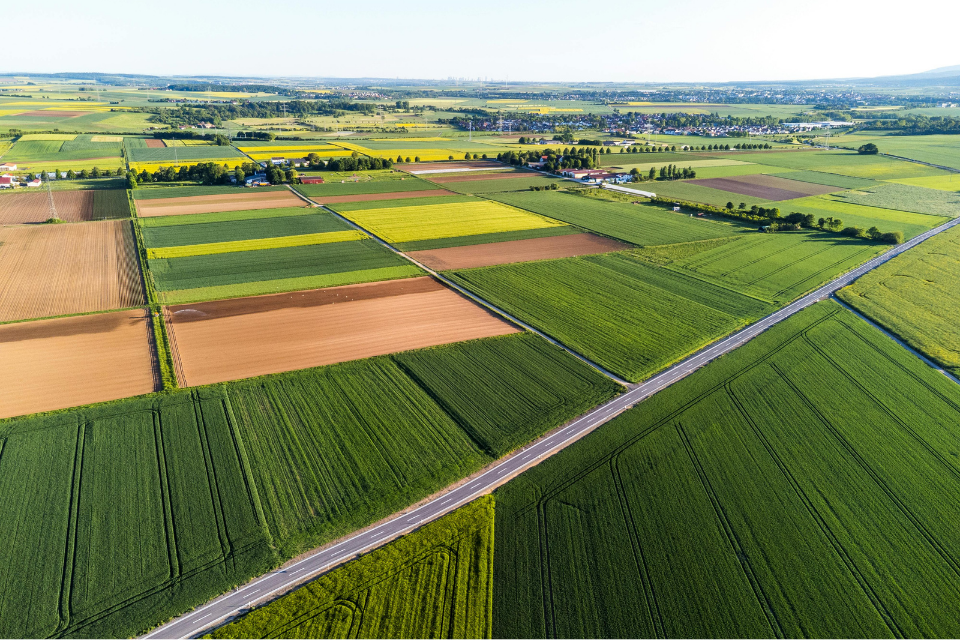
Too many communities across the state are now facing the threat of billion-dollar Big Tech corporations trying to bully their way into building these facilities, some as large as 2 million square feet, on farmland or, in some cases, near schools and homes.
I have spent most of my adult life trying to live out the principles of my United Methodist upbringing, doing all the good I can, in all the ways I can, wherever I can. I spent over 20 years as a professional organizer, working to advance justice on a range of issues across our country, including immigration, LGBTQ+ rights, health care advocacy, and workers’ rights. When I see injustice, I feel called to act.
It is also why I believe Michigan United Methodists should stand with our local communities against the sudden rush to build data centers throughout our state.
Late last year, it was revealed that a 1.8-million-square-foot hyperscale data center and a DTE substation were conditionally approved for a site just three miles from my home and less than a mile from the local elementary school, two daycare centers, and an assisted living center for seniors. Lyon Township’s Planning Commission approved the project without any input from residents, including those whose homes border the property.
My community was overwhelmingly outraged and began organizing on social media. We met in coffee shops, libraries, and our homes, throwing ourselves into educating ourselves, sharing what we learned with the community, and spreading the word about township meetings. We encouraged residents to review and respond to filings from the developer and the township.
We quickly organized a community meeting at the local high school and invited speakers familiar with the issue to help us understand what this could mean for our small community. Over four hundred residents turned out, and we learned what the data center could do to our local water supply and wells, and what could happen to our electricity costs and the power grid. We learned that construction could last as long as five or six years and that those living in the area could be exposed to constant, potentially harmful noise. We were horrified.
Since then, we have spent thousands of hours researching and reviewing filings, permits, and zoning ordinances; creating and printing fliers and signs; filing Freedom of Information Act (FOIA) requests with government entities; meeting with elected officials; and connecting with strangers from other communities who are in similar fights to share resources and strategies. Our group includes people from every walk of life, income bracket, and political ideology, as well as atheists and believers alike. Personally, I have never seen a single issue unite so many kinds of people. In an age of political division, it seems the entire community stands together against this data center.
As of this publication date, it’s been almost a year, and our community is still fighting to prevent the data center’s final approval. Because of the township ordinances, we may have to continue fighting for at least another year. If approval is granted, we’ll need to retain a lawyer and raise funds for legal defense to stop it from being built. It is a massive fight with no end in sight, and it feels like David versus Goliath, though we don’t yet know if we’ll have the same result.
We are one of the lucky communities, where a group of us has come together and has the time and energy to fight. Other communities, like Saline Township, are not so lucky, as “The Barn Data Center” took over a 1,000-acre farmland site and, when built, will be 2.2 million square feet. The developer, Related Digital, another billion-dollar company, only received permission to build after it threatened to sue the tiny township, a move that would likely have resulted in the township’s bankruptcy.
And herein lies one of the many injustices of the gold-rush-like race to build these data centers: small, rural communities with limited budgets and staff, whose ordinances haven’t been updated to protect against this new threat, are being pitted against billion-dollar corporations with armies of lawyers and engineers and unlimited war chests, bullying their targets into submission.
Many of these rural communities are home to our United Methodist churches, which stand as a cornerstone of love and support. If these communities perish, so too will our ability to minister to them directly, as John Wesley called us to do.
I believe that data centers in Michigan impose real economic, environmental, and health injustices on our communities across the state, with few tangible, long-term benefits.
The land that developers seek is typically either farmland or undeveloped land where nature lives and thrives. Property owners are sometimes offered as much as 100% over its value, making it virtually impossible to say no if you’re struggling to get by in these times of rising prices and inflation.
Data center developers across the state are seeking permits to fill wetlands, disturb streams and rivers, and discharge treated water into local rivers and drains, threatening the health of our water systems. In Saline Township, residents have already seen pond water levels drop and worry about the local water supply and contamination of their wells.
Communities that already have data centers, like Dowagiac in Southwest Michigan, are now suing data center operators over “chronic industrial noise,” a term which the World Health Organization has said can cause serious physical and cognitive health issues.
Michigan, like many states, currently lacks protections to shield residents from shouldering the costs of upgrading the electrical grid to accommodate these data centers. There’s no guarantee that utilities, which will greatly profit from the huge demand that data centers bring, won’t pass those costs onto consumers.
Because of the massive tax breaks, communities will lose the tax revenue these facilities generate, directly affecting the state’s K-12 education budget and leading to lower per-pupil spending. These giant corporations only get richer, and ordinary people lose out, widening the income inequality gap.
These injustices directly contradict several of our United Methodist Social Principles, and as such, I am calling on us to act by standing with our communities facing these very real and present dangers.
The Community of All Creation principle affirms that all creation belongs to God and that we are responsible for caring for and stewarding the natural world. We must protect our farmland and wildlands to ensure that humans, animals, plants, and other beings can flourish. “Rather than treating creation as if it were placed here solely for humanity’s use and consumption, we are called to practice responsible stewardship and to live in right relationship with the Creator and with the whole of God’s creation (Genesis 1:26-31; Matthew 6:26-30; Romans 8:22-24).”
In addition, “we confess that the degradation and wholesale destruction of the natural environment threatens unprecedented harm, bringing danger to human and nonhuman life alike.”
The Economic Community principle states, “We decry the widening gap between the rich and the poor, the concentration of wealth in the hands of ever smaller percentages.” It goes on to state, “We hold corporations, businesses, and governments responsible for any violations or infringements of the rights and lands of individuals and communities and commit ourselves to advocate and work for justice.”
The Political Community principle directly calls us to act where we see injustice: “We further believe churches have a right and a responsibility to educate and equip their members to be effective advocates for justice in the wider world.” Under Basic Rights and Freedoms, “Additionally, we believe that everyone has a right . . . to a healthy environment.” And finally, in Our Social Creed, “We affirm the natural world as God’s handiwork and dedicate ourselves to its preservation, enhancement and faithful use by humankind.”
If you feel called to learn more about this issue, please join me for a lunch-and-learn webinar hosted by the Michigan Conference Board of Justice on Wednesday, October 28, 2026. Register now. Alternatively, feel free to email me directly at [email protected].
The October 28 lunch and learn is made possible by generous financial gifts from local United Methodist churches in Michigan through Ministry Shares. Thank you! Learn about the impact of Ministry Shares on mission and ministry in Michigan and around the world.
Last Updated on September 8, 2026