
Continuing our Lenten series on United Methodist identity and beliefs, Kay DeMoss reflects on how mission has been part of Methodist DNA for the past 300 years.
KAY DEMOSS
Michigan Conference Communications
Editor’s note: This year, the Michigan Conference is focusing on rediscovering what sets us apart as United Methodist Christians. Conference leadership invites every local church to plan a study of Laceye Warner’s “Knowing Who We Are: The Wesleyan Way of Grace.” This book offers a clearer picture of our Wesleyan way of following Jesus. Read this article to learn more.
Few of us enjoy going to meetings. Unless one receives a bag of M&M’s upon arrival. Bribery, you say? Not at all. The treat was shared by Wayne Rhodes, on the staff of the General Board of Global Ministries (GBGM), during the years Lynn, my husband, and I served as their mission interpreters and advocates in the West Michigan Conference. Why did one receive M&M’s at the door rather than a Snickers bar? Rhodes explained that throughout history, the Methodists and the Mennonites have been the first to show up and the last to go away whenever and wherever disaster strikes. They were, in his mind, the M&M’s of mission. Sweet!
In “Knowing Who We Are,” Laceye Warner captures that reality in a chapter titled “Tenacious Mission.” She begins with theological grounding: “Methodism’s heritage of mission and social advocacy grows from John Wesley’s emphasis upon the Holy Spirit’s work of sanctification in persons — and communities” (p. 72). She explains that the helping and healing actions for those within the movement soon embraced others, first in Oxford and London, ultimately to the ends of the earth.
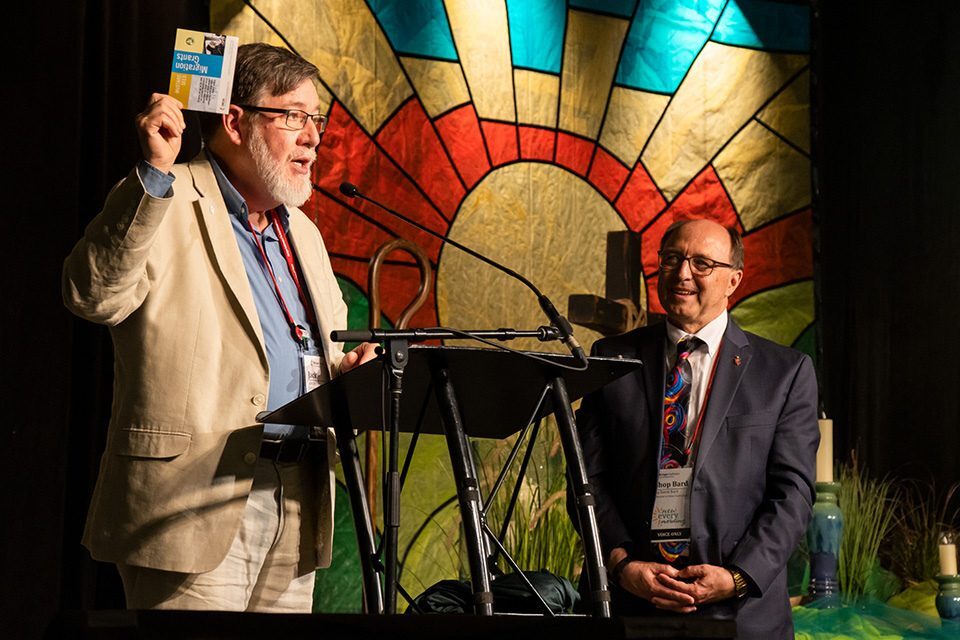
Warner shares mission by-the-numbers in 2024: “United Methodists [support] more than 32 million people in over 1,550 communities across the United States through 52 hospitals and health care systems, 105 community service ministries, and 152 older adult ministries” (p. 83). In addition, “By 1880 there were 44 Methodist colleges and universities as well as 11 theological schools [make that 13 in 2026], and 130 secondary schools. Today, United Methodists support 95 colleges and universities” (p. 84). And that doesn’t count the 700 projects supported by The Advance in 111 countries. Warner provides financials on page 77. Updating her 2018 figures, the denomination received “$47 million in designated giving and $106 million in apportionment funds” in 2023.
As impressive as those statistics are, mission isn’t about numbers, is it? “Methodism’s missional character was innate from the very beginning,” Warner states. “The beliefs grew and developed as layers in response to relationships nurtured in small groups and communities . . . . Through interactions with others and the steady authentic building of relationships, Methodism’s missional character continues to grow” (p. 72).
With that in mind, this Michigan United Methodist offers five more M’s of mission — Money, Multiculturalism, Matrix, Management, and Mutuality.
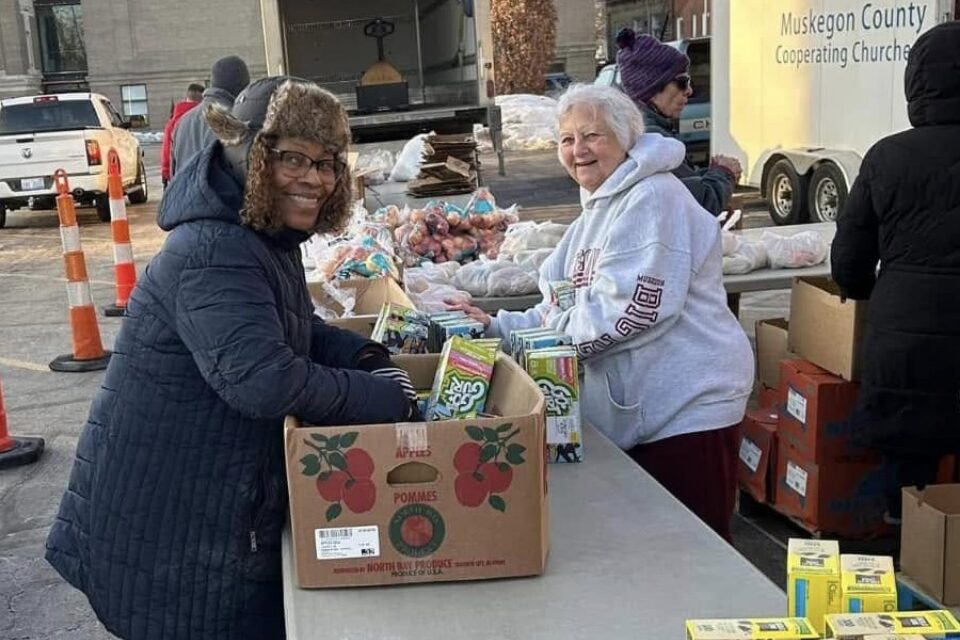
Money is needed to make ministry happen. However, an individual or congregation’s approach to mission should not resemble an ATM transaction: I put my debit card in and out comes mission. Not! Case in point: Muskegon: Central United Methodist Church’s participation in an annual Thanksgiving Dinner hosted by their sister congregation, Mt. Zion Church of God in Christ. Yes, Central contributed dollars toward the purchase of the turkey and trimmings. However, the true missional value of the event lies in Mt. Zion and Central folks serving side by side — dishing up the mashed potatoes and gravy together, delivering the takeouts — and the love they share with their neighbors — the hungry fed, table conversations with the lonely, and the witness that diversity is an awesome thing. Whenever possible, compassionate service should accompany monetary gifts.
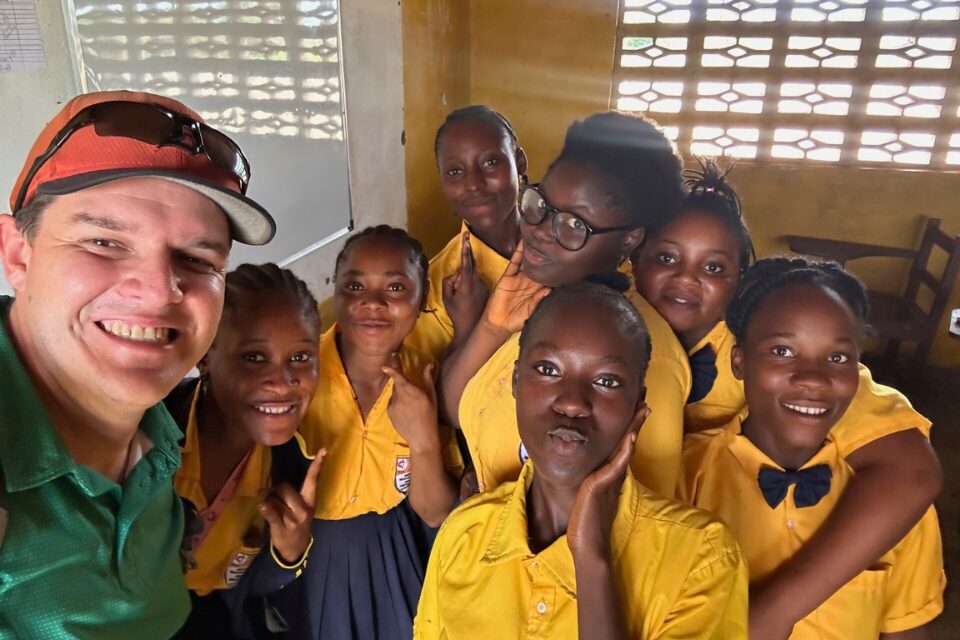
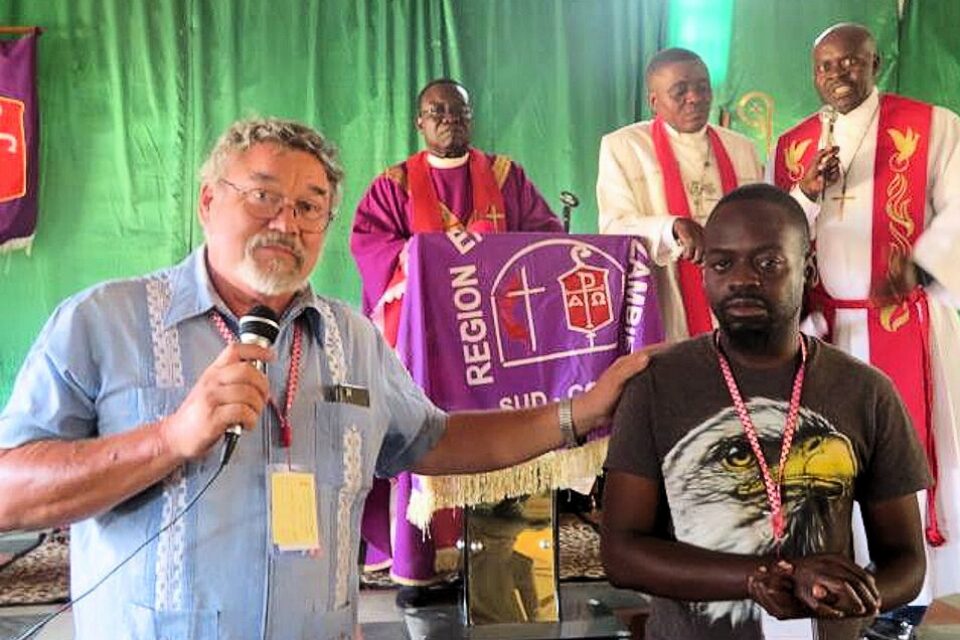
Multiculturalism is a hallmark of United Methodism. Cross-cultural experiences can happen within the city limits where one lives or across borders farther afield. Lynn served as an A3 in the Congo from 1957-1960, that era’s equivalent of today’s Global Mission Fellow. He was one of a dozen missionaries in ministry at a mission center called Mulungwishi. When he and I returned there as volunteers in 1998, 2005, and 2010 to teach in the seminary, there were only two United Methodist missionaries in residence. Today, there are none. Does that mean there is less mission being done at Mulungwishi than there was 60 years ago? Just the opposite. “Saltwater missionaries” who travel from the United States to places like Africa, crossed the ocean not to do mission for others but to do mission with others. The goal was and is to develop leadership within the country that will carry on the ministry after the missionary leaves. Today, The United Methodist Church deploys 200 missionaries in 60 countries. Unlike 100 years ago, Asia, Africa, and Latin America send more missionaries than they receive. The GBGM page on missionaries celebrates multiculturalism with the tagline, “From Everywhere to Everywhere.”
Matrix is another word to describe the connection we celebrate as United Methodists. When it comes to mission, this interrelatedness allows us to do more together than one church or individual can do separately. In addition, The Advance of vetted projects and missionaries brings a flood lamp of charitable possibilities into a more laser-focused catalog of opportunities. Support multiplies as many churches select the same project as the target of their missional giving. Just as importantly, the connection offers a network of knowledge that can readily match resources with needs. Several weeks ago, my pastor introduced me to a newcomer to the church. The man, named Alex, had a large quantity of medical supplies his company wished to donate to a worthy ministry. As a member of the Michigan Conference Board of Global Ministries, I was able to connect him with another Alex, who leads our Abundant Health Initiative. It remains to be seen if the two Alexes can make some beautiful missional music together. Still, the matrix of people, organizations, goods, human conditions, and hopes that we call the connection facilitates links that make mission happen.
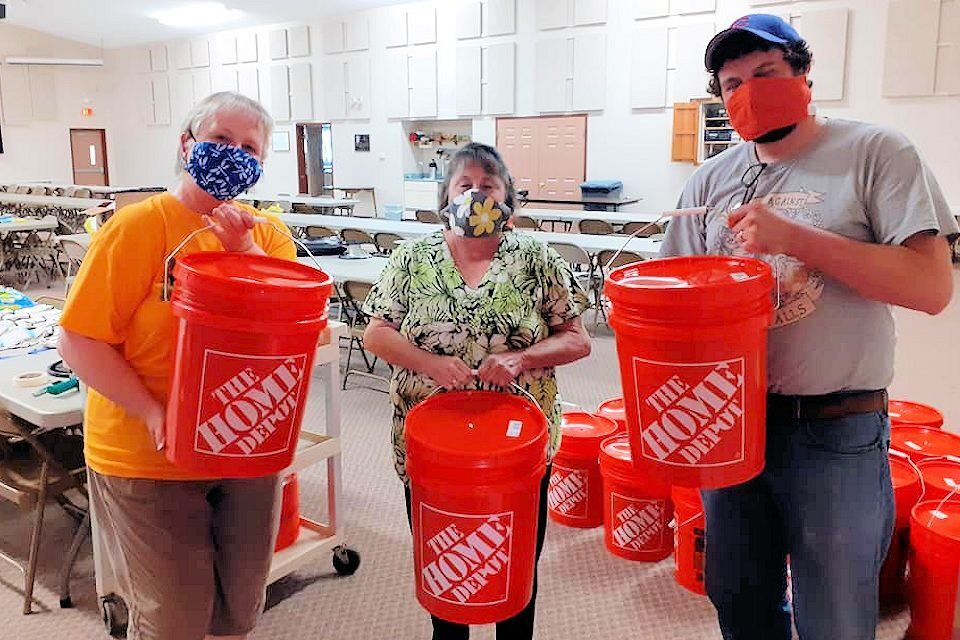
Management has become a key part of mission that has been dear to the hearts of Michigan United Methodists for decades. For many years, the Detroit and West Michigan conferences were leaders in mission giving for the entire denomination. Many of those dollars were given to the United Methodist Committee on Relief (UMCOR). It is impossible to measure the number of lives touched by the outpouring of those funds during times of great suffering at home and abroad. Money from Michigan made a difference to survivors of tornadoes, floods, earthquakes, and fires, as well as those suffering from hunger, displacement, war, and other manmade disasters. About ten years ago, Michigan’s relationship with UMCOR changed. Dollars still went out to do good where needed. But millions of dollars began to come into the state as Michigan United Methodists began a significant partnership with UMCOR and FEMA to do case management with disaster survivors as far north as the Keweenaw to Detroit in the south. In 2022, this work got big enough to become its own nonprofit called After The Storm. We can be proud to support After The Storm, which has been the case management provider following four disasters that struck our neighbors over the past five years.
Which brings us to Mutuality. As Laceye Warner reminded us, the foundation of Methodist mission, since the day of John Wesley, is relationship. The program motivating Michigan United Methodists in their mission outreach is called EngageMI. It is not transactional — there’s that ATM model of mission giving again — but transformational. EngageMI is about mission with others, not mission to or for others. The EngageMI booklet lists ways to learn, give, and act to “foster mutual relationships where all participants are met with dignity, engaged in shared leadership, and grow together in God’s love.” It’s Lent, a time when many “give up” something. I suggest you use this holy season to “give to” something. EngageMI names neighbors across Michigan and around the world who could journey toward Easter with you.
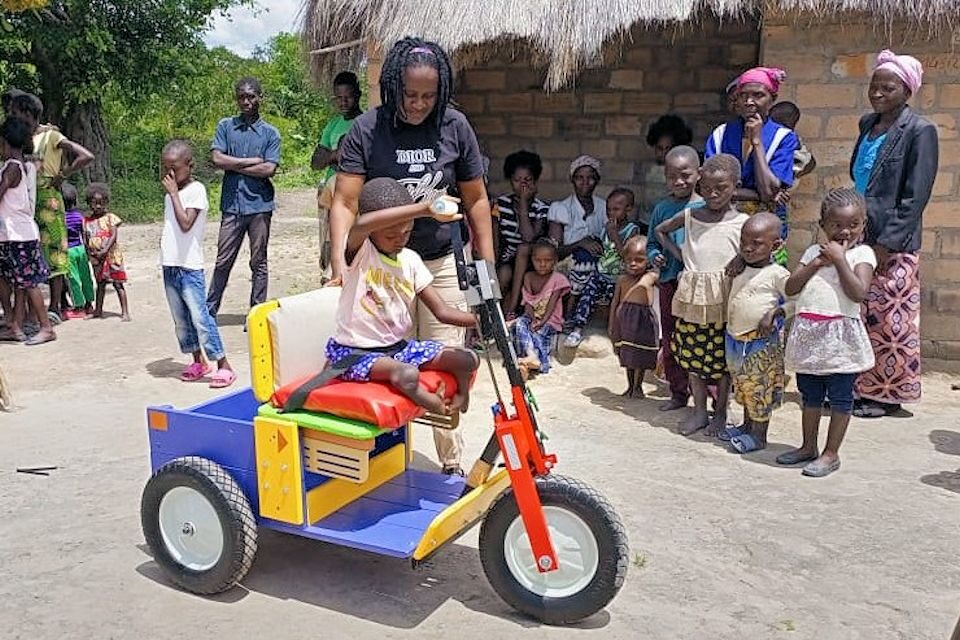
And that brings up one final M-word. Warner talks about tenacious mission. Is it perhaps time for us to become Mulish in our mission? Comparing you and me to a mule is surely not elegant. But here’s the dictionary’s take on “mulishness”: “sticking to a purpose or course of action, despite reason, arguments, or persuasion.” Remember, the very word “Methodist” was coined 300 years ago to mock John Wesley and his friends for their strict “methodical” approach to Bible study, prayer, and accountability.
So, we’ve been stubborn from the start. I believe Methodists today must continue to be mulish in their desire to be faithful, in word and deed, to love our neighbors as Christ would have us do. Mules have a tenacious attitude, but they have something else. Big ears that give them an acute auditory capability. Boasting large ears, let us hear the cries of the needy and respond with love.
The publication of this article was made possible thanks to generous financial gifts from local United Methodist churches in Michigan through Ministry Shares. Thank you! Learn about the impact of Ministry Shares on mission and ministry in Michigan and around the world.
Last Updated on March 17, 2026