
Coldwater UMC was determined to do something to help their Haitian migrant neighbors navigate the implications of the termination of their legal status in the United States.
REV. SCOTT MARSH
Coldwater UMC
“Do not fear, for I have redeemed you; I have summoned you by name; you are mine. When you pass through the waters, I will be with you; and when you pass through the rivers, they will not sweep over you. When you walk through the fire, you will not be burned; the flames will not set you ablaze. For I am the Lord your God, the Holy One of Israel, your Savior” (Isaiah 43:1-3, NIV).
There are moments in faith when we are asked to step out of our comfort zone and do something we feel unequipped or unprepared for. I would like to recount a recent movement of the Holy Spirit, a time when faithful people stood to make a meaningful difference despite fears and perceived shortcomings. In this process, I have learned to trust God more, and that faith takes on greater meaning the more we work it out in our world.
I have known about Haiti since I was a child. I remember collecting coins for the Haiti Hot Lunch Program and bringing them to my home congregation for a noisy offering. As Michigan United Methodists, we spent decades doing this faithful work. According to a 2015 Michigan Conference article, “the Michigan Area Haiti Task Force [was feeding] up to 20,000 children a day in Methodist Schools in The Republic of Haiti.” Our support for this program ended in 2019 after we did not receive the required annual reporting (as outlined in this article), yet we still found ways to walk alongside our Haitian brothers and sisters in the years since.
Hardship has been a constant in Haiti since the 1990s, when I would bring the contents of my piggy bank to church. Compounding crises — earthquakes in 2010 and 2021, hurricanes, ongoing gang wars, cholera outbreaks, assassinations of leaders, and other issues — have driven many Haitians to flee for safety. Over the years, some 500 Haitians have found a home here in Coldwater, many working at Clemens Food Group, a meat-processing plant.
Fast forward to late 2025, and new U.S. federal policies are rolled out. Among them is the termination of Temporary Protected Status (TPS) for Haitian migrants who are lawfully present in the United States. Congregants at Coldwater UMC who knew Haitians and had heard about this troubling news began discussing what we could do.
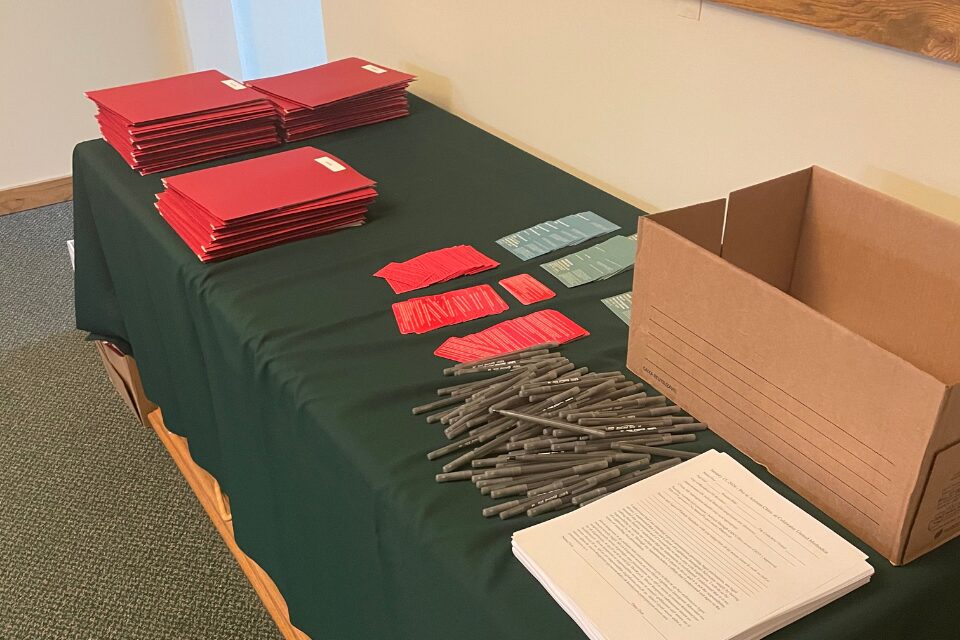
It was resolved after several emails and discussions to take meaningful action to help our Haitian neighbors. We would host a seminar on legal asylum. Greg Bright and many others in our congregation began planning the event. Working with Fleming Townley Collaborative, we were connected to a pro bono legal service based in Holland, Lighthouse Immigrant Advocates.
Once we set a date, we turned our focus to further building relationships with our Haitian neighbors. Upon hearing our plans, the Coldwater Community Center came alongside and joined the work. Phone calls, appointments, and face-to-face meetings with Coldwater Haitian community leaders were held.
But alongside the planning came worry. Rumors and confirmed sightings of U.S. Immigration and Customs Enforcement (ICE) agents in southern Michigan spread through our community. The events in Minneapolis — an altercation between ICE and Renee Good that resulted in her death — flooded the headlines. As we neared the event date, concerns grew: “Will the fear of ICE keep our neighbors away? If ICE showed up while they were here, how could we provide sanctuary?” Shared conversations considered how we could get information to those in need if attendance was low. We prayed for courage and trusted that God was working.
On the day of the event, I remember thinking of all that could go wrong. The what-if list kept rolling around my head, and then I prayed: “God, I hand it over to you. I can’t do this alone. We can’t do this without you. Be with our neighbors and help them trust us, as we trust in you. Show them that we seek their well-being and care for them. Be present here today, and may this information reach the minds and hearts of those who need to hear it. In your gracious name, I pray. Amen.”
And then they came.
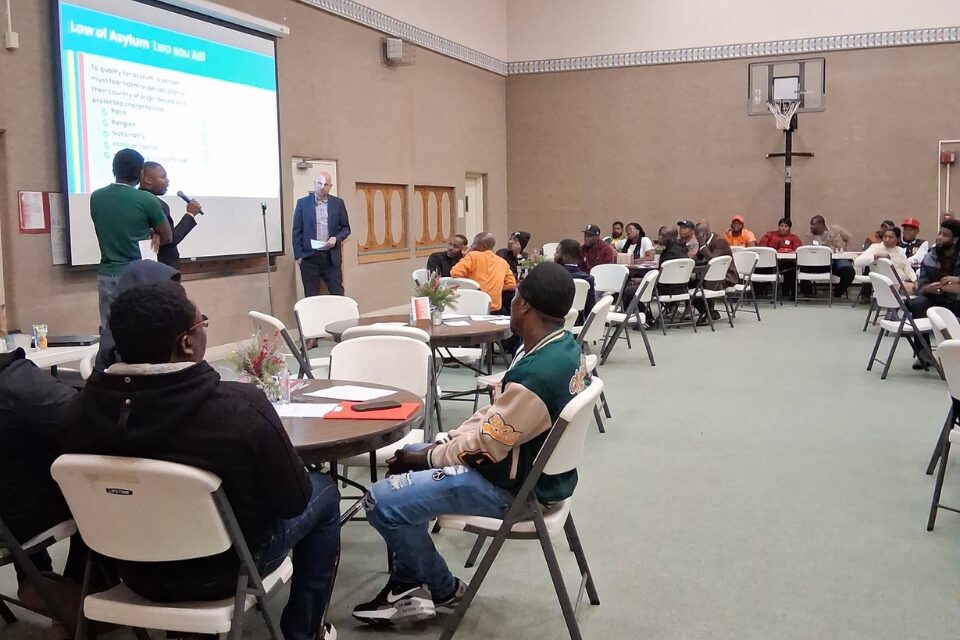
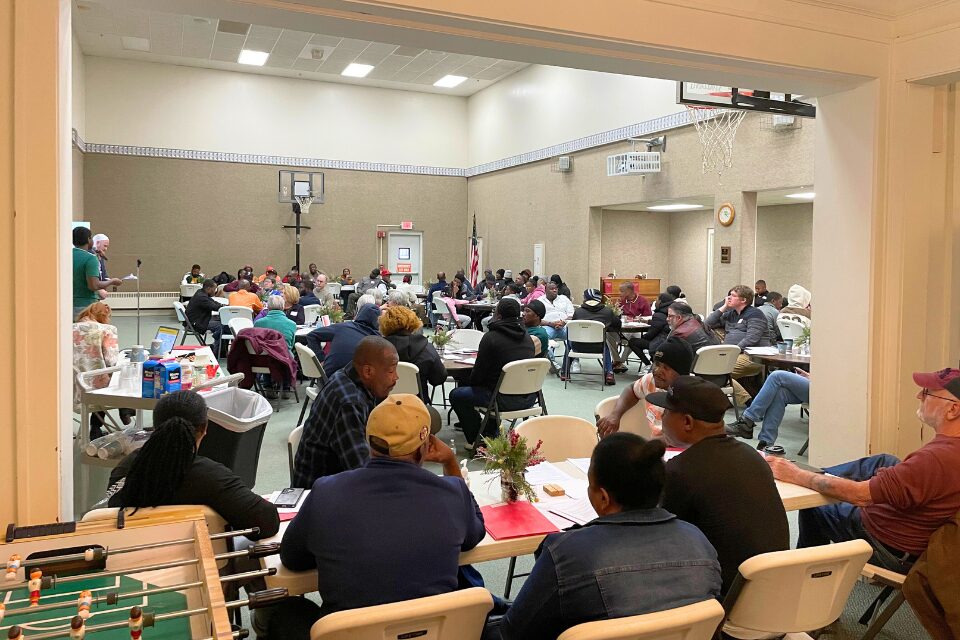
People began to flow into the church. Sitting at the welcome desk, I was overwhelmed with joy and care. We sent people out to get more cookies, and additional chairs and tables were set up. When it was all said and done, we had 90+ in attendance. We had pastors and business leaders, promising college scholars, children, truck drivers, and meat packers — all hearing instruction that may just save their lives.
Our congregation witnessed many things at the presentation. Parents who worry about their children’s safety, people weary from chronic fear, and leaders doing their best to speak truth to power in difficult times. Many gut-wrenching questions were asked. One that stands out in my memory is hearing a neighbor ask, “Can asylum be canceled? Just how far can this go?”
There is real fear about what is being allowed these days and what checks and balances are in place. Power wielded with impunity builds a world that mirrors the thoughts and attitudes of the powerful. Hear it from this preacher: This world is far from the one God has dreamed.
But empathy is part of God’s plan for us, not fear. We read this lesson in Scripture: “The foreigner residing among you must be treated as your native-born. Love them as yourself, for you were foreigners in Egypt. I am the Lord your God” (Leviticus 19:34). Remembering our history so we can improve the lives of others is a direct command from God. Christ echoes and expands on this when he says the two greatest commandments are to love God and to love our neighbor. “The Law and the Prophets hang on these two commandments” (Matthew 22:37-40).
As we celebrate and continue our work for justice, let us pause to ask: “How far can this go? How far will we allow fear to take us?” My answer is only as far as our collective memory will allow us to go. We are changed by the stories, tales, and warnings we grew up with, and by the power of community that remembers and puts them into action.
Perhaps this is one of the reasons Christ calls us to remember at the Last Supper. To appreciate and know the road, the wrong paths, and the good ones. For when we remember, we take away the power that feeds fear, we turn to lean on each other and God in our struggle, and we center ourselves on the lessons of the past to live differently in the present. In these days, may our God, our work, and our memory give us the direction we seek in our quest for justice. And may we be surprised by it all, as only God can do.
>>Does your congregation need guidance on how to support your immigrant neighbors during these challenging times? The Michigan Conference’s new Courageous Communities Project offers resources and consultations for Michigan United Methodist congregations seeking to do more. Learn more about the resources available to you.
The publication of this article was made possible thanks to generous financial gifts from local United Methodist churches in Michigan through Ministry Shares. Thank you! Learn about the impact of Ministry Shares on mission and ministry in Michigan and around the world.
Last Updated on February 2, 2026