
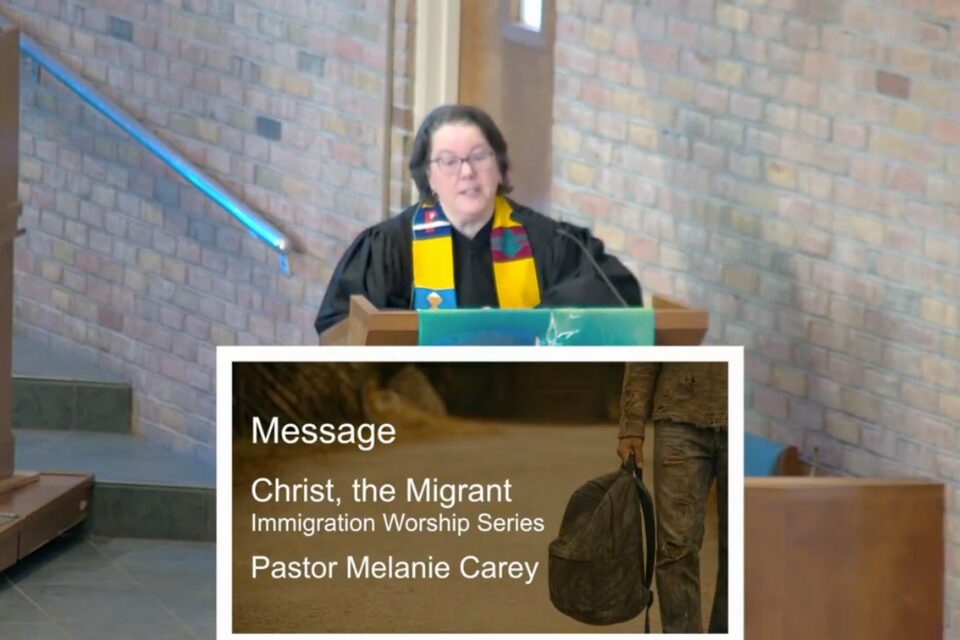
When University UMC in East Lansing learned that a program supporting first-generation university students whose parents are migrant workers had lost federal funding, they committed to raising money to help bridge the gap for students in need.
JAMES DEATON
Content Editor
We witness it roll across our news feed. The U.S. immigration system is complicated. It’s broken. And it’s changing almost daily. To fuel the fires of confusion, fear-based rhetoric is driving misinformation about our migrant neighbors, leading to violent and unjust consequences.
Wanting to be proactive, the justice-minded congregation of University United Methodist Church in East Lansing recently went through a sermon series and related studies focused on a biblical perspective on immigration and our faithful response to the ongoing crisis.
For this congregation, the topic is a matter of faith, as illustrated in the Scriptures and reinforced by our United Methodist Social Principles, recently updated at the 2020 / 2024 General Conference, and other statements on the treatment of immigrants and refugees.
So this group of concerned United Methodists sought God’s guidance through prayer on how to provide concrete support. “Who is our immigrant neighbor, and what can we do?” they asked.
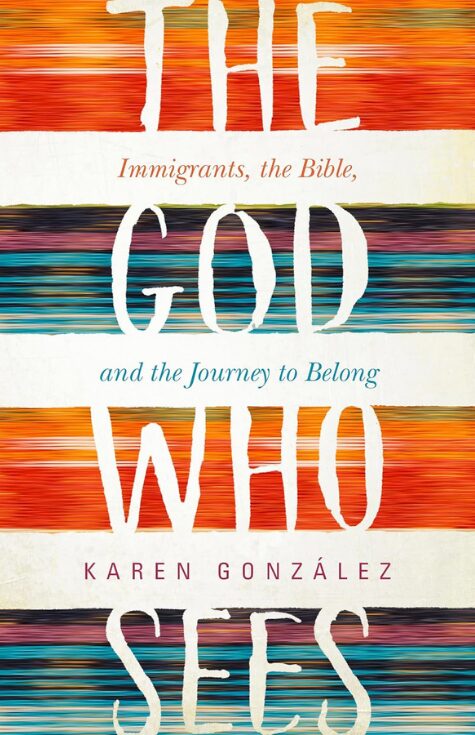
Through a Holy Spirit-led turn of events, the congregation learned about federal funding cuts affecting a highly successful assistance program at Michigan State University (MSU) that financially supports students from migrant families. They also discovered that the offices for Migrant Student Services (recently renamed Farmworker Student Services), the university department that manages this program, were located in a building across the street from the church.
Even though the congregation couldn’t have asked for a more perfect answer to prayer, practically on their doorstep, it was a surprise to those unaware of the program.
Rev. Melanie Carey, pastor of University UMC, explained, “You just don’t know who is in your neighborhood. We began studying Karen González’s book The God Who Sees: Immigrants, the Bible, and the Journey to Belong, and here we had to have our eyes opened. We didn’t know about this program, plus the fact that it’s so close to us, and it’s been around for 25 years.”
While leading a group of 25+ church members through The God Who Sees, Pastor Melanie had read an article in the student-run newspaper, The State News, about the U.S. Department of Education failing to renew funding for Michigan State University’s College Assistance Migrant Program (CAMP) initiative for the 2025 fiscal year.
Pastor Melanie brought this article to the study group. They discussed it and discerned that they were being called to help MSU raise the necessary funds to continue the program. Initially, they hope to raise $25,000 to help bridge the funding gap for this academic year. A task force was formed, and members of University UMC met with CAMP directors to begin conversations that, hopefully, will turn into a long-term relationship and community building.
Historically, federal funding covered the first year of studies for undergraduates from migrant families who needed financial support. MSU typically enrolls between 50-60 students through CAMP. However, anticipating funding challenges under the current presidential administration, the university brought in only 30 this academic year.
CAMP is the only program of its kind in Michigan and the Midwest, and it has a tremendous track record, with a 98% first-year completion rate. U.S. citizens or permanent residents from migrant families are eligible. Many of the students in the program grew up in Michigan and across the country. Since its inception in 2000, over 2,000 students have been served.
Getting through the first year of college is critical for any young adult to ensure success. Still, it’s especially challenging for first-generation students from migrant families, who often face language barriers or other hardships as they integrate into a new culture. Statistics show that a typical farmworker family of five earns approximately $12,000 per year, placing them well below the poverty line. Tuition, even at a state university, can put a significant financial strain on these families, and students often feel the need to work multiple jobs to make ends meet.
Migrant farmworkers in Michigan feed our families, whether they’re working on dairy farms or in blueberry fields, and CAMP strengthens farmworker families and communities.
Susan Holloway, a lay member of University UMC who is on the task force putting together plans for how the congregation will raise the $25,000 for CAMP, spoke about how this new initiative to aid these young adults seeking an education has a domino effect.
“In our Social Principles,” Susan explained, “it talks about providing concrete support to migrants and refugees, including help with education. And what CAMP really does is provide educational opportunities for students who wouldn’t have them otherwise. And that, in turn, allows them to be supportive of their families, too.”
Pastor Melanie outlined the broader impact this program has on the farmworker communities: “CAMP provides connections as other family members need medical assistance or consider getting their GED. Migrant families are constantly moving, and they don’t necessarily have access to all the medical care that they need. And many of them haven’t finished their high school degrees either. So, you’re really helping entire communities thrive.”
The task force in charge of University UMC’s plan to assist CAMP plans to raise funds toward the $25,000 goal through individual donations, involvement from ecumenical and interfaith partners, and a benefit concert sometime early next year. They would also like to invite other United Methodist congregations across the Michigan Conference to partner with them to increase the impact of their efforts. Contact Pastor Melanie at [email protected] if your congregation would like to learn more.
“We talked about what we are good at,” said Susan. “We know we’re good at music, and we’re good at hospitality. So we came up with this idea of doing a benefit concert. We will be working with our music team and trying to get local musicians, someone who would be a draw.”
University UMC’s new project to help young adults of migrant families just happened to start around the same time as the Michigan Conference’s new Courageous Communities Project. This UMCOR grant-funded project aims to resource church leaders who desire to support their immigrant neighbors with an online toolbox, consultations, and trainings. Learn more.
It is a holy coincidence, as United Methodist churches throughout the Michigan Conference are sensing a need to do something related to immigration and stand with our migrant neighbors. They are using a variety of immigration justice resources to educate themselves on the topic. Review the list of resources recommended by the Courageous Communities Project. They are then learning about their neighbors and discerning what they can do in this moment.
Susan shares how glad she is to be part of a congregation like University UMC, which has a long history of social activism and commitment to justice. It has shaped her faith for a good part of two decades. “I’m grateful to be part of a supportive, well-informed, inclusive, and action-oriented faith community,” she noted, “that has the courage to act on its mission. It’s aligned with my beliefs and priorities, and with how I want to live my life.”
University UMC’s project is a story of a United Methodist church that is better in touch with their community and curious about who their neighbors are and how they can reach out to them with the love of God. It’s a story of a pastor holding a community newspaper in one hand and the Bible in the other. And it’s a story of a congregation whose eyes and minds were opened, and who turned that into engagement.
“I think it’s powerful when you pray,” concluded Pastor Melanie, “and ask God to show you what God wants you to do, and really ask that. But you also must be prepared. God is God, and we may not be prepared for the answer we receive. And so, it opens our eyes to things we never thought about before, because that’s how God works.”
Last Updated on December 16, 2025