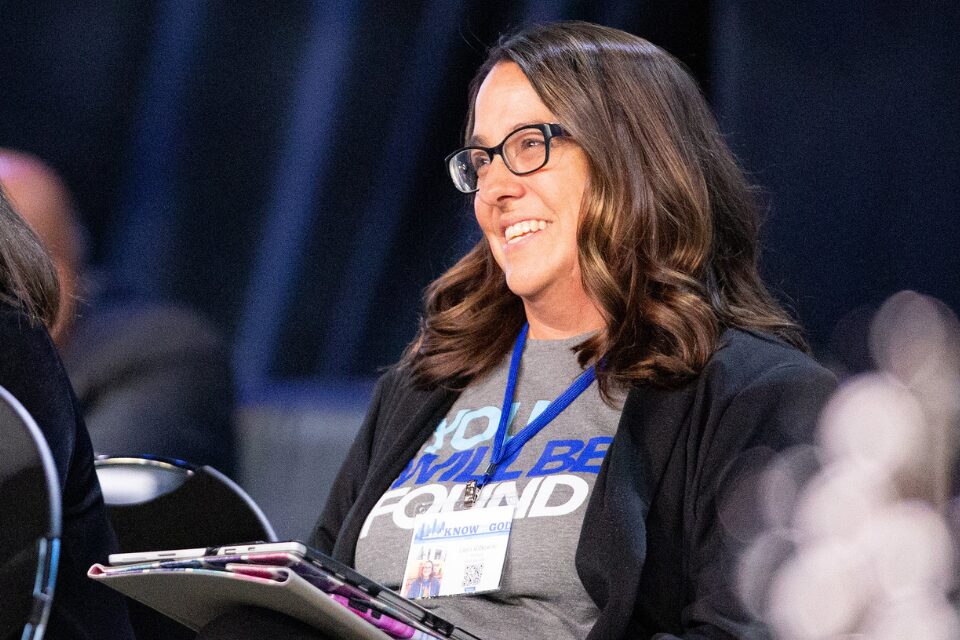
Laura Witkowski steps into a new role as Director of Connectional Ministries, bringing a leadership style that emphasizes authenticity and opens doors for creativity to blossom.
JAMES DEATON
Content Editor
“I would never ask someone to do something I wouldn’t do myself,” said Laura Witkowski, the Michigan Conference’s new Director of Connectional Ministries. She cited this servant leadership principle as one that has guided her vocational life serving The United Methodist Church, which she’s called her spiritual home since birth.
At her core, Laura believes we are called as United Methodists to live out our faith authentically. We must always be true to ourselves and our God-given gifts, and practice what we preach. In essence, it’s about modeling a vulnerability that is Christlike and collaborative.
Her experience illustrates these beliefs. Whether it has been presenting legislation before delegates at General Conference, preaching God’s word to the largest gathering of Michigan United Methodists in recent memory, or serving as conference secretary and supporting our bishop during plenary sessions at our annual meeting, Laura has embraced her calling and lived it wholeheartedly, even when that meant stepping outside her comfort zone.
Laura comes to this new position after serving as the Michigan Conference’s Lead Associate Director for Connectional Ministries. She was a member of the Connectional Ministries Team, along with Lisa Batten, Naomi García, and Rev. Kathy Pittenger, until staffing changes took effect at the beginning of 2026.
Laura sat down with MIconnect to discuss her role as Director of Connectional Ministries, what has shaped her philosophy of leadership in the church and brought her to where she is today, and some early thoughts on the new Connectional Ministries Staff structure and the future.
****
Give an overview of your life of faith, in case readers do not know your background. What has shaped your understanding of what it means to be a United Methodist Christian?
My faith journey began “in the cradle” as a fourth-generation Methodist. My childhood was very much involved with church and God. We never questioned going to church. It was just what we did. My youth group leaders at Grand Rapids: Aldersgate UMC encouraged me to ask the questions I needed to figure out how to reconcile my head stuff with my heart stuff. I remember taking confirmation seriously and consciously deciding to follow Jesus Christ.
I am a product of United Methodist camping. I went to Christian Athletic Camp (CAC), and there is no way my faith would be what it is without CAC. CAC is an independent United Methodist sports and faith camp, originally founded as a collaboration between the West Michigan and Indiana Annual Conferences. Every year at camp, we would dive deep into Scripture. My faith was deepened by understanding how to apply Scripture to daily life. That yearly gathering in junior high and high school continues to influence me today.
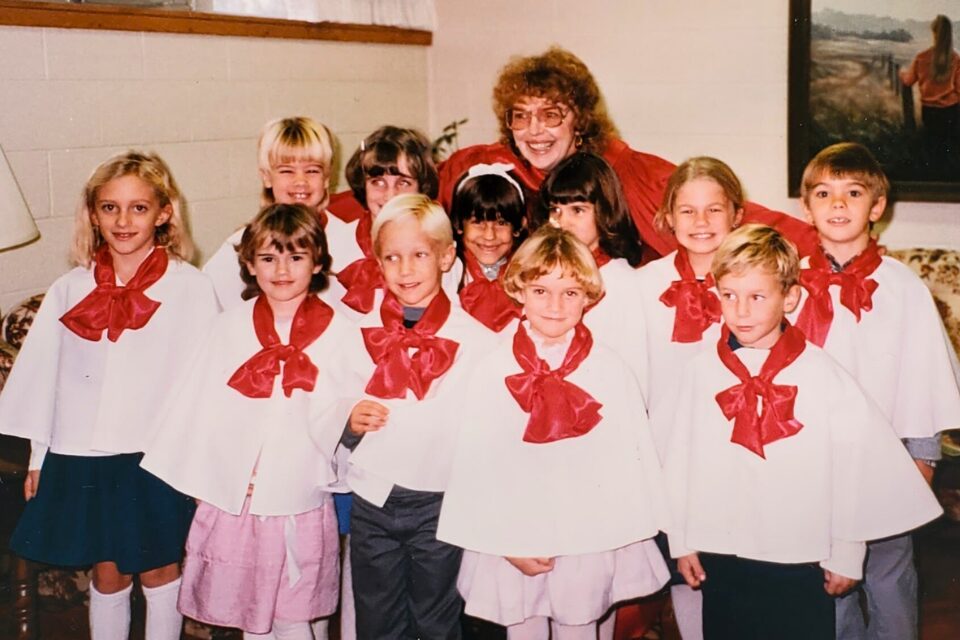
With a solid faith foundation, I went to college. At the time, the newly formed Wednesday night chapel at Albion College (led by Carl Gladstone) kept me connected to my faith in the strange world of university life. I struggled at Albion in other ways and ultimately transferred to the University of Memphis in Tennessee.
A few years after college, I moved back to Michigan under heartbreaking circumstances. I still felt God, and I could even feel the prayers of others, but I wasn’t listening anymore. Quite frankly, God and I were on the outs. As I got to the other side of my grief, we started our conversations again. I started listening and talking, and haven’t stopped since.
Today, I actively seek God’s presence, recognizing the movement of the Holy Spirit and the love of Jesus in my daily life. I feel fortunate to work in ministry as a layperson, as it continues to offer me ways to ask questions — just as I did as a youth. I have no doubt that my calling to lay ministry and the wider connection is a direct result of my faith journey.
Looking over your time serving the church, name a few key moments or experiences that rise to the top as especially formative, especially as you think about your new role?
One of the questions I’ve been asked recently, and one I’ve had to wrestle with, is why I stay in ministry. Why do I stay in the church? It’s hard for a variety of reasons. But I have a particular set of skills. Part of that is the work I’ve done in the church — I’ve had an unusual career path. Part of that is my own God-given gifts and skills, which I know are unique and well suited to the church and to connectional ministry. There are other careers I would be good at, but I don’t think they would be nearly as fulfilling or offer me the unique experiences I’ve had in The United Methodist Church. And I just can’t imagine being anywhere else.
Looking back on the time I’ve served the church, three formative experiences come to mind, experiences that have opened doors for me.
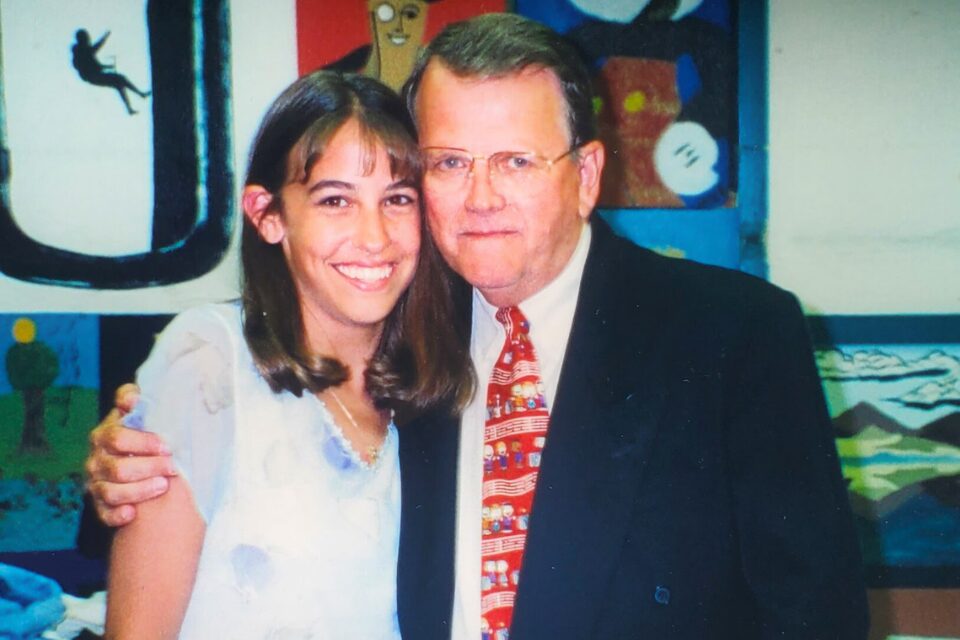
I served as the West Michigan Conference Secretary beginning at age 26, a role that significantly shaped my leadership development and understanding of The United Methodist Church’s structure and polity. I served in that role from 2006 to 2009.
Before being appointed by Bishop Jonathan Keaton, I had spent several years assisting Rev. Bill Johnson, the conference secretary at the time. Having been my pastor since childhood, Bill had a profound impact on my spiritual life throughout my journey as a youth and young adult. I eventually went on to assist the subsequent conference secretary as well. Because of that background experience, it was a natural progression. I wasn’t working in the church at the time; I had a corporate job, so it was a challenge to balance life and conference responsibilities.
As a 26-year-old, I had a significant voice in the workings of that annual event. That really helped me understand how the event worked, and as a layperson, a young person, and a woman, that was a big deal. Looking back, I can see how that experience helped me develop confidence and public speaking skills. Plus, for the bishop to invite me to serve as the conference secretary was really meaningful.
I have no idea whether I would’ve gone down the same career path if that hadn’t happened, because at the same time, you also acquire so much knowledge as a conference secretary about The United Methodist Church, the Book of Discipline, and all of these things that are so weird to the outside world and that most lay people don’t get to experience. And ever since I left being conference secretary, I’ve said, “I just have this weird knowledge in my head. What am I supposed to do with this for the rest of my life?” Not many people have that. And so learning the ins and outs of The United Methodist Church and how it operates was profound.
Another pivotal moment in my ministry came in 2019 when I preached at Annual Conference before approximately 1,200 people, an experience that also increased my confidence and allowed me to model lay preaching for others in the church.
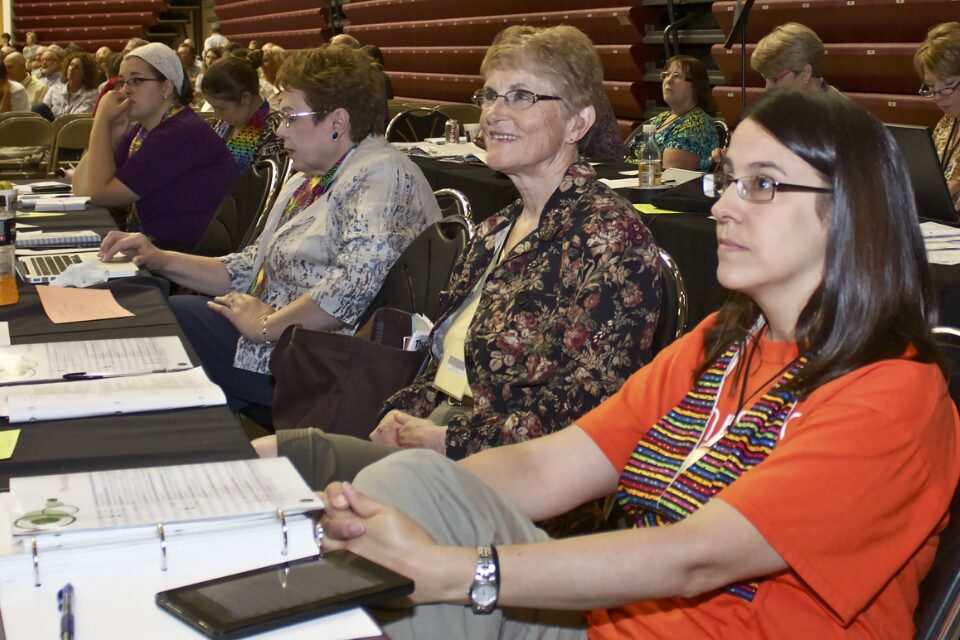
I had preached a couple of times before, but never to that large a crowd. That’s an intense moment. At first, when Bishop Bard asked me to do that, I thought, “That’s ridiculous. No way.” But this was at the beginning of my tenure as the Associate Director for Lay Leadership Development, a position I held from 2018 to 2023, and so I felt I needed to model for lay people: “You can do this. If I can do this as a layperson at Annual Conference with 800 clergy in the room, you can do this in your local church.” So that was a really significant experience for me because it was a way to model for others what that looks like, even when it’s hard and even when it’s nerve-racking.
The third experience is serving as a member of the West Michigan delegation to the 2016 and 2019 General Conferences, and then as co-chair of the Michigan Conference’s delegation to the 2020 / 2024 General Conference.
One memory of note: Two years ago, I stood at the podium at General Conference and spoke against legislation I felt didn’t truly represent who we are as United Methodists. It wasn’t easy, especially with Bishop Bard being on the committee that wrote it, but I’ve learned that you have to speak up when something is important to you — even when you’re in the minority. It’s an example of the philosophy I’ve always carried with me: I would never ask someone to do something I wouldn’t do.
Describe the role of the Director of Connectional Ministries (DCM), and what are some of your responsibilities as they relate to building relationships with local churches?
As we know, the conference’s role is to equip and connect our churches. We equip and connect our churches by resourcing and supporting our clergy, pastors, and lay leadership.
The role of the DCM is to be the “connective tissue” and to coordinate and support the implementation of all that equipping and connecting for our clergy, pastors, and lay leadership in our local churches. The DCM looks out and continues to point everyone to the conference’s vision.
The DCM coordinates the work of the structure of the conference among our staff, boards, agencies, committees, and task forces, ensuring alignment with the vision. If the DCM is doing their job well, they are building and nurturing many teams (staff, boards, agencies, etc.), keeping them all connected to each other and the vision of the conference, ultimately supporting and strengthening our local churches.

Ideally, the DCM stays focused on the vision, lays out parameters, offers resources, and gives others space to be creative with their ideas, always ensuring that what the conference offers equips and connects our local churches.
Personally, I feel that being a layperson in ministry has given me a unique perspective that I bring to my work as DCM. In all areas, our church has laundry lists of tasks and expectations. Over the years, I’ve tried to empower folks to focus on a few things and do them well. Lead in the ways you are gifted, and then sprinkle in things that challenge you and help you grow in life and faith. As a DCM, I can be here to remind our lay people that they don’t have to carry the weight of church leadership alone; they have a connectional system behind them.
I spent a lot of time volunteering in ministry while having a full-time corporate job and know what that tension feels like. My experience allows me to be empathetic and grateful for any layperson who steps into church leadership. I never take that for granted.
One more thing, for context: we haven’t had a dedicated DCM since the 2023 staffing restructuring, which combined the role with the Clergy Assistant to the Bishop. Some annual conferences have such a position, but it didn’t work for us. This is partly because, as we have found over time, the Clergy Assistant needs to focus more on matters related to the episcopal office, given that Bishop Bard now relates to two conferences. There’s only a finite amount of time in a day for one person. Also, as a staff, we were unable to pay attention to certain matters, and silos across different areas prevented communication from flowing as it should.
What is your sense of the new Connectional Ministries Staff structure, and what would you like local churches to know about the revised structure and the staff roles?
First, I want to say that Kathy and Lisa are rockstars! They have done incredible work and will continue to do so. We have shifted from a team-based approach to the work back to a more specialist approach. Input from the bishop’s listening sessions in 2024 / 2025, personal conversations, and feedback loops has been incorporated into their work.
Rev. Kathy Pittenger (email her), Associate Director of Faith Formation and Leadership Development, will focus on resourcing congregations in Lifelong Faith Formation and leadership development opportunities. Both of those areas encompass a whole lot of offerings. The conference will continue to see trainings, workshops, website resources, and the deployment of teams (conference leaders) in ministry areas. She will continue to offer support on Safe Gatherings and protection policies. We have also found an increasing need for support in human resource-related policies in local churches, which are included in her portfolio.
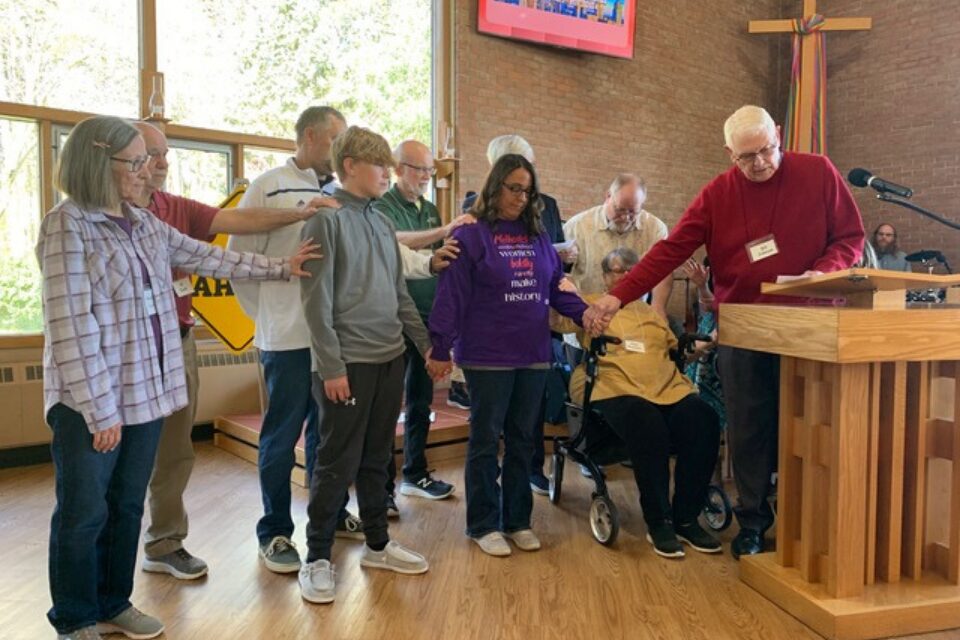
Lisa Batten (email her), Associate Director of Intercultural Resourcing, Leadership and Fund Development, will focus on resourcing congregations in anti-bias/anti-racism efforts and strengthening their intercultural competency. She works closely with our conference ABAR Working Group and other leaders in developing these efforts. She will continue to resource and offer training in fund development and financial sustainability for congregations and leaders. She will also continue to offer leadership development opportunities and resources.
An exciting shift is that an intentional relationship will be built between the Connectional Ministries Staff and the Appointive Cabinet. With fewer people, there was recognition of the need to be more closely connected, especially as it relates to the specific and individual needs of congregations. This intentionality will make the conference staff more accessible to one another and enable them to work together to deploy resources to our local churches.
The work of the Connectional Ministries Staff, which now includes Yolanda Thomas as Executive Assistant, remains crucial to the life of the Michigan Conference. As DCM, I’m there to support them and ensure that the work focuses on our vision and our local churches.
What are the challenges facing ministry in the Michigan Conference right now? What is preventing us from living into our vision as a conference?
From my perspective, we’ve gone from being proactive to reactive, and attention is given to the crisis of the moment. My hope for our conference is that we can be proactive and future-focused in our mission, and, of course, be centered on the gospel.
Staying out of our echo chambers will be important moving forward. We need to continue inviting everyone to the table and ensure that all voices are included and heard. When the Michigan Conference can be a reflection of God’s image, we can do great things.
We have some work to do on our vision and our identity as United Methodists in Michigan. I’m excited about that and the possibilities before us.
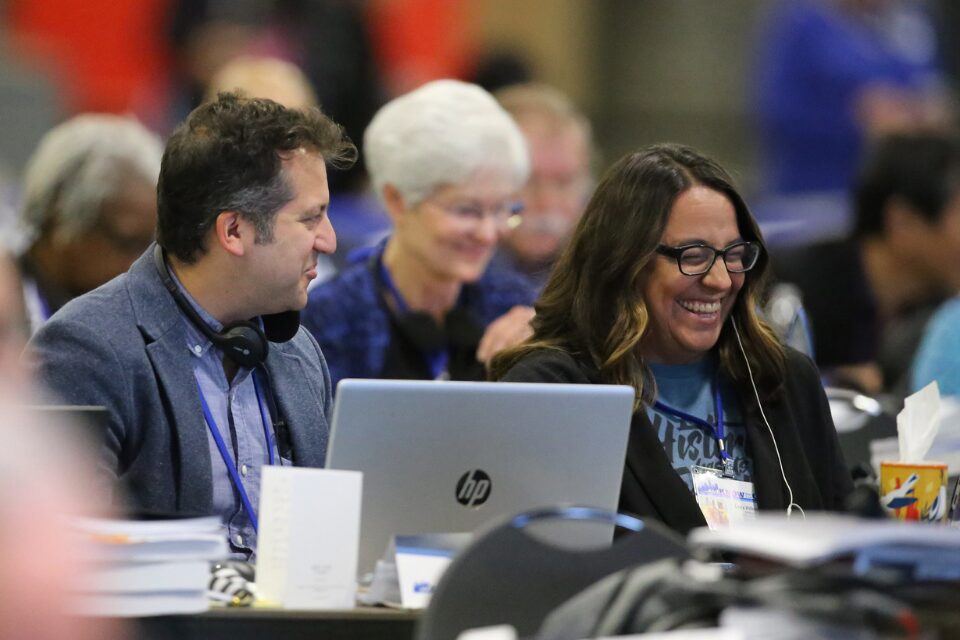
My hope for the Michigan Conference is that we become future-focused as we equip and connect our local churches for ministry, “to be faithful to our United Methodist identity in a changing world” (Book of Discipline, ¶ 608).
The ministry of our Director of Connectional Ministries is made possible thanks to generous financial gifts from local United Methodist churches in Michigan through Ministry Shares. Thank you! Learn about the impact of Ministry Shares on mission and ministry in Michigan and around the world.
Last Updated on February 25, 2026