
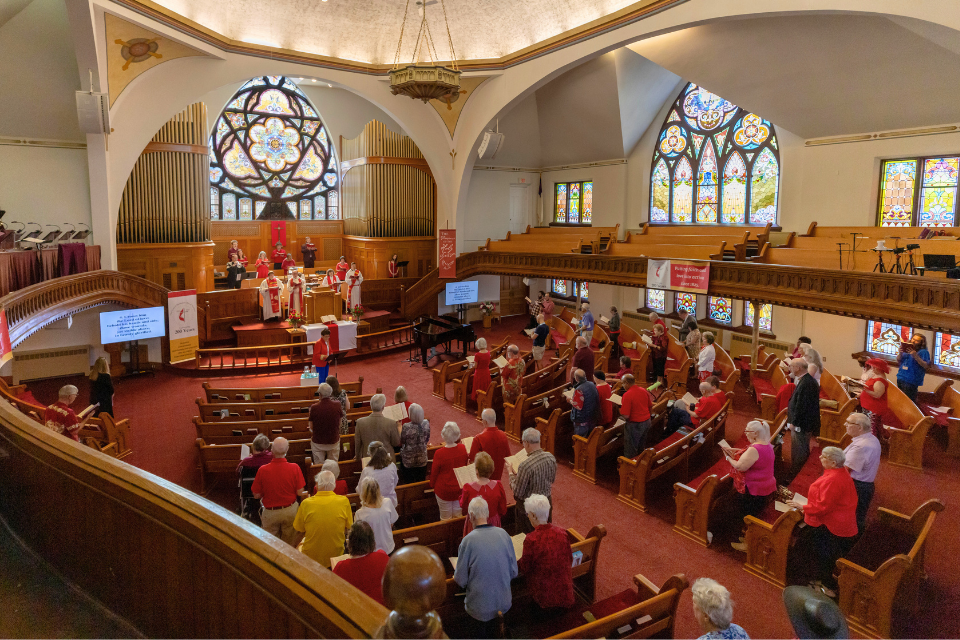
Ypsilanti: First UMC embraces God’s ongoing work as it celebrates its bicentennial and looks to the future as it refocuses its commitment to the community.
MARTY HEATOR
Ypsilanti: First UMC
Although Bishop David A. Bard was preaching in a nineteenth-century sanctuary, he was addressing a twenty-first-century problem, quoting a surgeon general’s report on our nation’s “epidemic of loneliness and isolation.”
“Lacking social connection is as dangerous as smoking 15 cigarettes a day,” he said, referencing the 2023 report. “Among the remedies suggested are strengthening the social infrastructure and building a culture of connection, including ‘cultivating values of kindness, respect, service, and commitment to one another.’ Friends, that’s our work as the church.”

Bishop Bard was at the First United Methodist Church of Ypsilanti for its bicentennial worship celebration on June 22, 2025. After recounting the church’s history and accomplishments (“Countless lives have been touched by this church”), the bishop urged congregants to look forward with a clear sense of direction.
Acknowledging that our world’s needs are ever-changing, Bishop Bard reminded congregants that our responses to these challenges are always rooted in our Methodist heritage. “Healing, freeing, welcoming, growing in our faith, building beloved community — friends, this is our direction for the future.”
The First Five: A Congregation Begins
The city of Ypsilanti started as a collection of riverside huts and cabins known as Woodruff’s Grove, located on the homelands of native and Indigenous peoples, including the Wyandot nation and the Anishinaabe nations of the Ojibwe, Odawa, and Potawatomi.
It was to this settlement, following a blazed trail through forest and swamp, that the Methodist circuit rider Rev. Elias Pattee came in May 1825, to share the gospel in a crude cabin. The five pioneers in attendance were the nucleus from which the present church developed.
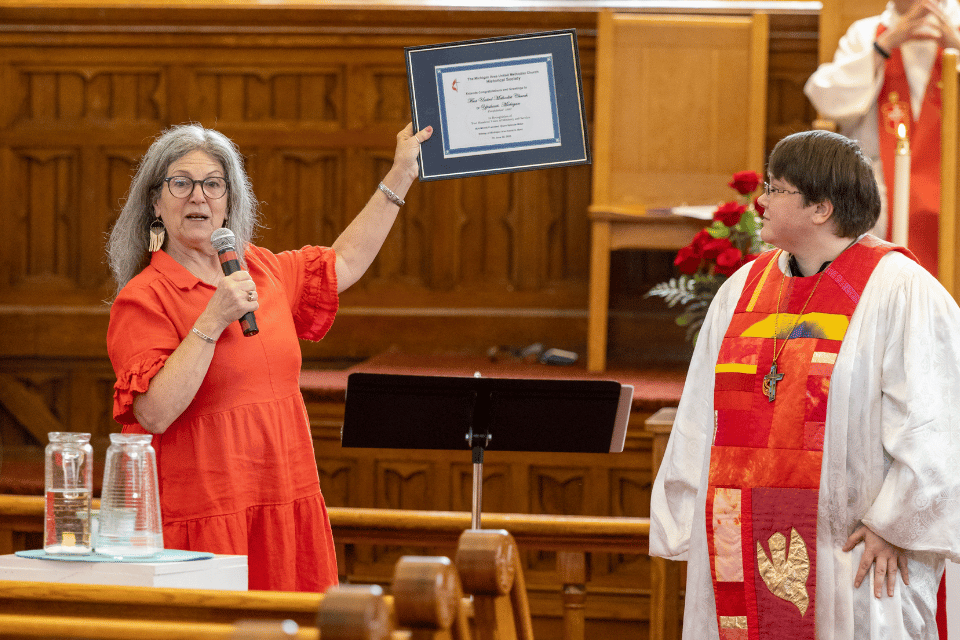
Four church buildings and 200 years later, Ypsilanti: First UMC conducts its ministries from a downtown, tall-steeple structure built in 1892 and expanded in 1957. The brick, stained glass, woodwork, and pipe organ are impressive, but these things tell only part of the story.
“Buildings are a gift we are given stewardship over to further develop God’s beloved family,” said Ypsilanti: First’s pastor, Rev. Cori Clevenger. “The legacy of the church is found in its people and how we love others into relationship with God.”
Ministry through the Years: Deeds and Words that Heel and Free
As she researched church history for the bicentennial celebration, Ypsilanti: First’s Church Archivist and Historian Karen Jania was struck by the generosity and work ethic that has characterized her congregation from its earliest days to the present.
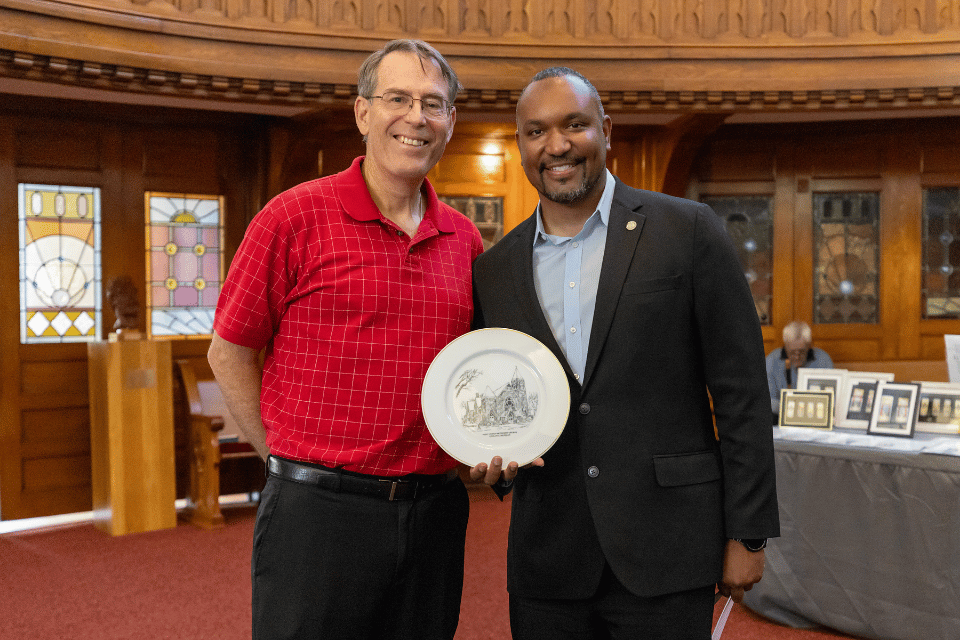
As examples, she offered Dr. Thomas Towne, who donated the land and provided a construction loan for the 1843 church building that was replaced in 1892 by the current structure; the Shiable family, who donated the pipe organ that is as “magnificent” today as it was when installed in 1928; the many congregants who have left generous sums of money to the church upon their deaths; and countless individuals who gifted their time and talents to run committees, meet the church’s day-to-day needs, produce programs and events, and carry out ministry.
Called to Ministry: Yesterday and Today
Jania’s research shows that contemporary ministries are rooted in history. The Ladies Sewing Society was organized in 1839 to “clothe the poor children and set them into Sabbath School” and provide “any other benevolence” that came their way. Today, the Ypsilanti First Stitchers create and donate hats, gloves, and mittens. This same ministry collects plastic shopping bags and uses crochet techniques to bind them into sleeping mats for those who are unhoused.
In 1962, the church organized a Commission on Social Concerns to address racism, poverty, and peace, and to create a working rapport with Black churches. In the same decade, the church created affordable homes by purchasing and renovating rundown houses. In the decades to follow, the church built homes with Habitat for Humanity; supported school children in Zimbabwe and Haiti; and welcomed immigrants and non-native English speakers into the church building, offering hospitality, English as a Second Language (ESL) classes, and justice-oriented services.
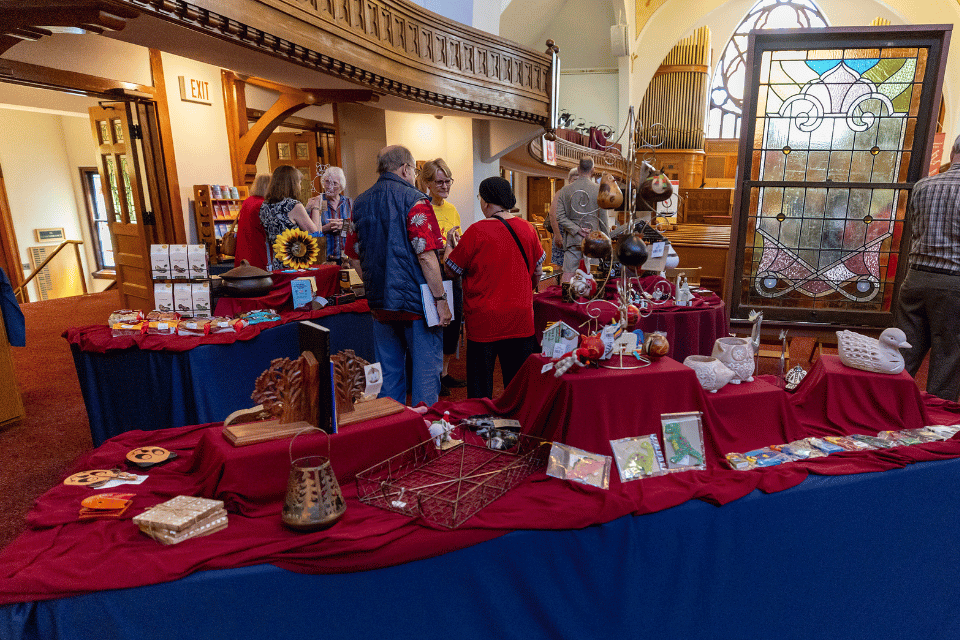
Today’s congregants support families in developing countries through sales in the Small World Shop. They host, feed, and support homeless families at Ann Arbor’s Alpha House, and feed the hungry through annual CROP Hunger Walks and seed drives.
The United Women in Faith (formerly United Methodist Women) chapter was formed in 1972 to support and empower women, children, and youth, and to address the pressing issues of the day. Today’s UWF is as strong as ever, raising funds for worthy causes, organizing work sessions to help those in need, and educating others on today’s critical social issues.
Ypsilanti: First became a Reconciling Ministries affiliate in the early 2000s, affirming its commitment to justice for LGBTQ+ persons. In 2024, congregants traveled to Lansing for the Michigan Conference’s annual Advocacy Day to join other faith communities in lobbying legislators for increased funding to support mental health resources for Michiganders.
Going Forward: Community Matters
Mark McClure leads the team behind Ypsilanti: First’s year-long bicentennial celebration. “We’ve created events that appeal to a wide range of audiences, and we’ve found ways to highlight our beautiful and historic sanctuary,” McClure said. “Most importantly, we’ve invited the wider Ypsilanti community to join us in this celebration.”
A “Community Day” event on August 23 will feature food trucks, music, face painting, and games for kids. “We’ll also distribute free backpacks loaded with school supplies,” said McClure. “And we’ll have tables representing local nonprofit organizations that, like us, are here to meet the needs of our neighbors.”
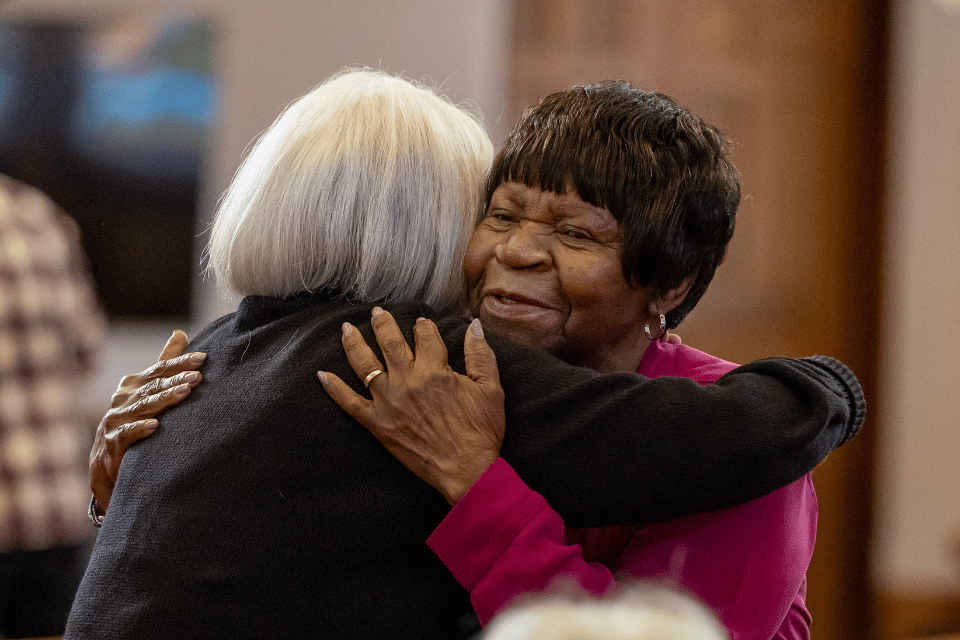
Three years into her appointment to the congregation, Rev. Clevenger reflected on the church’s past and its future. “What has stood out to me about the church’s heritage is its devotion to the marginalized, the downtrodden, and those in need of social justice,” she said.
“Today, this church is uniquely positioned to enter God’s ongoing work by engaging the people of Ypsilanti where they are, especially those who are hurting and in need of hope. We can do this by building relationships, providing encouragement, and inviting them into the sacred spaces we create together.”
Editor’s note: This article was written by Ypsilanti: First UMC’s congregant Marty Heator, drawing on the research and writing of Church Archivist and Historian Karen Jania.
Last Updated on August 12, 2025