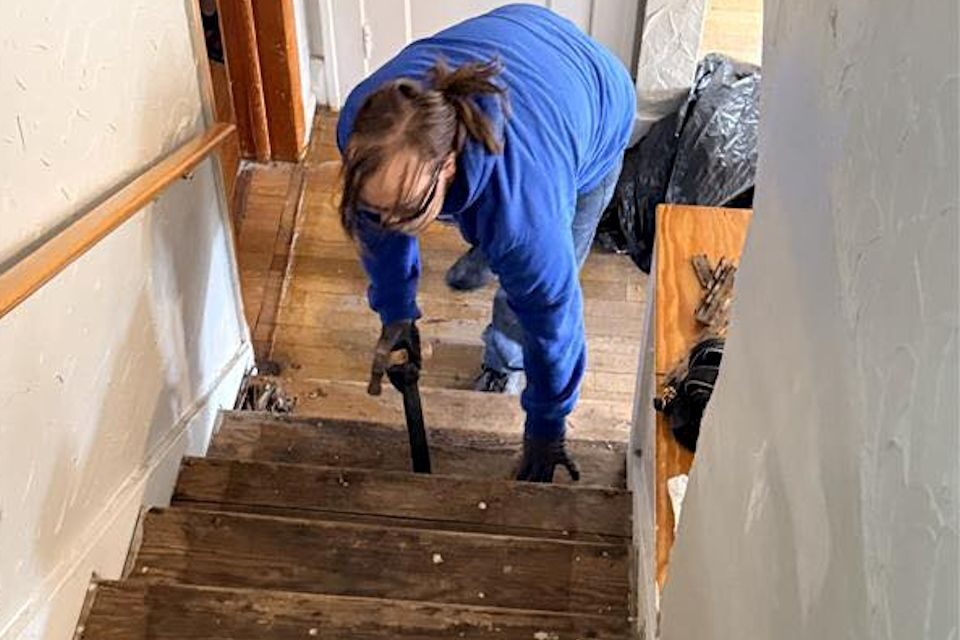
Four years after its launch as After The Storm, disaster recovery staff continue to walk beside those battered by storms with the help of UMCOR, FEMA, and the Michigan Conference.
KAY DEMOSS
Michigan Conference Communications
Thousand-year rainstorms, bursting dams, and wicked winds have slammed the state of Michigan over the past 13 years. Through it all, The United Methodist Church has played a key role in case management and long-term recovery of storm survivors from the Keweenaw to Detroit and many points in between.
Michigan’s annual conferences led these disaster response efforts for years, partnering with the United Methodist Committee on Relief (UMCOR) and others. These programs met needs in northwest Detroit in 2014 and 2019, Midland County in 2017, Houghton and Hancock in 2018, and the Great Lakes Bay Region in 2020.
This work was done in collaboration with community leaders, nonprofit organizations, and municipal, county, state, and FEMA (Federal Emergency Management Agency) assistance. Grants from UMCOR, community foundations, and gifts to Michigan Conference Disaster Response funded efforts to rebuild lives.
Reorganized in 2021
In 2021, disaster ministry leaders and conference staff concluded it was time to create a nonprofit to continue this vital ministry. At that juncture, Rev. Paul Perez, in his role as the Michigan Conference’s Director of Connectional Ministries, made this statement: “I believe one of the primary tasks of the Annual Conference is to incubate ministries that no one local church could do on their own and that meet unmet missional needs in local communities. We have now done that with disaster case management.”

Three reasons were cited for this change:
-
- The work of disaster case management had grown “beyond the capacity of the conference to manage and administer.”
- Potential was building toward “receiving sustainable funding from non-United Methodist sources.”
- Less confusion for community leaders by presenting “a clear outward-facing organizational identity for the work.”
Perez continued, “The ministry has matured to a point where it is ready to ‘leave the nest’ and continue to flourish and thrive as its own organization.” That organization, named After The Storm, launched in 2022.
While independent from the Michigan Conference, After The Storm maintains affiliation with The United Methodist Church. Their executive director, Nancy Money, states, “We are grateful to the Michigan Conference and the individuals we work with directly. After The Storm couldn’t do this work without them and UMCOR.”
Ties to the Michigan Conference include United Methodist representation on After The Storm’s board of directors, receipt of special designated appeals for funding, and a close working relationship with the conference’s disaster response coordinators, Rev. Kayla Roosa and Rev. Bob Miller. Those two pastors are the liaisons to Bishop David Bard when applying for grants with UMCOR. Early Response Team (ERT) training is also coordinated by the conference, with help from Jody Pratt. After The Storm is an EngageMI ministry project.
Moving Forward
Over the past four years, After The Storm has become involved with case management for two federally declared disasters in Michigan. They managed the recovery of the Detroit floods in 2021 that stretched on for months. Several storms and multiple tornadoes then hit nine counties across Michigan in August of 2023. After The Storm has been involved in case management from Grand Rapids (Kent) to Detroit (Wayne) ever since.
“From the beginning, one of the strongest bonds Ms. Hill and I shared was our faith in God. That spiritual connection became the center of a relationship built on trust, patience, and the belief that restoration is possible. . . . Upgrades [to her home] went far beyond physical improvements. We were about restoring dignity, independence, and peace of mind. Today, Ms. Hill’s home is a safer, warmer place, and her story stands as a powerful testament to how compassion, connection, and community support can truly change lives.” ~ Chasidy Banks, disaster case manager
In addition, After The Storm organized volunteer recovery efforts, access to resources, and long-term case management for two non-federally declared storms. In May of 2022, the deadliest EF3 tornado in Michigan’s history struck Gaylord. After The Storm was there. They were also active in Kalamazoo in 2024 after tornadoes brought destruction and debris to the outskirts of the city.
The state’s Emergency Management and Homeland Security Division (EMHSD) applies to FEMA for a disaster case management grant when the president makes a federal declaration. After The Storm has been the provider of all three of these grants that have been awarded to the state.
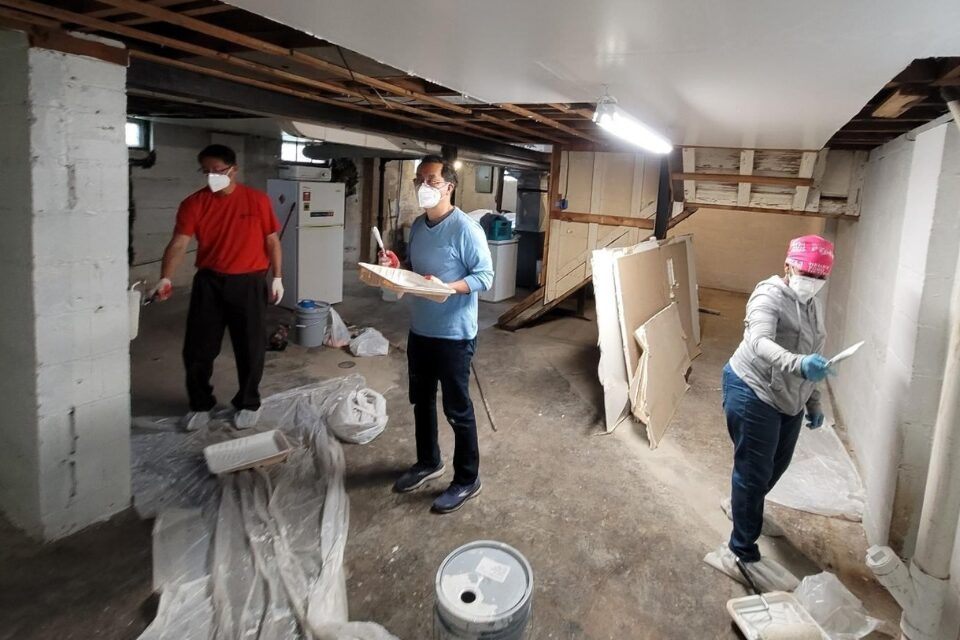
After The Storm’s primary focus is case management. Their staff of 33 works directly with individuals and families affected by disaster. Money remarks, “We help them achieve a new normal.” That is not limited to repairing property. “Our case managers offer spiritual and emotional support and connection with community resources in addition to home rebuilds or mold remediation.” Case managers guide homeowners through insurance issues and FEMA services. “We become one point of contact that walks beside them through the whole process,” Money notes.
Joys and Challenges
The unknown does remain a challenge given the long-term needs. Visibility, or lack of visibility, is also an obstacle. “What we face day-to-day, particularly in Metro Detroit, is so much of the work is in basements,” Money remarks. “A disaster doesn’t end once the debris is gone from the curb or after the emergency folks leave. People are still hurting and navigating what’s next.” When debris is gone from the street, and damage is hidden in basements, needs are no longer obvious to the public. The result, says Money, is that “funding to help unmet needs dries up. The next shiny thing captures the attention of funders and leaders.”
“My mother and I cannot thank you enough for the repairs that are about to be done to my home [which are desperately needed]. This will forever change my life and my living conditions. Being a grandfather is not easy, but I can now hold my head up, thanks to you.” ~ Keith Jones, survivor
To meet that challenge, it’s necessary to keep communicating the needs that remain. “Conversations with elected officials, church members, and community leaders must keep a spotlight on what’s still happening” months and years after the storm has ended. “We use our documentation to share how many in the community are living in mold in their basement or have other needs for recovery. Making folks aware can be difficult,” Money says.
Yet there are many real-life joys. “People who didn’t have heat receive free hot water heaters and furnaces from DTE because we connect them to resources,” Money shares. “One older adult in Kalamazoo couldn’t get the debris out of the yard. That’s when folks with chainsaws came in.” Growing relationships within communities that enable After The Storm to respond more quickly and effectively is also cause for joy.
Future Outlook
Even though government and church budgets are tightening, Money says that After The Storm continues to enjoy a good relationship on both fronts.
She is grateful for the partnership with UMCOR that is channeled through the Michigan Conference. Over the past 15 years, UMCOR has provided millions of dollars in grants to hire case managers and address the unmet needs of survivors that other funding sources do not. “We have received funds from UMCOR for every disaster we have served, except Kalamazoo, for which we did not apply,” Money reports.
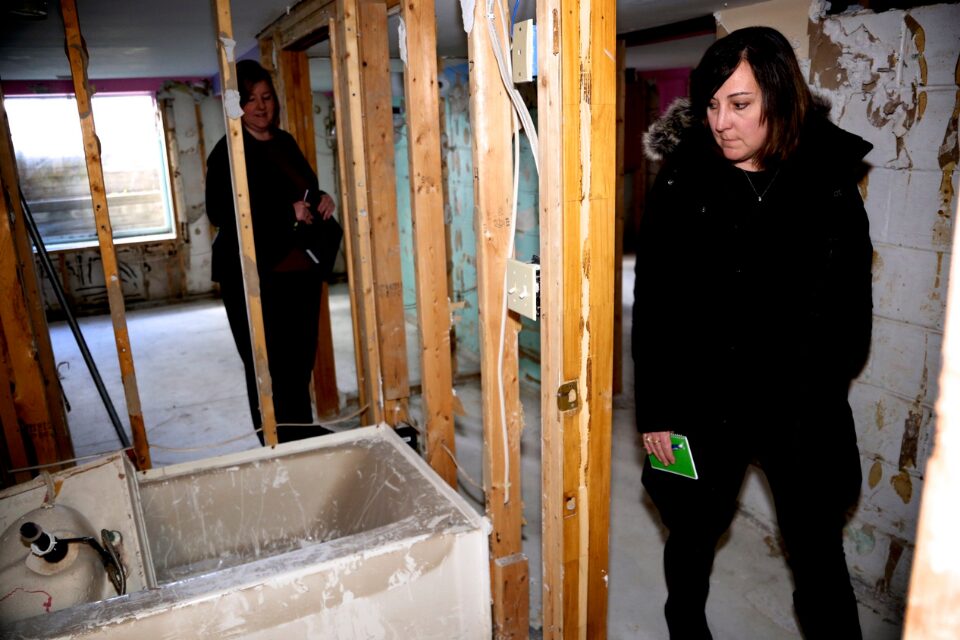
After The Storm is going beyond disaster recovery toward becoming more proactive about disaster preparedness. “We are working with partners like Homeland Security to make sure they have plans in place for community nonprofits and long-term recovery groups,” Money explains. “We want to raise awareness and make this work sustainable, so we don’t have to ramp up again with each new disaster.”
While the news brings word of possible changes at FEMA, Money remains confident that After The Storm will continue to play a role in making an impact for storm survivors in Michigan. “We don’t know what FEMA will look like moving forward,” she says. “We are having conversations with State Emergency Management in an effort to stay relevant, whatever FEMA looks like.”
FEMA just authorized a one-year extension of support to continue case management in the nine-county region through February 2027. This is “great news for our survivors,” says Kayla Roosa. A $500K grant request has also been made to UMCOR to cover unmet needs from that 2023 storm.
“Andrene helped me restore my childhood home that I have never left and inherited from my grandparents. I have had the absolute pleasure of being blessed by After The Storm. I lost so much. But God, with the assistance of an amazing team, showed up. I am beyond grateful and humbled by this experience.” ~ Mary Solomon, survivor
Nancy Money summarizes the past four years: “God has blessed After The Storm immensely. We have grown and made a difference. Many hands are working. We are figuring out how to stay relevant among changes in the landscape, legislatively, environmentally, and culturally.” She then offers her pie-in-the-sky dream: “My prayer is that we continue to work in a way that is pleasing to God and impactful to the survivors. Their glass is half full, and we are called to help them survive this.”
Surviving a disaster is a long walk. But thanks to After The Storm, survivors do not walk alone.
The publication of this article was made possible thanks to generous financial gifts from local United Methodist churches in Michigan through Ministry Shares. Thank you! Learn about the impact of Ministry Shares on mission and ministry in Michigan and around the world.
Last Updated on February 3, 2026