
Action steps from the Wisdom and Witness sessions at the 2026 Michigan Annual Conference are now available for local churches to use and adapt for their faith communities.
At the 2026 Michigan Annual Conference, four breakout sessions were held to allow conferencegoers to engage in conversation with others about aspects of our shared United Methodist identity.
These four Wisdom and Witness conversations centered on the newly updated Social Principles, our public statements on contemporary issues, and on helping participants find faithful ways to respond. The four main topics participants chose from were: Creation in Peril; Food Justice; Racism, Ethnocentrism, and Tribalism; and Universal Accessibility.
Expert facilitators have made the action steps and outcomes from all four breakout sessions available on a dedicated web page. Local churches and individuals can download them, use or adapt them, and develop a plan to put the Social Principles into action in their faith communities.
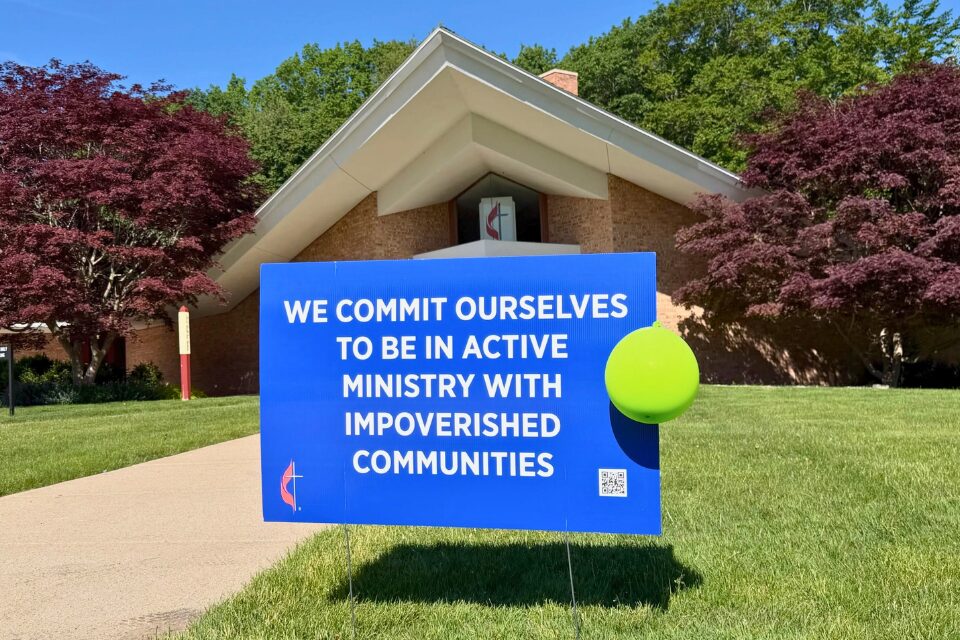
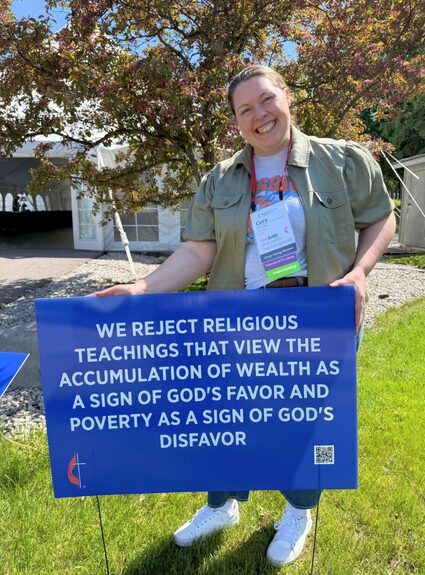
See the Social Principles yard signs Grand Haven: Church of the Dunes created.
The Social Principles, including a topical index and other resources, are available as a free download in multiple languages. Download now. The published edition of the Social Principles includes a helpful study guide for local churches to use in small groups. Purchase now.
Review and download Wisdom and Witness materials.
Purchase a copy of the Social Principles with study guide.
Before United Methodists took part in the in-person sessions at Annual Conference, Laura Witkowski, Director of Connectional Ministries, spoke about the evolution of the Social Principles, which are rooted in sound biblical theology and our best traditions, and how they “challenge every one of us to engage in reflection and honest dialogue between our faith and our daily practice.”
Witkowski said her favorite part of our Social Principles is that they’re meant for everyone. “You do not need a seminary degree to be inspired by them,” she said. “They are not meant to be complex literature. They are meant to be accessible, relevant, and meaningful for all our UMC siblings in all contexts around the world.”
Witkowski then expressed her hope that these sessions would produce “inspiring, concrete action steps to take back home to your local church and ways you can love boldly.”
Community of All Creation: Creation in Peril
This session engaged participants in a theological grounding for creation care, the harm to people and planet caused by environmental degradation, and the ways our church calls for creation stewardship and justice as an expression of faith. Download resources.
Food Justice
This session helped participants reflect on art, Scripture, and our Social Principles; the difference between charity and justice; and lessons from Advocacy Day, which this year focused on food insecurity and hunger in Michigan. Download resources.
Racism, Ethnocentrism, and Tribalism
This session helped participants foster conversations that build our capacity to talk about race and racism through a Wesleyan theological lens. Resources will be available on the web page soon.
Universal Accessibility
This session provided information to help local church leaders provide accessibility for our diverse communities while addressing the practical realities our churches face. Download resources.
Last Updated on July 1, 2026