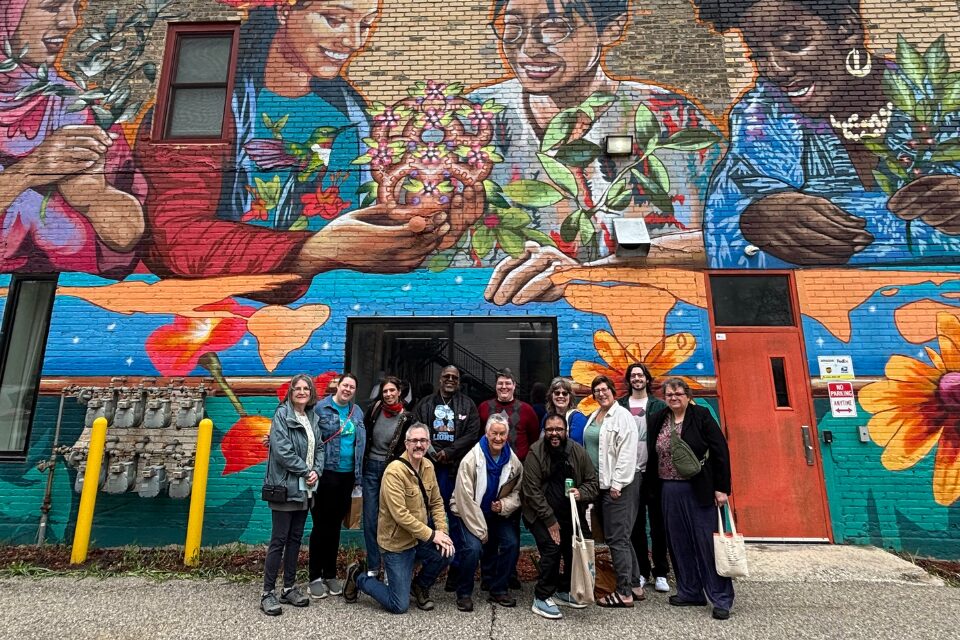
The eleven members of the Michigan Conference’s Civil Rights Pilgrimage pose next to an amazing mural at Treetops Collective, a vibrant organization that connects with and invests in refugee and immigrant women and teen girls in Grand Rapids. Treetops’ values include a posture of listening, wholeness, radical welcome, cross-cultural connection, celebration, creativity, and redemptive influence. From left to right, back to front: Rev. Geri Hamlen, Rev. Cora Glass, Rev. Sonrisa Cortes, Rev. Albert Rush, Rev. Jenaba Waggy, Rev. Mary Butler-Loring, Lisa Batten, Colin Batten, Rev. Jackie Roe, James Deaton, Naomi García, and Aiden Diaz. Sonrisa Cortes, who was part of the pilgrimage planning team along with Glass, both Battens, Diaz, and Kayla Shannon (not pictured, but joined in Flint), was available to be with the group in Douglas and Grand Rapids. ~ MIphoto/photo taken by Tarah Carnahan
Eleven United Methodists embarked on a Civil Rights Pilgrimage across Michigan, learning the histories of marginalized communities and uncovering stories of resilience along the way.
JAMES DEATON
Content Editor
Who are we as Michiganders? What is our history, and who has shaped it? Whose stories do we tell, and whose voices have we silenced? Which communities have risen to new life despite exclusion and violence, and how do we, as people of faith, allow their stories to transform us?
Eleven Michigan United Methodists traveled together April 15-22, 2026, on the Michigan Conference’s first-ever Civil Rights Pilgrimage to grapple with these questions and learn about the struggle for justice among marginalized communities in our state.
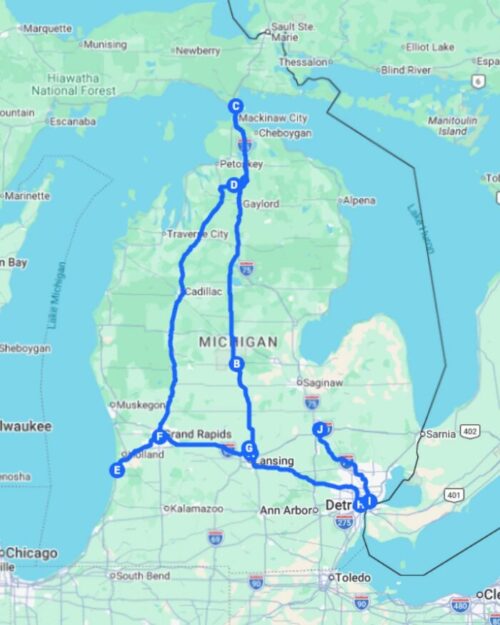
Through curated educational opportunities, daily prayer, and group reflection, pilgrims set out on a cross-cultural journey that touched both Michigan peninsulas, visiting seven cities: Mt. Pleasant, St. Ignace, Douglas, Grand Rapids, Dearborn, Detroit, and Flint.
The route the Civil Rights Pilgrimage took around the state. ~ map courtesy Aiden Diaz
Composed of laity and clergy, the group visited key sites and museums with expert guides and enjoyed the food, art, language, and other cultural expressions of different communities. The pilgrims also held histories with humility and celebrated stories of resilience and healing. They witnessed just how painfully long the arc of the moral universe can be as it bends toward justice, as Martin Luther King, Jr., described it.
The narrative that has shaped the United States is the history taught in classrooms and textbooks, which has centered the dominant culture — white, European, cisgendered male, heterosexual, Protestant Christian — and often erased or diminished the histories of peoples and cultures that do not fit these categories. The sins of racism, bias of various forms, sexism, and heteronormativity, among others, have poisoned the narrative we have inherited, and the stories the Michigan pilgrims heard helped to correct that narrative through truth-telling.
Similar pilgrimages center on major sites in the southern United States that focus on the Civil Rights Movement of the 1950s and 60s and honor the Black freedom struggle. This Civil Rights Pilgrimage was localized in Michigan and broadened to include other historically oppressed groups, such as Native Americans, Arab Americans, and the LGBTQIA+ community.
The pilgrims saw how these oppressed communities carve out safe spaces where they can be themselves and support one another in life-affirming ways. They heard individuals speak boldly, sharing their stories with conviction and honesty. They were also introduced to United Methodist-affiliated ministries and other organizations that do remarkable work supporting those living on the edges of our society.
The Michigan Conference’s Civil Rights Pilgrimage began at the start of Eastertide, as Christians remember how the risen Christ, through resurrection, overcame systems of oppression and hate that led to crucifixion and death.
It was a fitting season for pilgrims of faith to journey together and learn about their neighbors and their own ministry contexts, as shifts in today’s political and cultural landscape put certain communities at risk. Some are being targeted because of their skin color, religious beliefs, or gender identity. How do people of faith learn the truth about their neighbors and their histories, and allow storytelling to transform their hearts, minds, and actions?
The Eastertide scripture of Jesus appearing to the disciples on the road to Emmaus serves as another reminder of what can happen when our eyes are opened, and our hearts are set ablaze by truth-filled words. The disciples said to each other, “Were not our hearts burning within us while [the Lord] was talking to us on the road?” (Luke 24:32, NRSVUE).
The pilgrims from the Michigan Conference experienced similar moments during the eight days of travel to various sites across the state. Their eyes were opened, and their hearts were moved by God’s Spirit. Join the pilgrims in the following summary, featuring photos and stories from this cross-cultural journey. It’s a snapshot of what they carry with them now.
Day 1: Mt. Pleasant
After gathering at the Michigan Conference Ministry Center in Lansing and loading the passenger van and accompanying sedan, the pilgrims headed north to Mt. Pleasant. Lunch was provided by the Wesley Foundation at Central Michigan University, and the pilgrims then took a guided tour of the Ziibiwing Center of Anishinabe Culture & Lifeways as an introduction to the peoples who lived on this land before Europeans arrived and continue to live and care for the land despite the harm caused by colonialism, cultural erasure, forced relocation, and genocide.
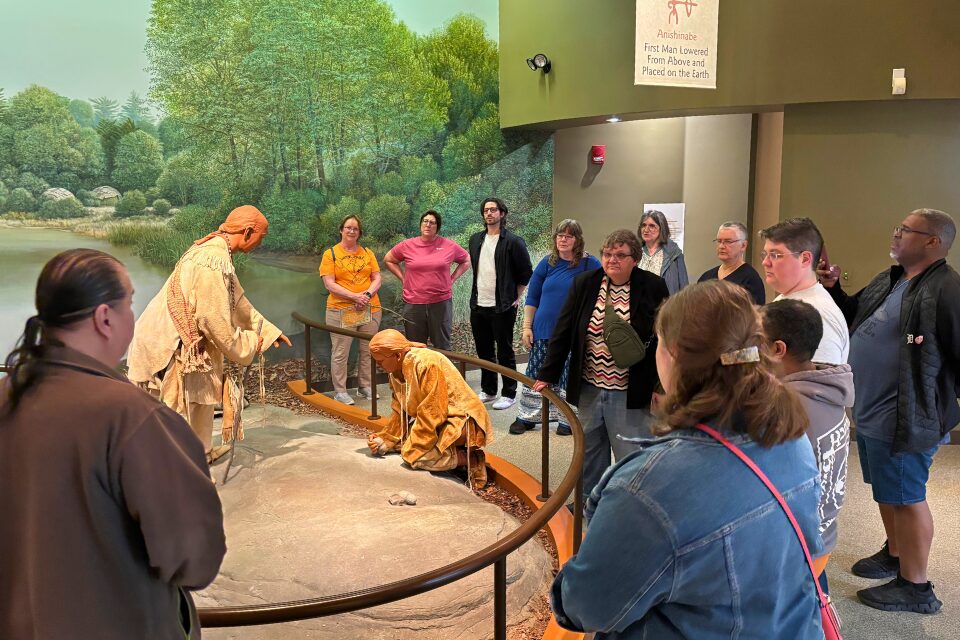
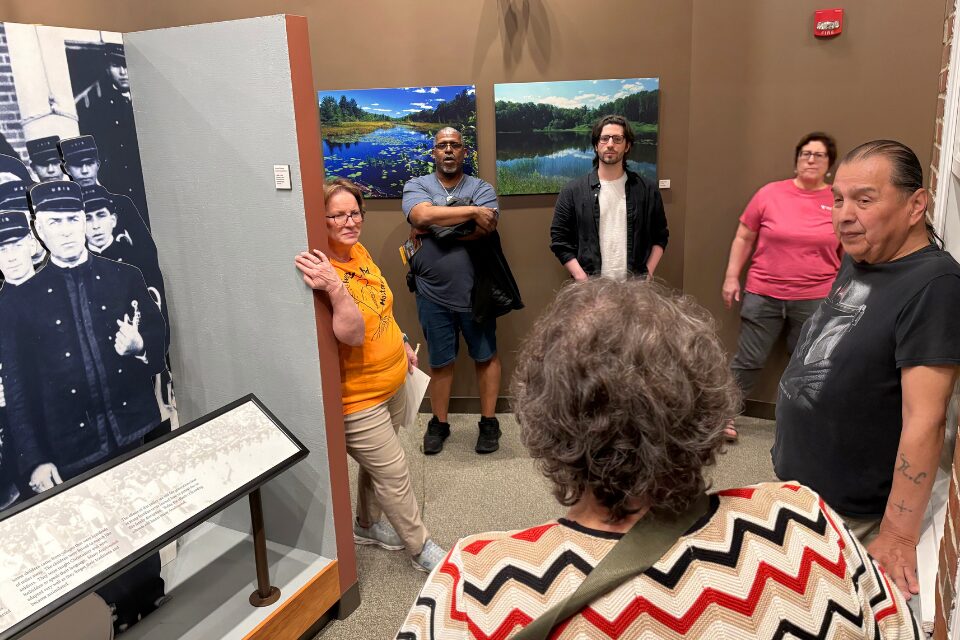
Mr. Ray (far left), a member of the Saginaw Chippewa Indian Tribe of Michigan, gives the United Methodist pilgrims an overview of Anishinabe beliefs and cultural identity markers while explaining a replica of some of the Sanilac Petroglyphs. These Native American teachings, carved into sandstone some 1,400 years ago, are preserved at Sanilac Petroglyphs Historic State Park. “Anishinabe,” the name of the Native peoples in Michigan, means “first man lowered from above and placed on the Earth.” Pilgrims learned about the Anishinabe creation story and how the Creator placed them in North America and gave them Seven Grandfather Teachings, which have been passed down from generations and teach them how to take care of Mother Earth and each other: Wisdom, Love, Respect, Bravery, Honesty, Humility, and Truth. Pilgrim Jackie Roe, pastor at Clayton and Hudson UMCs, expressed her appreciation for the tour: “I have a better understanding of the hurt that Native Americans and other oppressed people have. It also shows me a reason why people may not share their beliefs openly.” Mr. Ray knew the pilgrims were Christian, yet said he held back in sharing his own personal religious beliefs during the tour. He spoke of religious beliefs held in common among the Anishinabe. ~ MIphoto/James DeatonRev. Wava Hofman (left), pastor at Northport Indian UMC and chair of the Michigan Conference Committee on Native American Ministry (CONAM), joined the pilgrims at the Ziibiwing Center and provided a local United Methodist perspective. Wava, along with pilgrims Albert Rush, Colin Batten, Lisa Batten (left to right), and Jackie Roe (foreground), listen on as Mr. Ray, the Native guide, speaks about the horrors Anishinabek children and youth experienced at boarding schools in Canada and the United States in the late nineteenth and early twentieth centuries. One boarding school with religious ties was located in Mt. Pleasant, another in Harbor Springs, near Petoskey. Youth were not allowed to speak their Native language or practice their cultural and religious traditions. They were forced to assimilate into the dominant culture. Pilgrims heard painful stories throughout the guided tour, but especially in this section. Pilgrim Cora Glass, deacon serving as communications specialist for United Methodist campus ministries in Michigan and Noah at Central in Detroit, expressed how the truth-telling impacted her: “At the Ziibiwing Center, we learned that the spread of smallpox to the Anishinabe people was an intentional act spread by gifting Anishinabe communities with infected blankets. It was one of a number of examples along the trip where things presented in my childhood as unfortunate happenings were instead retold as deliberate acts of hate and violence.” ~ MIphoto/James Deaton
Day 2: St. Ignace
The pilgrims crossed the Mackinac Bridge, and members of St. Ignace UMC welcomed them to the Upper Peninsula with lunch. Continuing their exploration of Native history and culture, the pilgrims visited the Museum of Ojibwa Culture. That evening, they traveled to Lake Louise Christian Community near Boyne City for a time of debriefing and an overnight stay.
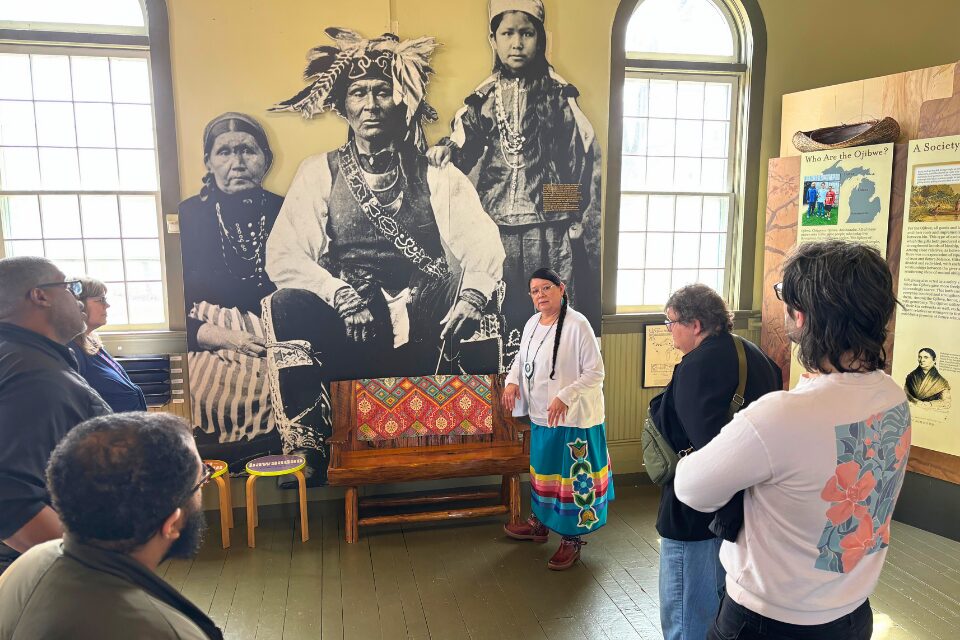
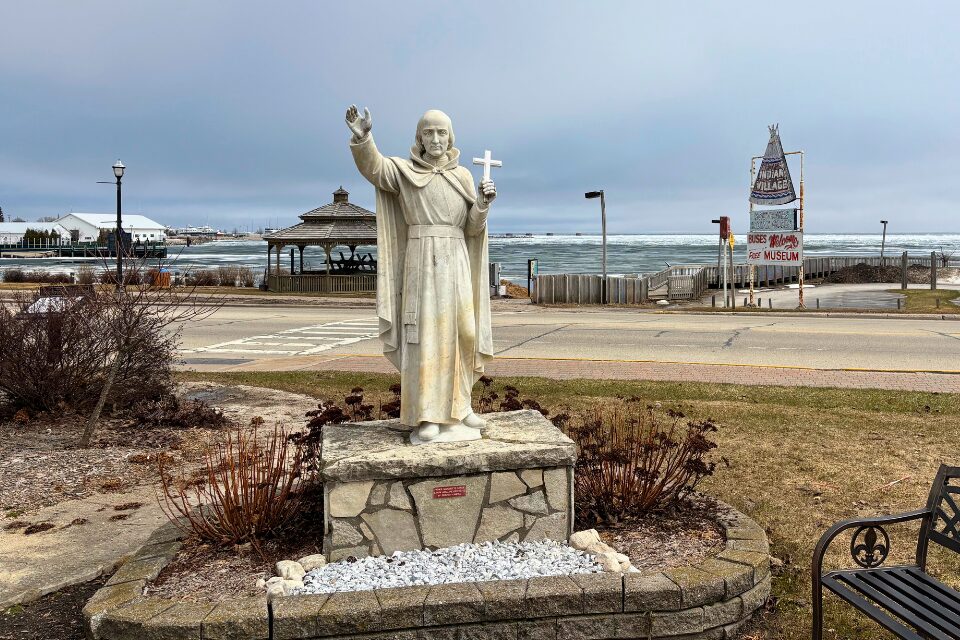
Ozaawaa Meme’gohns (Yellow Butterfly), the Cultural Director of the Museum of Ojibwa Culture, gives the pilgrims an overview of the displays that outline the history and culture of the Ojibwa, the primary Native population found in the Upper Peninsula. The Ojibwa are considered part of the larger Anishinabek group. Behind Meme’gohns is a late nineteenth-century photo of Chief David Shoppenagons (the Needles), Irene Nawquachicaming, his wife, and one of their daughters. Their dress is a mixture of traditional Ojibwa and American styles, as was typical during this period of history. Pilgrim Mary Butler-Loring, pastor of Dixboro UMC, commented on the hospitality their guides gave them along the way: “As we entered into the space of our host, whether that was a restaurant, our lodgings, or the various guided tours through that day’s adventure, I found myself falling into the rhythm of listening, pondering what I heard, remaining curious and often asking questions for clarification, and then pondering some more. The best part of the pondering is that I didn’t have to do it alone. The community of eleven spent time each morning and each evening processing, deepening, and integrating what we learned together. I observed how the more our community of eleven connected, went deeper, and became vulnerable with each other, those who were our guides seemed to sense that they too could be more vulnerable with us, offering us perhaps a fuller story than they might have.” ~ MIphoto/James DeatonA statue of Father Jacques Marquette, a French Jesuit who came to the Great Lakes region as a missionary, sits in a park next to the Museum of Ojibwa Culture. Father Marquette is buried at this site, which was also the location of the mission he established in 1671. The history of Father Marquette and the Roman Catholic Church’s influence is complicated. The arrival of European Americans brought formal education practices and the documentation of the Ojibwa language, but also colonialism, disease, and forced assimilation. Pilgrim Geri Hamlen, pastor at Lexington UMC, spoke about the weight of this narrative and how the Native tribes in this area have moved forward: “This pilgrimage affirmed for me the generational impact of such violence as well as the current and ongoing impact on people today. There was evidence of both healing from and resistance to human cruelty. Native leaders noted that healing is possible. Not that the pain is forgotten, but there is a way forward. The collaborative efforts between tribal and township governing systems in St. Ignace felt organic and fruitful — not without some strain around the edges, but a mutually respectful effort at cooperation and living together.” ~ MIphoto/James Deaton
Day 3: Douglas
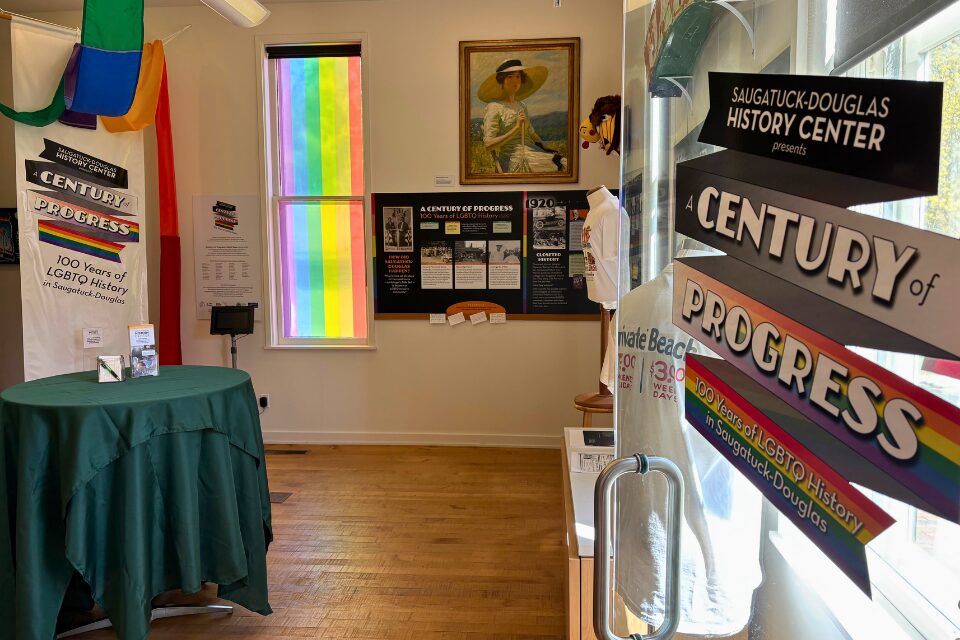
Traveling south, the pilgrims journeyed to the coastal communities of Douglas and Saugatuck on the shores of Lake Michigan. Summerlike weather greeted them after experiencing the icy Lake Huron harbor at St. Ignace. For decades, these small towns have drawn artists, bohemians, and progressives, as well as marginalized groups such as the LGBTQIA+ community. The pilgrims took a self-guided tour through a special exhibit at the Saugatuck-Douglas History Museum: “A Century of Progress – 100 Years of LGBTQ History in Saugatuck-Douglas.”
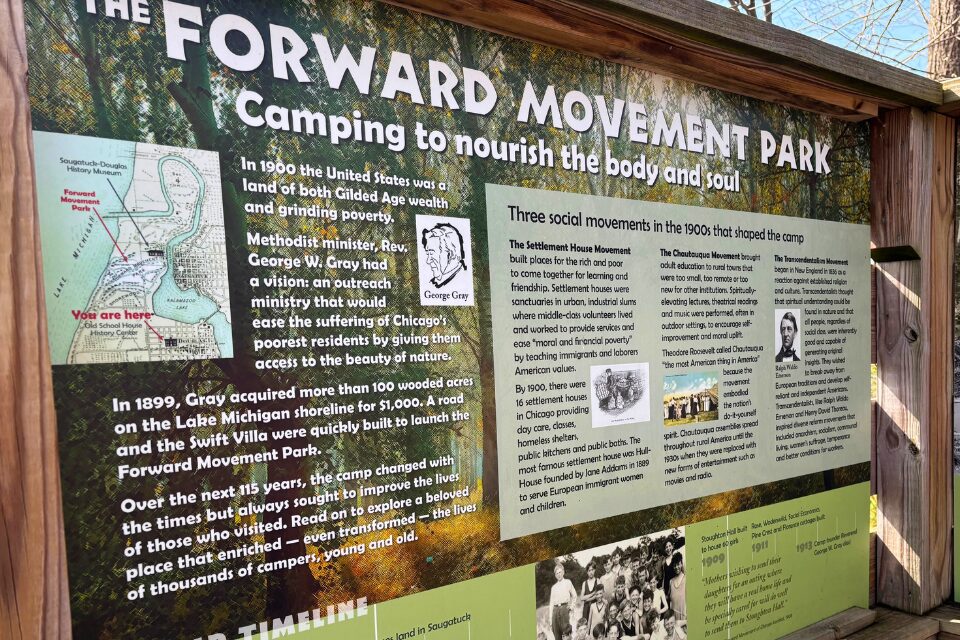
Pilgrim Geri Hamlen noted how the various museums, including the history museum in Douglas, came to life for her: “The impact of museums opened up avenues of understanding in an educational and entertaining way. The museums are so much more than just warehouses of artifacts. They created visual and aural experiences of what it was like, what happened, and what’s going on now. Those are the seeds for dreaming, imagining, and moving towards a better future for us all. And those seeds are not just part of the current dominant culture. All the groups we encountered have their own hopes, prophecies, spiritual paths, gifts, and wisdom to bring to the process of both surviving the violence of our human experience and thriving as those who are created in the image of God.”~ MIphoto/James DeatonThere were several contributing factors that paved the way for these two small towns to become a haven of safety for sexual and gender minorities, those whose attraction and expression differ from the majority of society (cisgender norms). Steamships in the early 1900s made it easy and affordable for people to escape the summer heat and social restrictions of larger cities such as Chicago and Milwaukee. The communities grew dependent on this tourism. In the early 1900s, an artists’ residency program called Ox-Bow was established, with deep ties to the School of the Art Institute of Chicago. This brought avant-garde artists to the area. Another factor was the Forward Movement Camp (discussed in the photo above), founded by Methodist Rev. George W. Gray, who had a vision for a ministry that would provide summer holidays for disadvantaged young people from Chicago. The camp’s leaders brought socially progressive ideas to this area with lectures, sermons, and social engagements, in line with the Chautauqua movement, which was founded by Methodist clergy. ~ MIphoto/James Deaton
Day 4: Grand Rapids
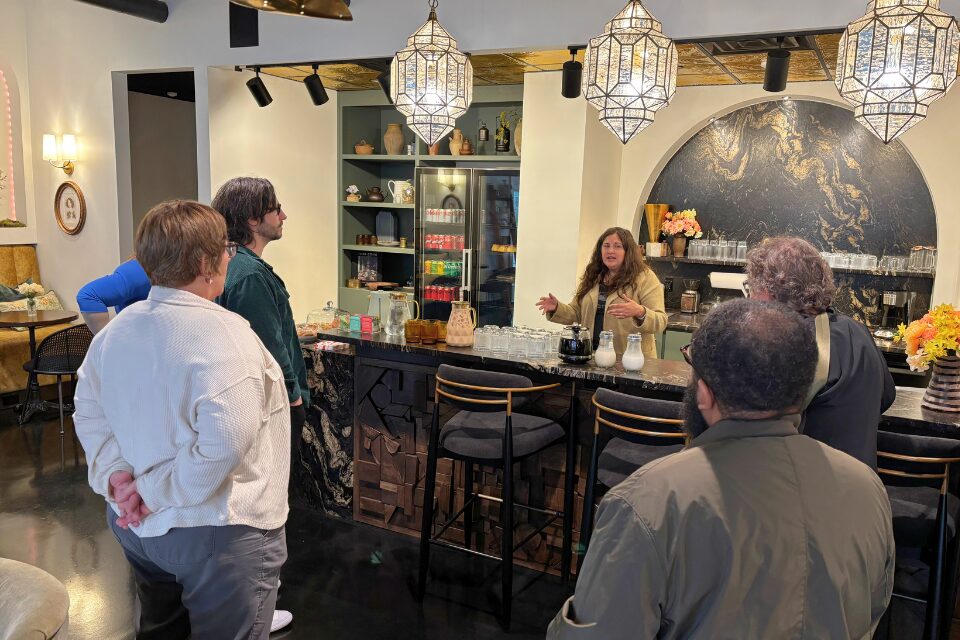
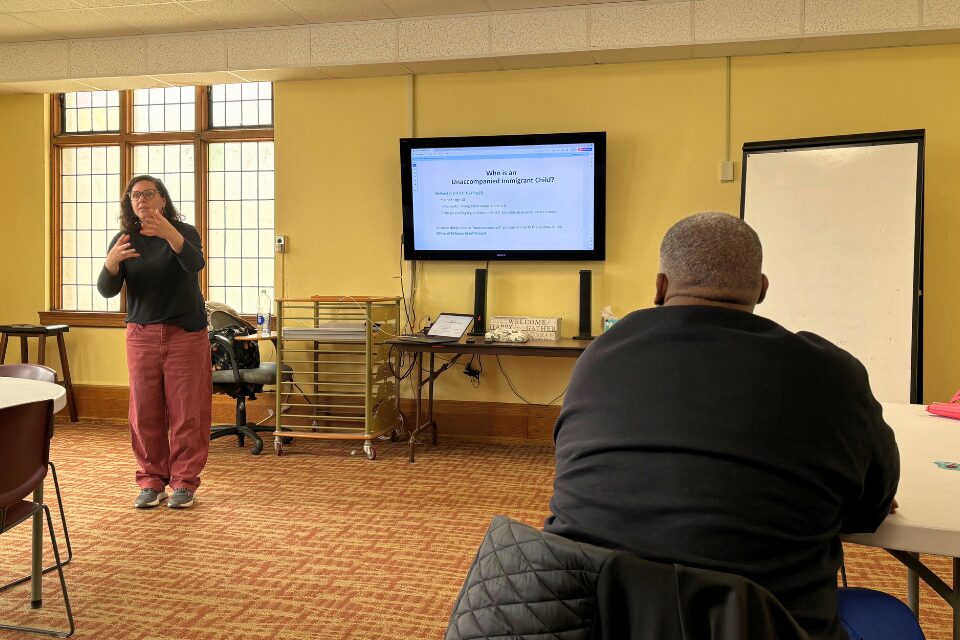
The pilgrimage turned eastward, and on the fourth day in Grand Rapids, the focus was on refugees and migrant communities. The pilgrims first visited Treetops Collective, which provided much inspiration and hope. Treetops is an organization that provides “opportunities for refugee and immigrant women and teen girls to find their place, reclaim their identity, and build new relationships in West Michigan and beyond,” according to one of their publications. They connect with and invest in them through mental health circles, leadership empowerment cohorts, academic support, workforce development, and more. The afternoon was spent at Trinity UMC, hearing a presentation from the Young Center for Immigrant Children’s Rights, a national nonprofit based in Chicago that provides independent advocates for unaccompanied immigrant children in government custody. The Young Center recently opened a Grand Rapids office.
Tarah Carnahan, Executive Director and Co-Founder of Treetops Collective, welcomes the pilgrims with homemade sweet treats and chai made by members of the Treetops community. Treetops offers several on-site programs that help immigrant and refugee women utilize their skills and build community, including a café open to the public, a shop featuring refugee-made and inspired goods, and in-house alteration services for clothing and other fabric-based items. Pilgrim Geri Hamlen noted, “Community building at Treetops on behalf of women and children was a direct effort to counter the isolation and alienation of entry into the Grand Rapids community. Offering education and encouraging income-generating activities within a supportive community is also a form of resistance.” ~ MIphoto/James DeatonLiliana Valderrama, Volunteer Coordinator for the Young Center Grand Rapids, speaks to the pilgrims about the important work of advocating for children who are journeying through immigration hurdles alone. The Young Center seeks Volunteer Child Advocates across the country who will spend time with unaccompanied immigrant children and youth, building trust, for up to a year, and advocate for their rights and best interests while in government custody. These advocates are appointed to the most vulnerable children, including children with mental or physical disabilities and children who have witnessed or experienced violence. Pilgrim Geri Hamlen said, “The care for immigrant children (separated from their families) by the Young Center was a level of resistance that drew on local resources while making a dent in the seemingly monolithic bureaucracy that tramples on human rights and decency.” ~ MIphoto/James Deaton
Day 5: Dearborn
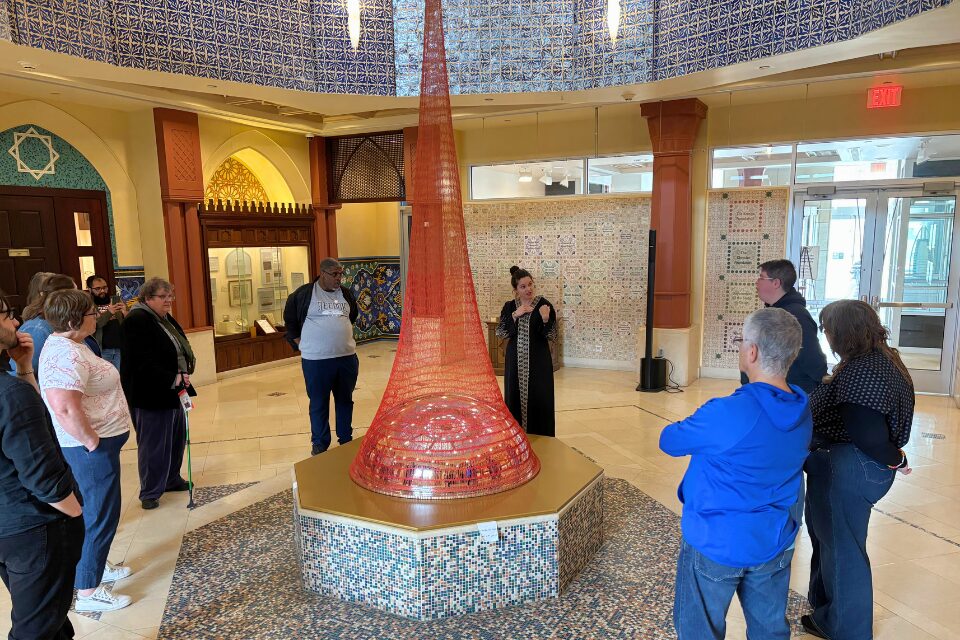
The pilgrimage moved farther east to the Detroit area. After worshiping with Centro Familiar Cristiano UMC in Melvindale on its 10-year anniversary as a beacon of intercultural ministry, the pilgrims toured the Arab American National Museum in Dearborn, the first and only museum of its kind in the United States.
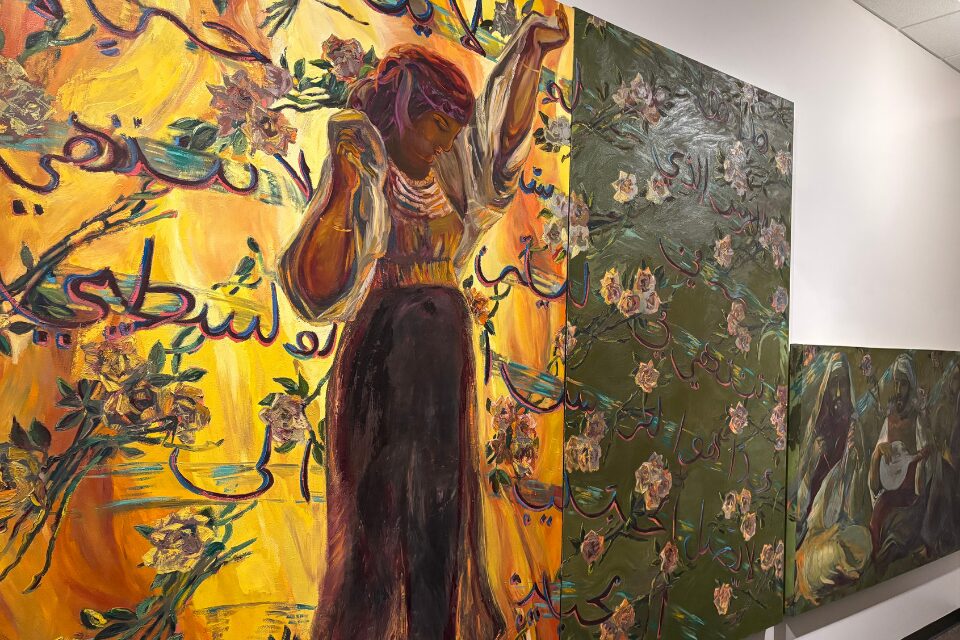
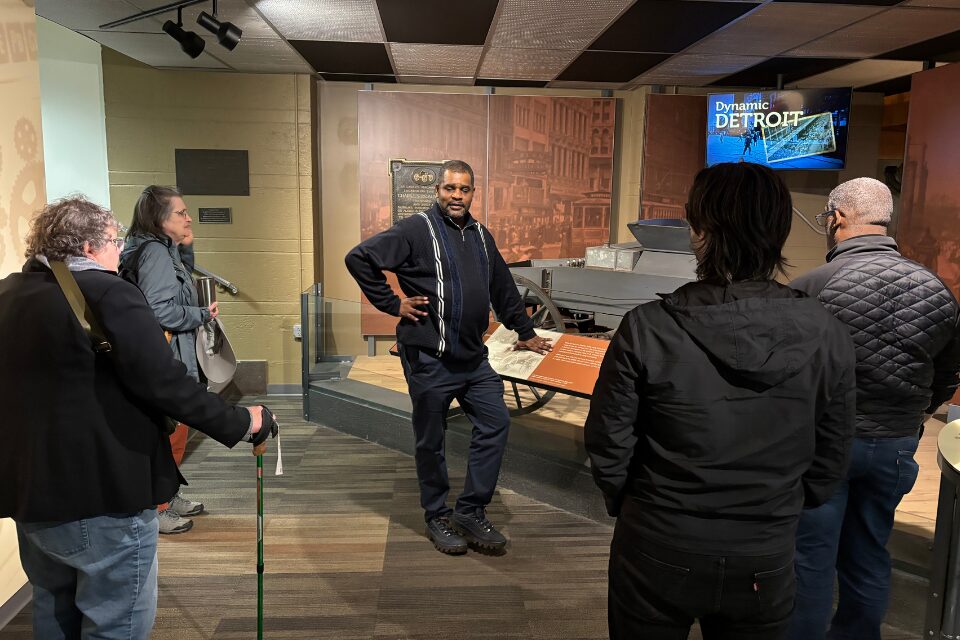
The pilgrims begin a guided tour of the Arab American National Museum. Dearborn became the first Arab-majority city in the country in 2023. One of the reasons this community, next to Detroit, became the home of so many immigrants from the Arab world (tied together by language, culture, and political identity) is the need Henry Ford (and other car manufacturers at the time) had for workers to run his assembly lines, despite his well-documented racist hiring practices (especially toward African Americans). Making the connection to present-day news, pilgrim Jenaba Waggy, associate pastor at Ann Arbor: First UMC, noted, “The drop in immigration in Detroit from 2/3 to 1/4 or less in the 1910s to 1920s was startling to me — both because I hadn’t known that Detroit had been such a diverse city then and also because there are so many parallels now in businesses and politicians deciding that immigrants are no longer welcome and structuring finances and cultural spaces to cut them out.” ~ MIphoto/James DeatonThe museums and cultural spaces throughout the trip displayed art that illustrated the creativity of marginalized communities. The artwork above is titled “A Jewish Bride and Arab Guests” by Doris Bittar, an Iraqi American artist. Pilgrim Cora Glass felt inspired through the art she experienced: “I saw the work of the Holy One through the prevalence of art throughout the trip. In each community, people used art to express beauty, call out injustice, and share their unique stories. One artwork that stood out to me was ‘Epitaph for a Road Map’ by Rajie Cook at the Arab American National Museum. It was a blank paper with creases, as if once neatly folded to fit in one’s pocket, which for me represented the unattainable or unclear path to peace for Israel and Palestine.” ~ MIphoto/James Deaton
Day 6: Detroit
The sixth day of the pilgrimage was spent exploring downtown Detroit, with visits to a memorial to Vincent Chin at the edge of historic Chinatown. Vincent Chin, a Chinese American, was killed on June 19, 1982, by two white autoworkers (one who had been laid off) who wrongly assumed he was Japanese. The U.S. auto industry was in a battle with Japanese carmakers, especially Toyota and Honda, at the time. Later, the pilgrims went on a guided historical tour of African American history at the Detroit Historical Museum, and an introduction to the socially active Central UMC and two of its on-site ministry partners: Noah at Central and Swords into Plowshares Peace Center and Gallery. Both of those ministries are also EngageMI ministry partners.
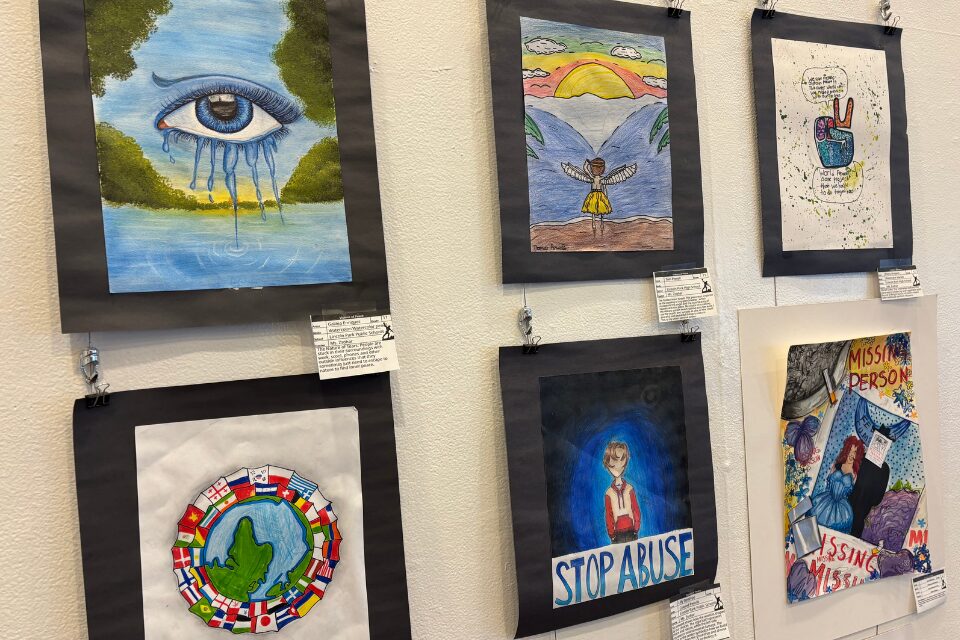
Jamon Jordan, Detroit’s first official City Historian, gives the pilgrims a tour of the Detroit Historical Museum with a specific African American lens. Jordan gave the pilgrims a perspective on facts such as Detroit’s place on the Underground Railroad, where Blacks and women were at the forefront, collaborating with white abolitionists, and the impact of auto manufacturing and the racist employment policies of Henry Ford and others. Pilgrim Jenaba Waggy learned much from the history presented: “There was so much I didn’t know about Michigan in its cultural and economic history. As someone not originally from this state, I’ve noticed a lot of clashes and frictions and never understood them; I have so much more context now for who Michiganders are, even if they themselves don’t know the why of it.” ~ MIphoto/James DeatonChildren from Detroit schools submitted art for Swords into Plowshares’ Visions of Peace installation. Pilgrims felt encouraged by the positive stories of Swords into Plowshares and Noah at Central, and so many others. Pilgrim Cora Glass expressed her gratitude for the Civil Rights Pilgrimage: “My faith was encouraged by this experience because it showed the resiliency of humanity in the face of acts of hate and violence. We have so much to learn about one another. Although we heard very challenging stories of injustice at each place we visited, we also met many brave and determined people who are called to share the many sides to Michigan’s history and work towards a better life for all people who call Michigan and the United States their home.” ~ MIphoto/James Deaton
Day 7: Flint
The final day of the pilgrimage was a stop in Flint, a city that has overcome racist political and economic practices and a water crisis that continues to impact the livelihood and future of its residents. The pilgrims stopped to hear empowering stories of resilience at the Flint Freedom School Collaborative, a nonprofit founded by Michigan United Methodists, and a panel discussion with local leaders who are doing amazing things to bring Flint back and empower the community to make future change and effect continued healing.
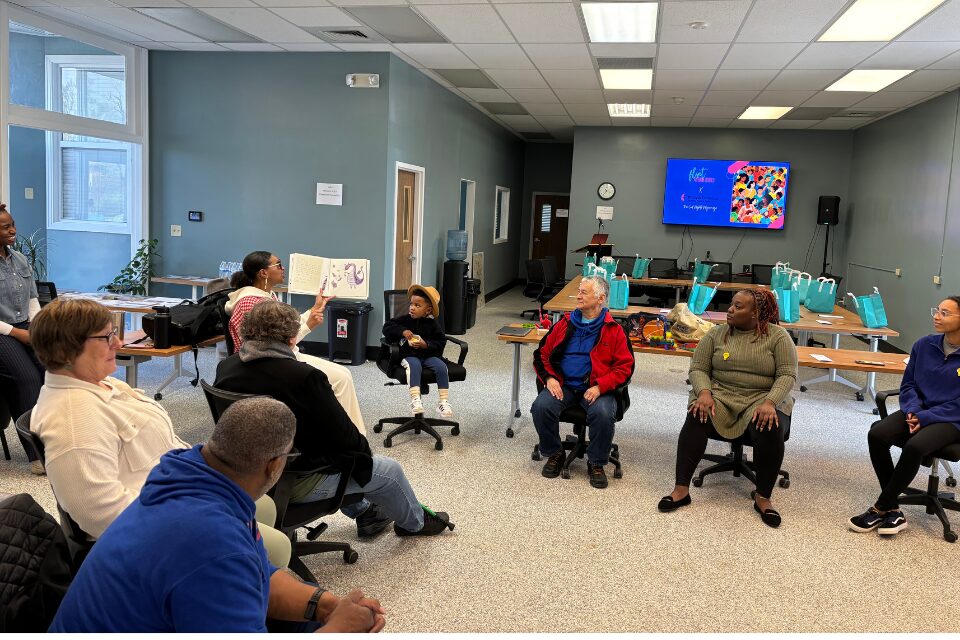
Leaders from the Flint Freedom School Collaborative give the pilgrims a taste of this ministry by sharing a popular children’s book, one that is used in the reading enrichment portion of the summer program. This ministry’s mission is to empower young people (K-12 students) in underserved communities through intergenerational leadership development, academic enrichment, and civic engagement. Pilgrim Colin Batten noted the impact on the communities in Flint: “I felt pride in knowing the Michigan Conference has been working for almost a decade to collaborate with Flint Freedom Schools (FFS) and serve in transforming a nonprofit into a community hub. The FFS community space was not a workspace; it felt like a home, a home we were invited into, a family where each person wants to see their loved ones succeed. There was an immediate feeling of the Spirit at work, a feeling that authentic community heals people, that resistance can look like a fierce, unwavering love for each other through action.” MIphoto/James Deaton
Training for the young adult leaders — Colin Batten, Rev. Sonrisa Cortes, Aiden Diaz, Rev. Cora Glass, and Kayla Shannon — who helped design and plan the Civil Rights Pilgrimage was made possible thanks to generous financial gifts from local United Methodist churches in Michigan through Ministry Shares. These young adults met with Lisa Batten, Connectional Ministries Staff member, for 11 months to discern, plan, and organize the trip. This leadership training was done in hopes of having organizers for future events and trips. Thank you for this investment! Learn about the impact of Ministry Shares on mission and ministry in Michigan and around the world.