
Faith Timmons recalls a transformative experience visiting a church parsonage in Connecticut, once a stop on the Underground Railroad, that left a lasting impact on her life.
FAITH GREEN TIMMONS
Michigan Conference Communications
I tend to withdraw when I am uncomfortable in my surroundings. I had that feeling the first time I walked into a small, picturesque church on the East Coast. This United Methodist church personified a Thomas Kincade masterpiece, little white steeple and all. However, nobody spoke when I entered the church hall. They had to see me. At 5 feet 9 inches, I stand tall. Plus, I am African American, an infrequent sight at this worship gathering. My experience there highlights the ongoing challenge of feeling seen and valued in predominantly white spaces, urging us to reflect on inclusion and racial justice within faith communities.
No one was rude or cold. However, about 50 people simply strolled past without acknowledging my presence. It was as if I did not exist at all. I felt like a ghost, smiling, nodding, and saying hello as each person stared straight ahead, offering no response. I felt invisible. The closest comparison I can offer is the ghost of Dr. Malcolm Crowe, played by Bruce Willis in the 1999 film “The Sixth Sense.” He wanders through the movie’s scenes, wondering why no one seems to see him. Thankfully, a genuinely kind face finally greeted me — the pastor’s wife.
She was expecting me, as was her husband. I was interviewing for a job I was offered shortly after: Director of Christian Education. My race did not hinder me from this great opportunity. Nonetheless, my initial awkwardness almost kept me from embracing this blessed experience. Some say: God does not call us to be comfortable; God comforts the called. I remain forever grateful that I did not miss this extraordinary adventure.
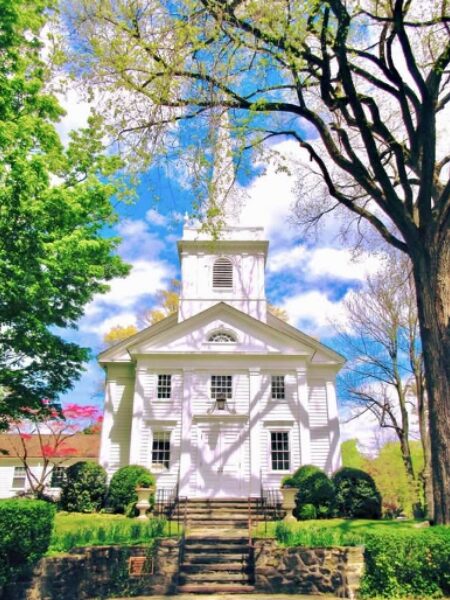
First Church of Round Hill in Greenwich, Connecticut, stands among the earliest stops on the Methodist circuit riders’ route, reflecting a profound denominational legacy. The congregation was established in 1810, dedicated its first frame building in 1828, and moved to the historic location where it stands today in 1871. During my time there, the parsonage, built around 1728, became a registered landmark. In my first week on staff, someone offered me a personal tour that left a lasting impact on my life.
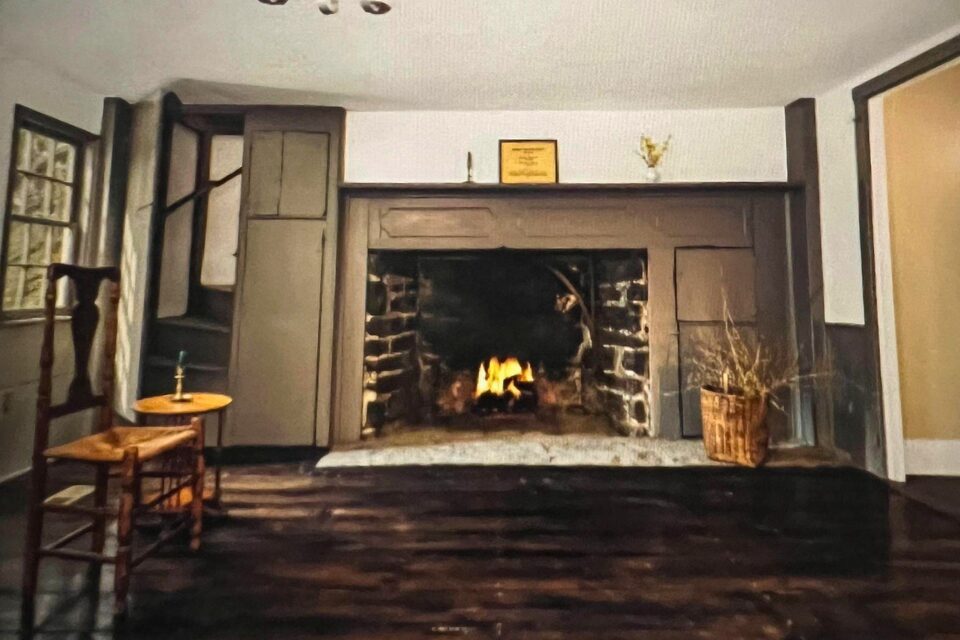
The earliest part of the timber-framed saltbox house, reminiscent of Dearborn’s Greenfield Village, is where the original chimney remains, with a stone hearth and a wrought-iron cauldron suspended from a crane. The post-medieval rural structure holds stories, secrets, and sacred mysteries far beyond what is recorded in the national registry. To the left, behind the hearth, is a tiny stairway accessible via a hidden passageway. Beyond that is a narrow, winding staircase abutting the fireplace, separated by a brick wall built before the Civil War.
Ernesto, the Brazilian groundskeeper and church custodian, gave me time to absorb the significance of this moment alone. He said this secret nook once sheltered up to 17 slaves seeking sanctuary and freedom.
I crawled into that cranny, suddenly convicted. Here I was, a free person of color, recruited to join the staff to teach God’s word. Yet I almost turned down the position because I felt uncomfortable at first. Meanwhile, the last people of African heritage to enter that space were grateful merely to be hidden in this crevice where I was now crouching.
At my size, I barely fit in the cleft. Nonetheless, over a dozen slaves on the run once squeezed in, fearing for their lives, hoping not to be caught. The humbling gravity of the moment seeped into my soul, and an overwhelming sense of gratitude filled my heart. Barely audibly, I mouthed into the darkness, “Here I am, I’m here, we are here, we made it,” and wisps of the scent of cinders caught my nose as I nestled in the sanctuary of those secret steps.
“We’re free,” I whispered as tears welled in my eyes. I felt surrounded by a great cloud of witnesses as I embraced the sense that intercessions, petitions, and urgent supplications had been offered by precious people as they hid in this puny pit-like space. Suddenly, I understood that my employment, as a free Black person, to join the ministry staff of this United Methodist church was an answer to their earnest prayers. Congressional archives also document the church building as a stop on the Underground Railroad!
A Black Methodist abolitionist named Thomas Smallwood coined the term “Underground Railroad,” which became famous as a secret passageway for enslaved people seeking freedom. However, it was neither underground nor an actual railroad. It was a network of safe havens, or stations, through which fugitive slaves traveled as they fled the South to reach Northern states or Canada. Pulitzer Prize-winning journalist Scott Shane’s book “Flee North: A Forgotten Hero and the Fight for Freedom in Slavery’s Borderland” documents Smallwood’s life. In an NPR interview, Shane said he found Smallwood describing “the Underground Railroad as this kind of mythical transport system by which people were supposedly escaping slavery.”
Given First Church of Round Hill’s proximity to Albany, New York, where Smallwood worked as a journalist for an abolitionist publication, it is highly probable that he was not only familiar with the route through Greenwich, Connecticut, but also utilized it to free many others. Albany is just 130 miles northwest of the church, a roughly four-day journey on foot.
Routes through Connecticut operated from the early nineteenth century through the end of the Civil War in 1865. Connecticut was the last of the East Coast states to abolish slavery in 1848. That’s when abolitionist activity increased, relying on cooperation among free African Americans, white abolitionists, and Native Americans.
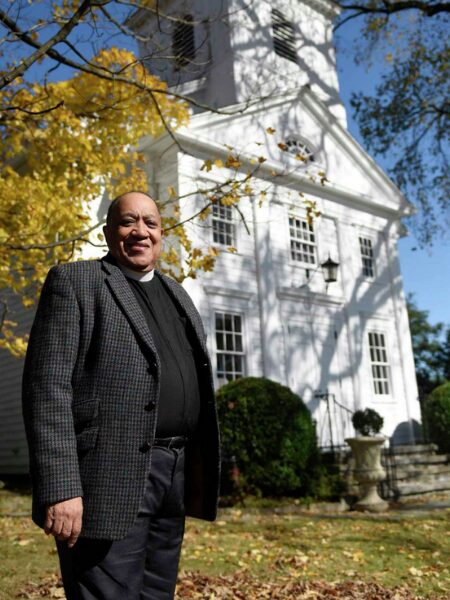
I nearly missed this profoundly rich history and the opportunity to share it. I almost gave in to the temptation to place my personal comfort, an appreciation of my skills, and the anticipation of someone (anyone) acknowledging my presence, in hopes of acceptance, above God’s call on my life. That realization, coupled with my commitment to make disciples for the transformation of the world, afforded me this extraordinary experience, 300 years in the making. I forged lovely, lasting connections with the people of First Church of Round Hill, who remain grateful for the unique fellowship we share.
Although spoken in a different context, there are aspects of the following statement by former slave and abolitionist Frederick Douglass that apply here: “Those who profess to favor freedom and yet depreciate agitation, are people who want crops without ploughing the ground; they want rain without thunder and lightning; they want the ocean without the roar of its many waters. The struggle may be a moral one, or it may be a physical one, or it may be both. But it must be a struggle.”
Sometimes, I grow weary of the struggle to help others relate. In reality, most Black people face the continuous challenge of proving themselves almost daily, over and over again, for their entire lives.
It is tiring and exasperating, and it can feel potentially threatening to continually confront suspicion, prejudice, ignorance, unfamiliarity with diversity, and discomfort with cultural differences. I long for a reprieve from trying to assuage fear of the unfamiliar, from explaining mere distinctions that need not be treated as indignities, and from convincing those who do not relate to redirect their attitudes and intentions, rather than dismissing or subtly denigrating what they have yet to understand.
For these reasons and more, Black History Month celebrates contributions that long went unrecognized. It fosters appreciation for the painstaking struggle for freedom and raises awareness of the ongoing need to advance civil rights.
Past progress toward defining, securing, and maintaining human rights does not negate the necessity for people of the church to patiently keep pressing on “toward the mark for the prize of the high calling of God in Christ Jesus,” even when disillusionment, disappointment, or discrimination threaten to dim the loveliness of the beloved community (Philippians 3:14, KJV).
Often, God offers opportunities to practice faith and develop fortitude that we may not initially recognize. Old Negro spirituals are filled with lyrics that describe lived experiences, showing how perseverance, hope, trust, and a commitment to God helped an oppressed people overcome seemingly insurmountable odds.
May their testimonies encourage you to accept, rather than avoid, challenges when you have the chance to make a difference, especially if that means opening your heart to embracing a new and different you.
If not for embracing that possibility, I may have missed one of the most precious moments of personal prayer, from a point of privilege, that I have had: tucked away, crouching alone in a private section of the historic Underground Railroad, never made public. And I was being paid to do it, unlike those who last shared that secret space behind the hearth before me.
The publication of this article was made possible thanks to generous financial gifts from local United Methodist churches in Michigan through Ministry Shares. Thank you! Learn about the impact of Ministry Shares on mission and ministry in Michigan and around the world.
Last Updated on February 9, 2026