In this month’s blog, Bishop David Bard explains how The United Methodist Church must train pastoral leaders to engage in theologically informed conversations with their congregations.
BISHOP DAVID ALAN BARD
Michigan Conference
There is much going on in the world. Political violence has again reared its ugly head as an armed man attempted to break into the White House Correspondents’ Association dinner. Thankfully, he was apprehended quickly. We all need to raise our voices against such violence, and I do so together with the Council of Bishops.
Many of the other significant news stories in recent weeks are connected to the war in Iran. These include the war itself (how it is being waged and the rhetoric used), the economic impact of the war (particularly rising gas prices), and the dispute that has arisen between Pope Leo XIV and the president of the United States.
While Christian moral thought includes a tradition of considering when war might be justifiable (just war theory), there is also a strong presumption that the primary task of followers of Jesus is to be peacemakers. “Blessed are the peacemakers, for they will be called children of God” (Jesus in Matthew 5:9). “Let us then pursue what makes for peace and for mutual upbuilding” (Paul in Romans 14:19). The desire of God for peace is powerfully articulated by the prophet Isaiah: “[They] shall beat their swords into plowshares and their spears into pruning hooks; nation shall not lift up sword against nation; neither shall they learn war any more” (2:4).
The church leans into peace and peacemaking, even as it acknowledges that war may, in certain circumstances, be justified. This is a subject for deep, theologically informed conversation. It is also important to note that the just war tradition mandates that wars, when justifiable, be limited in scope and that every measure be taken to protect noncombatants.
Recent events, then, suggest the need for deep, thoughtful, theologically informed conversations. If we desire more such conversations and to do the things that make for peace, we may want to enhance opportunities within United Methodism to form leaders who can lead such conversations and equip others to do so. This is one reason we ask our clergy to pursue theological education through a seminary or, alternatively, through the Course of Study.
The United Methodist Church in the United States is well-equipped to provide such education. The United Methodist Church in other parts of the world yearns to develop more resources for the theological education and formation of its leaders. In numerous conversations over the years, I have heard United Methodist leaders from outside the United States express their deep hope that the church would enhance opportunities for the education and formation of clergy.
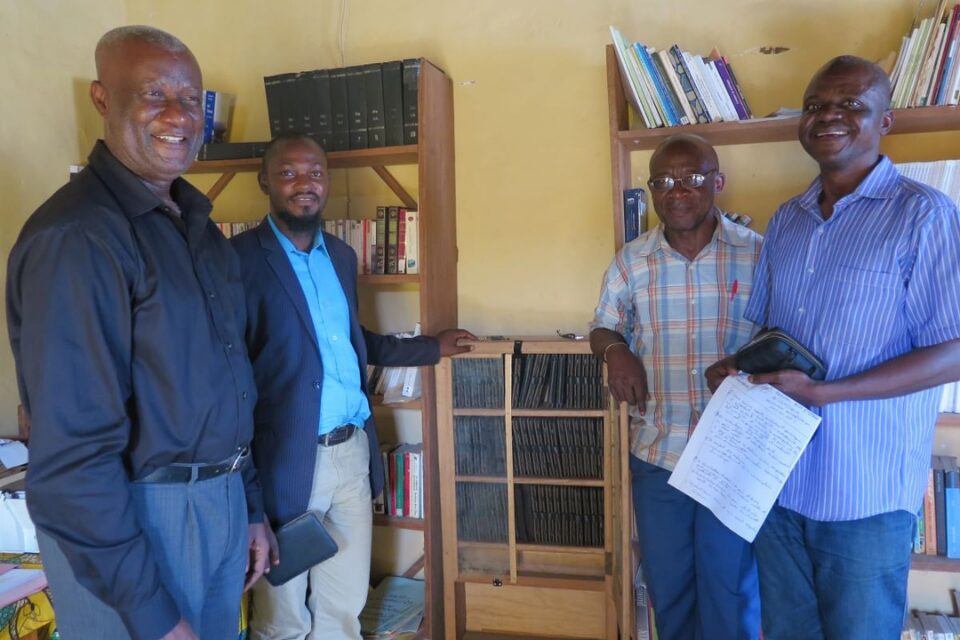
This is the rationale behind the Miracle Sunday initiative put forward by the Council of Bishops with support from the Connectional Table and the General Council on Finance and Administration. Read this news article to learn more. The initiative seeks to unite 30,000 congregations worldwide to extend the mission of The United Methodist Church and to raise vital support for 500 clergy each year through the Endowment for Theological Education in Africa, Europe, and the Philippines.
There has already been a significant amount of information shared about this initiative, and I am very grateful to the Rev. Dr. Charles Boayue for his work in promoting it in our conference. Here, I simply want to encourage you to explore the resources for this initiative and to give your congregations the opportunity to participate. May 17 is the target date for a special offering. If you have not yet made plans, your support will be welcome at another time. Consult this website for resources to help your church promote Miracle Sunday on May 17 or on a date of your choosing.
The ministry of our bishop is made possible thanks to generous financial gifts from local United Methodist churches in Michigan through Ministry Shares. Thank you! Learn about the impact of Ministry Shares on mission and ministry in Michigan and around the world.
Last Updated on May 6, 2026