
Black Methodists for Church Renewal celebrated Juneteenth and charted a bold future at their annual meeting in Detroit.
FAITH GREEN TIMMONS
Michigan Conference Communications
DETROIT — The spirit of liberation filled the air at Scott Memorial United Methodist Church on June 13 as the Michigan Conference Black Methodists for Church Renewal (BMCR) convened for a powerful day of governance, historical reflection, and vibrant celebration. The Fourth Annual Juneteenth Celebration served as a poignant backdrop for a community determined to honor its past while actively dismantling modern barriers to equity.
In the tradition of early Juneteenth celebrations from the late 1880s, organizers chose a biblical theme as their focus: Isaiah 26:3, which proclaims of God, “You will keep in perfect peace those whose minds are steadfast, because they trust in you” (NIV).
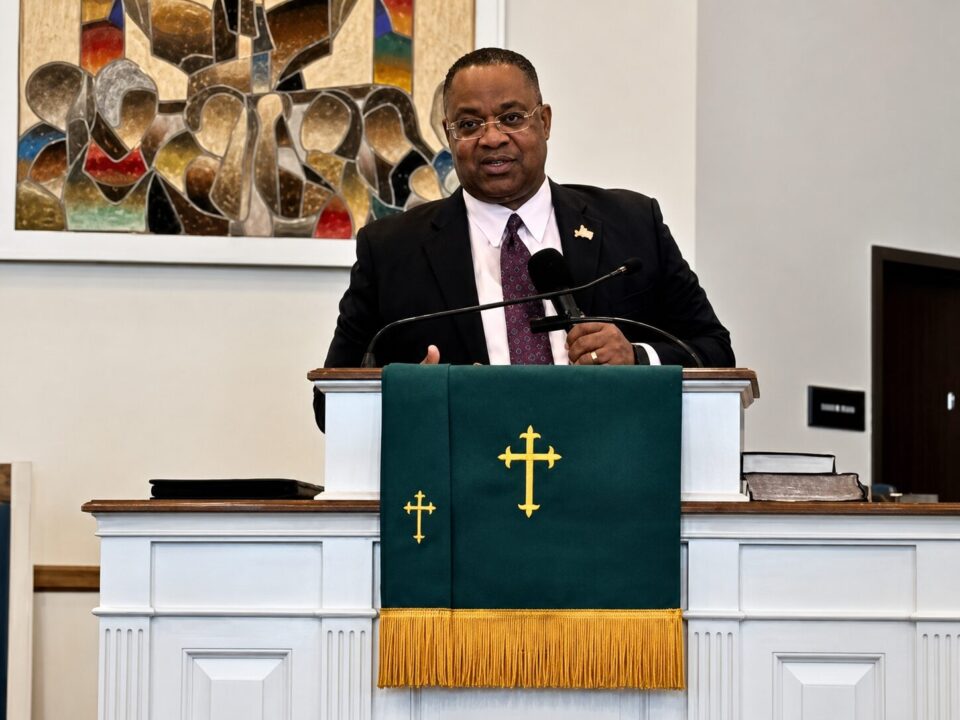
“God has already provided a way out,” declared Greater Detroit District Superintendent Rev. Dr. Darryl Totty during a stirring keynote message. His sermon bridged historical emancipation and modern-day jubilee. The rousing address resonated deeply with an audience gathered not only to celebrate a holiday but also to renew a mission that began in Detroit in 1967 — ensuring the vitality and voice of the Black church remain at the heart of the United Methodist connection.
A Mandate for Change
The event was a triple header. In addition to addressing the organization’s business and celebrating Juneteenth, BMCR honored laity from predominantly Black congregations and cross-racial/cross-cultural charges served by Black clergy.
The business of the annual meeting took a historic turn as members moved beyond acknowledging progress to demanding broader accountability. While the Michigan Conference currently requires annual Anti-Bias/Anti-Racism (ABAR) training for appointed clergy, the BMCR body issued a clear directive: the work of justice belongs to everyone. Their intent is to further advance and enhance that progress. Following the adoption of Resolution #2026-7 at the 2026 Michigan Annual Conference, the BMCR executive team was tasked with drafting a 2027 resolution mandating in-person and online ABAR training for laity across the Michigan Conference.
From Galveston to Detroit
A deep dive into the roots of Juneteenth marked the transition from business to celebration. Attendees revisited the 1865 arrival of Union Major General Gordon Granger in Galveston, Texas, where the promise of the Emancipation Proclamation finally reached the last of the enslaved.
This legacy of perseverance was echoed by Bishop David Bard, who offered a transparent reflection on his journey and his growing understanding of privilege. In a moving moment, Bishop Bard acknowledged the starkly different realities families of color face amid daily encounters with authorities and thanked BMCR for their unwavering focus on justice-centered ministry.
Honoring the Pillars of the Church
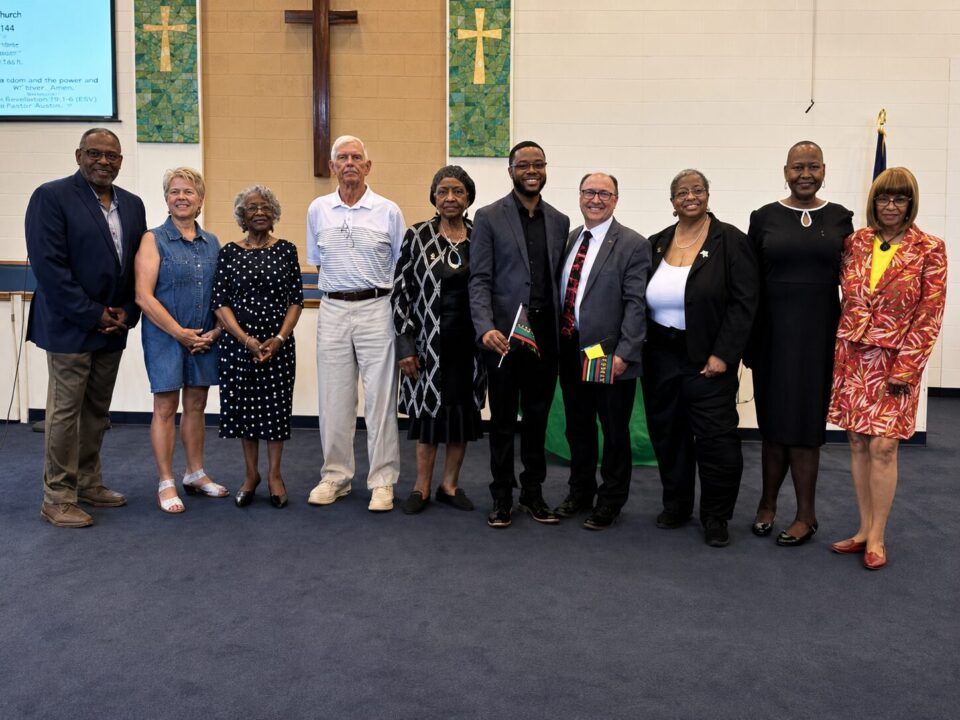
The highlight of the afternoon was the recognition of sixteen dedicated lay leaders from predominantly Black congregations and churches with cross-racial appointments. These individuals were celebrated as the living heartbeat of the movement, embodying the mission to transform the world through Jesus Christ. As the well-attended ethnic festival concluded, the message was clear: the work begun in 1865 should continually shape every prayer, every training session, and every act of service in the Michigan Conference.
The laity recognized included: Sammye Van Diver, Detroit: Metropolitan UMC; Jonathan Gipson, Detroit: Trinity-Faith UMC; Elise Perry-King, Detroit: Resurrection UMC; Theresa Grimes, Detroit: Scott Memorial UMC; Ira Neubauer, Trenton: First UMC; Michael Boggs, Southfield: Hope UMC; Brenda Street, Pontiac: St. John UMC; Jim Wyatt, Detroit: Grace Community UMC; Noricky Gibson, Detroit: Conant Avenue UMC; Cindy Allison, Trenton: Faith UMC; JoAnn McGhee, Detroit: Calvary UMC; Dorothy Hardy, Detroit: People’s UMC; Brian Mitchell, Rochester Hills: St. Luke’s UMC; and Don Michel, Clawson UMC.
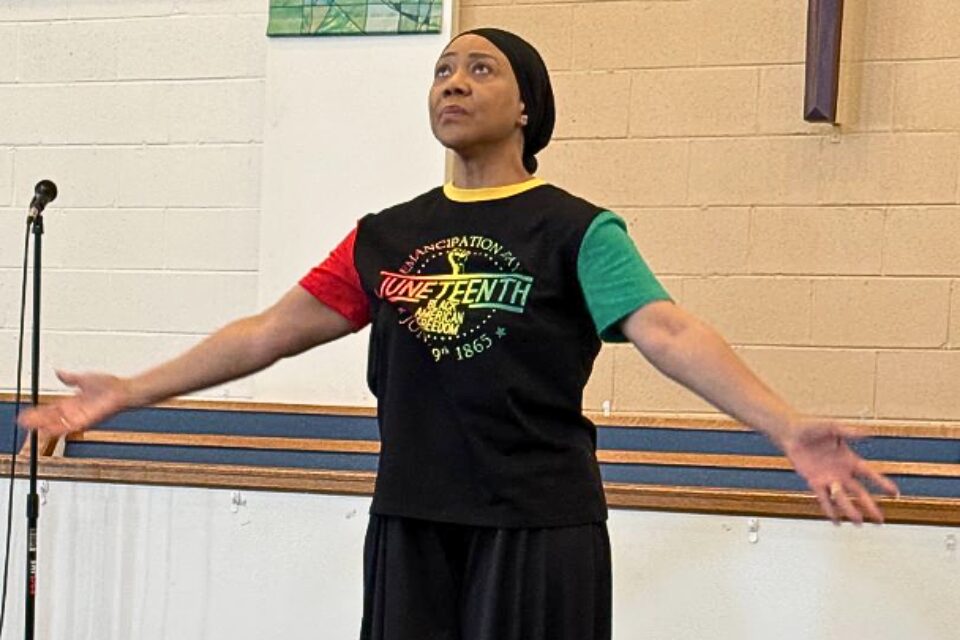
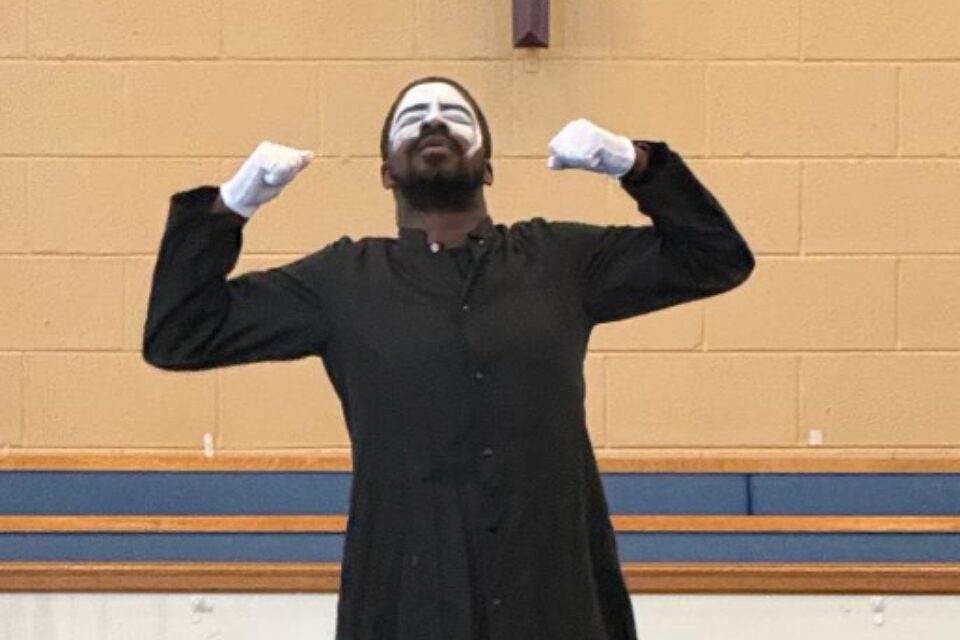
The commemoration was both stirring and solemn, meant to fully acknowledge the range of historical experiences shared by generations of Black and Brown people throughout the African diaspora. Liturgical dance and dramatic pantomime served as artistic renderings that used body movement and nonverbal expression.
Liturgical or “praise” dance in the Black church is a powerful form of embodied worship that fuses African ancestral movement with classical, modern, and Gospel expressions. Far more than mere performance, this tradition serves to interpret Scripture physically, offer devotional depth, and celebrate the sacred worth of Black bodies. These practices were intended to rebuff and counter centuries of systematic degradation that sought to diminish their value to that of chattel, or mere property. Joyful movement and physical motion sustained generations despite their suffering and remain evident in many Black churches today. They trace the lineage of these practices to West African and Afro-Caribbean worship and tradition.
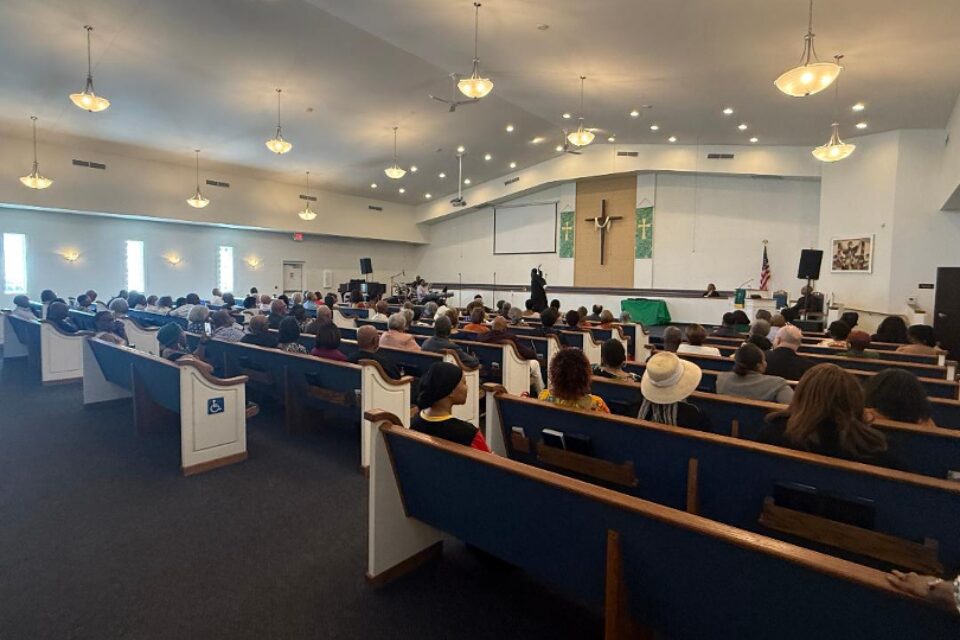
Bishop Bard supported the event by offering inspiration to roughly 150 attendees. He shared how his life’s journey and ministry experience shaped his understanding of privilege and struggle. Our presiding bishop acknowledged the reality of white privilege and articulated the differences in how his son and the sons of people of color have to be taught about encounters with law enforcement and those in power. He admitted that he has not felt the urgent need to caution his son about what to do and how to react when pulled over by the police, because law enforcement officers were not generally perceived as threats to his male child’s life.
At the same time, Bishop Bard acknowledged that he has learned more about the obstacles and dangers that people of color face. He now understands more fully that their sons and daughters must be taught and trained in a multitude of ways, as a necessity. They need to know how to respond to help avoid placing their lives at risk. Bishop Bard thanked those in attendance for their vibrancy and ministry focus, and blessed those present with the sense that they were both heard and cared for.
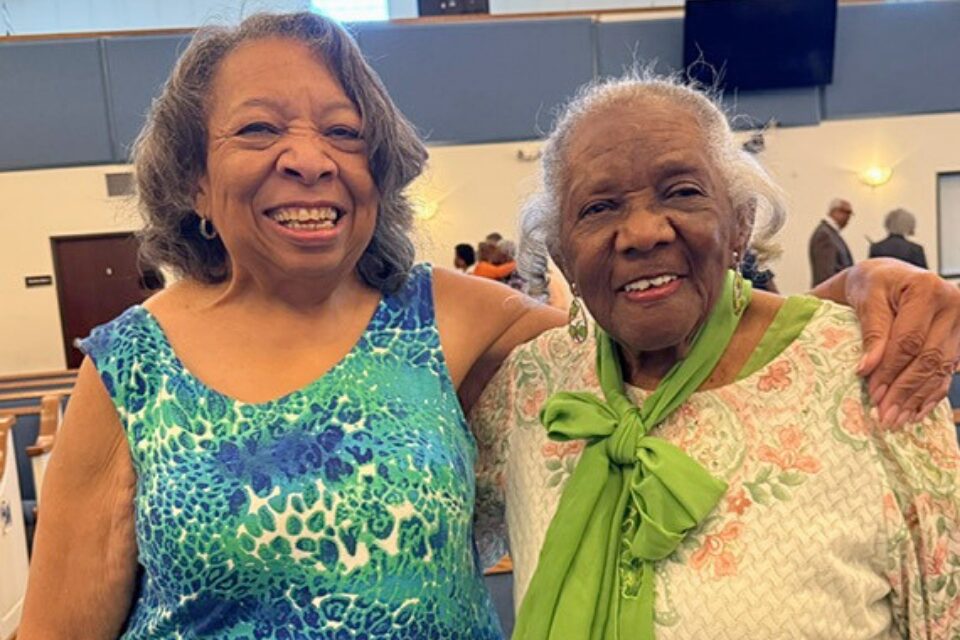
The Michigan Conference BMCR was organized by Black laity and clergy. However, their work and mission are offered as open invitations to all who wish to participate. The mission of renewal and vibrancy of the Black church is a shared goal for the church at large, to make disciples, nurture and grow, and transform the world through the life and work of our Lord and Savior, Jesus Christ.
Want to learn more about BMCR’s advocacy and justice work and how to stay connected? Contact Cecelia Tolliver, BMCR Vice Chairperson, at [email protected].
Editor’s note: Rev. Scott Manning of Black Methodists for Church Renewal contributed to this article.
The publication of this article was made possible thanks to generous financial gifts from local United Methodist churches in Michigan through Ministry Shares. Thank you! Learn about the impact of Ministry Shares on mission and ministry in Michigan and around the world.
Last Updated on July 2, 2026