
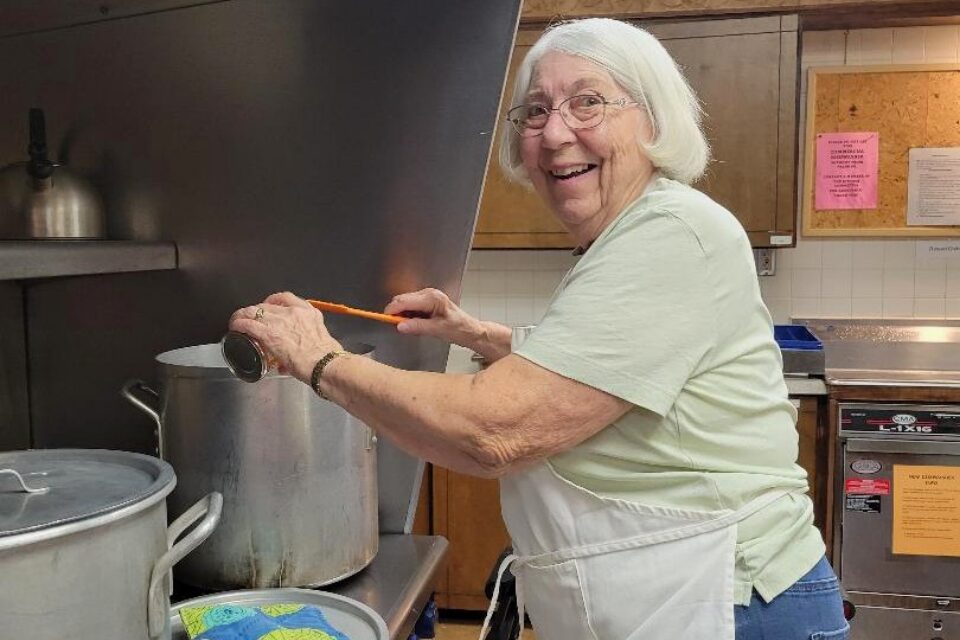
Georgetown UMC recently raised $2,500 for the Gardens of Hope campaign. The event celebrates past freedom and supports future hope.
KAY DEMOSS
Michigan Conference Communications
“Long ago my country was a land of sugarcane and coffee fields, and my people were enslaved working under the fiery sun, growing vegetables, making soup for their masters, soup they were never allowed to eat themselves. Freedom Soup was only for the free,” said Gran. “No soup for New Year’s?” My face felt hot. “And then what happened?” I ask.
Thus begins the story of Haitian independence, as told by Tami Charles in the children’s book “Freedom Soup.” What happened next in 1804 was a revolution in Haiti that secured its freedom from France. What happened next in May of 2026 was a luncheon inspired by the story behind a recipe for freedom.
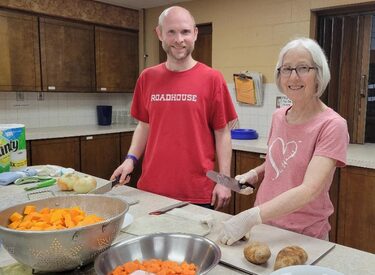
A five-person crew spent Saturday in Georgetown UMC’s kitchen chopping and then cooking the dozen vegetables that go into the savory beef stew. The soup’s key ingredient — pumpkin, called “joumou” in Haitian Creole — came from a can, however. Fruits eaten in Haiti (bananas, watermelon, and grapes) and a baguette, a traditional French bread, were also on the menu. Gateau a L’orange (Orange Cake) was the dessert.
Valerie Mossman-Celestin, co-chair of the Michigan Haiti Task Force, was on hand Sunday to share how the Michigan Conference’s Gardens of Hope campaign will transform communities in Haiti through education, health care, and community-led savings and loan initiatives. The 60 who came to the table after worship learned that the dollars raised at the Freedom Soup Lunch will provide vital resources to empower local farmers, educate children, and enhance access to medical care.
Now, 11 weeks later, Valerie says Haiti’s need for these ministries is greater because of the U.S. government’s actions. In June, the Supreme Court ruled that the administration could end Temporary Protective Status (TPS) for Haitians and Syrians. Approximately 350,000 Haitians held TPS nationwide, having lived and worked legally in the United States since the 2010 earthquake in Haiti.
As of July 27, 2026, Haitians lost their employment authorization and residency protections. They now risk deportation to Haiti, a country experiencing violence, gang activity, political instability, and food insecurity. Human Rights Watch calls the situation in Haiti one of the world’s most severe human rights crises.
“Deportees face a higher-than-average risk of violence (kidnapping, rape, murder) because they are perceived to have greater financial resources or international ties to people who will pay,” Valerie shares. “This has always been true for the diaspora, but it is even more so under current conditions.” She quotes Haiti advocate John Carroll: “Deporting Haitians is like a person who jumps from the window to escape a fire and then is pushed back in the front door.”
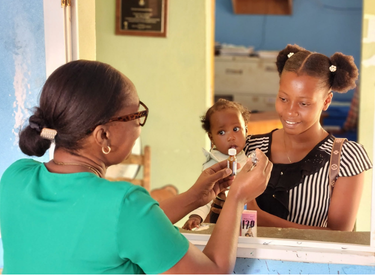
“So, now we have people returning to Haiti,” Valerie explains. “This increases demand for health care, shelter, education, and vocational opportunities as displaced people return.” Valerie says space is a constraint for ministries at HAPI. Valerie serves as the executive director of HAPI (Haitian Assets for Peace International). “We are rearranging rooms to add more maternity beds because otherwise we sometimes have to send moms home to make room for the next birth.” She adds, “Funds from Gardens of Hope have been a timely blessing.”
The need for more support services in Haiti is not the only issue. Haitians with TPS who were working in the United States had been sending money to their families in Haiti. “With work permits revoked, that source of income is now gone,” Valerie states.
Gardens of Hope was approved at the 2025 Michigan Annual Conference. The goal is to raise $215,000 for ministry partners in Haiti, achievable if every United Methodist congregation in Michigan contributes $350. The 2026 Annual Conference extended the effort through the end of 2027. “We have crossed the halfway point,” Valerie notes, with 370 churches not yet participating. Each ministry has received about half of what was pledged.

As needs in Haiti escalate, churches are encouraged to contribute. Get inspired by Georgetown UMC’s Freedom Soup Lunch to raise funds for our EngageMI partners in Haiti, or review 25 ideas for having fun with fundraising to create your own.
Also, a Bike Ride for Haiti is set for Labor Day weekend, a month from now. The Bike Ride for Haiti is scheduled for Saturday, September 5, with rides starting from Midland. Cedar Springs is the staging point for rides on Monday, September 7. Both begin at 8 am, with routes ranging from 10 to 75 miles. Register to ride on the Bike Ride for Haiti web page. Pledge sheets and other resources are also available for download. A $26 registration fee covers all ride costs. All donations go to Gardens of Hope.
Haitians eat Freedom Soup every New Year’s Day. But freedom is not something you get out of a bowl with a spoon. The Gardens of Hope campaign seeks to nurture leaders, teach, and heal in ways that empower Haiti’s people to be free from the cycle of poverty that robs them of dignity and opportunity. Please give generously.
Editor’s Note: The Gardens of Hope campaign supports the Michigan Conference Commitment to the People of Haiti and three important EngageMI partners: Grace Children’s Hospital, HAPI – Haitian Assets for Peace International, and Jeremie Rising — nurturing a “healthy field” for lasting change. Half of all donations also empower local leaders through a new partner, Grassroots Community Voices Foundation (MUSO).
Last Updated on August 11, 2026