
A scenic road at the tip of the Keweenaw bears the Brockway name. Rev. Jeremy Peters explains how it leads back to Flint’s oldest congregation and the circuit rider who planted it.
REV. JEREMY PETERS
Flint: Court Street UMC
At the far end of the Keweenaw Peninsula, there is a spectacular spot called Brockway Mountain Drive. A cruise up the drive will take you more than seven hundred feet above Lake Superior, with stunning views of the lake and Copper Harbor below.
It’s one of my favorite spots in all of Michigan, and it has an unexpected connection to the congregation I serve, Court Street UMC in Flint, more than 350 miles away. Founded in 1836, Court Street was Flint’s first congregation of any kind, and its story begins with the man whose family gave that mountain its name.
Brockway Mountain Drive is named for Daniel D. Brockway. Born in Vermont in 1815, Daniel moved with his family to the Keweenaw in 1843, at his brother’s urging, who assured him that the Upper Peninsula was a land of opportunity.
Daniel settled in L’Anse for a few years, working as a blacksmith and mechanic, but in 1846 he decided to join the Keweenaw copper boom. He moved up the peninsula and built the first permanent structure in Copper Harbor: a sort of hotel that sheltered miners, government agents, and just about anyone passing through.
Daniel spent the rest of his life in the Keweenaw. In addition to his hotel business, he worked as a mine agent, postmaster, politician, and inventor. He became so closely associated with the settlement of Copper Harbor that the mountain and its road eventually came to bear his name.
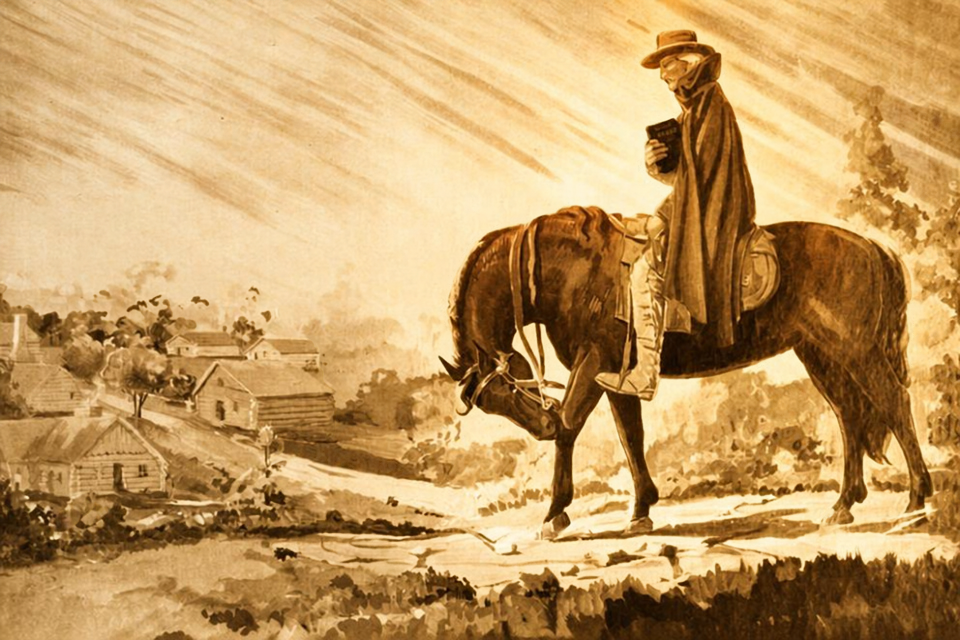
So what does a mountain in the Keweenaw have to do with a church in Flint? That brother, the one who encouraged Daniel to come to the Upper Peninsula, was Rev. William H. Brockway, the first Methodist minister licensed to preach in Michigan and the founding pastor of Court Street UMC. Rev. Brockway preached in Flint for the first time in 1835 and, in 1836, organized nine Methodists into that first congregation.
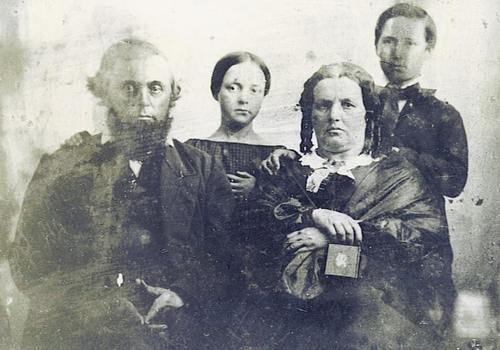
William soon moved from southeast Michigan to the Upper Peninsula. He ministered to Indigenous inhabitants, copper miners, and soldiers alike as he traveled from one end of the peninsula to the other.
One reporter traveling across the Upper Peninsula in 1845 described a memorable encounter with Rev. Brockway. One Saturday night, while camping about 15 miles north of L’Anse, the reporter was awakened around 1 am by excited voices. He left his tent and found several “Indian voyageurs” and a “plain-dressed Yankee-looking man.”
He learned that this man was Rev. Brockway, returning from a trip to visit some far-flung settlements. Rev. Brockway and his four Ojibwa companions had traveled 80 miles that day in a birchbark canoe, and the preacher was eager to press on to reach L’Anse in time for Sunday worship. After a bite to eat and a cup of tea, Rev. Brockway and his friends set off again into the night.
William Brockway became one of the most prominent Michiganders of his time, and United Methodists across the state continue to live by his legacy.
He served as chaplain to Michigan’s 16th Infantry Regiment during the Civil War and as a member of both the Michigan House and Senate. He helped found the Bay View Association near Petoskey, where Methodists still gather each summer. For nearly forty years, he served as agent and trustee of Albion College, helping to build up both the college and the city. A commercial building in downtown Albion is still known as the “Brockway Block.”
When I think of Rev. Brockway and all that God has done in the last 190 years, I can’t help but think of the parable of the mustard seed (Matthew 13:31-32). Jesus compares the kingdom of God to a tiny mustard seed that grows into a great tree whose branches give shelter to the birds.
That is certainly the Court Street story: A young man traveled from Vermont to Michigan and became a circuit-riding preacher, moving from cabin to cabin and sharing God’s love with anyone who would listen. He gathered nine people into a sort of family and encouraged them to share the love of Jesus with each other. That seed of faith grew into Court Street United Methodist Church, and many birds still find shelter in its branches.
It’s also the story of so many of our congregations across Michigan: a handful of faithful people, a preacher willing to travel, and a God who makes small things grow. Wherever your church first took root, the same seed is still at work. Thanks be to God!
Editor’s note: This article was adapted from an article published in the weekly newsletter of Flint: Court Street UMC.
The publication of this article was made possible thanks to generous financial gifts from local United Methodist churches in Michigan through Ministry Shares. Thank you! Learn about the impact of Ministry Shares on mission and ministry in Michigan and around the world.
Last Updated on September 29, 2026