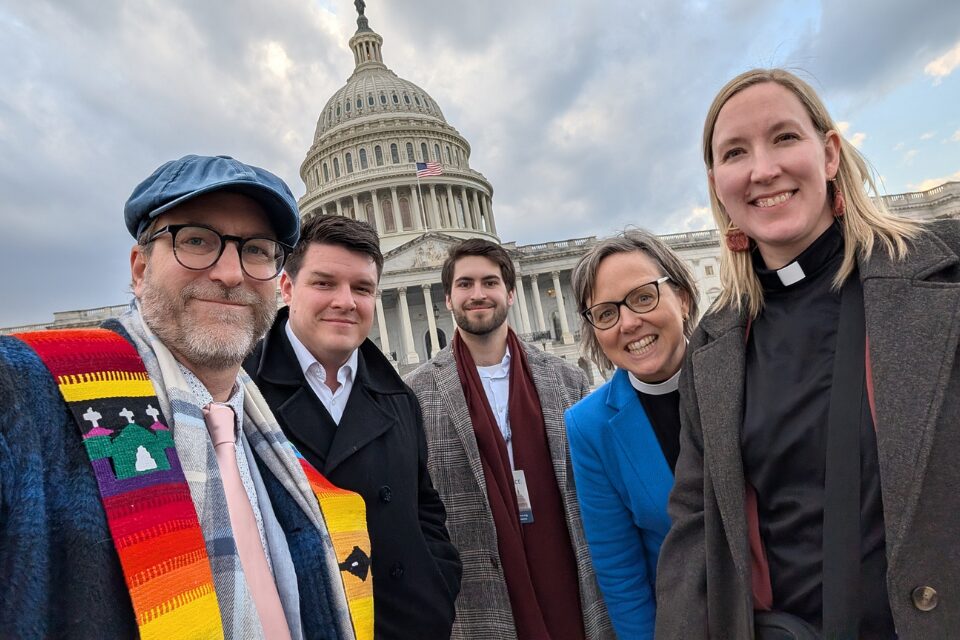
Michigan United Methodists joined more than 2,000 people of faith on Capitol Hill to worship, sing, and march to bring attention to the plight of immigrants in the United States.
REV. ERIK ALSGAARD
Retired Elder, Baltimore-Washington Conference
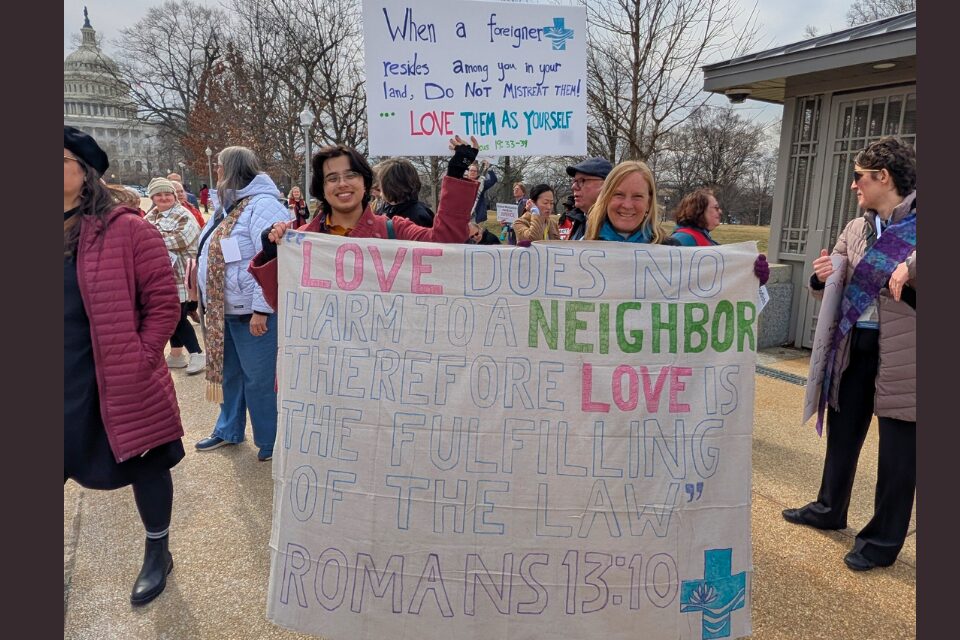
WASHINGTON — More than 2,000 people of faith gathered in and around three churches on Capitol Hill in Washington, D.C., on February 25 to worship, sing, and be spiritually prepared for a march around the Capitol to bring attention to the plight of immigrants in the United States.
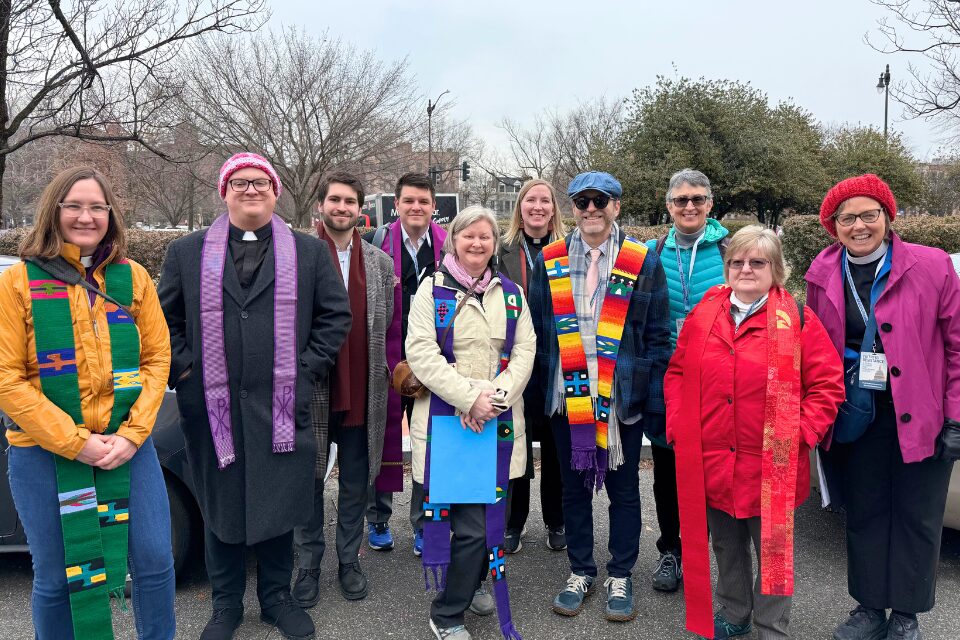
“Faithful Resistance: A Public Witness for Immigrant Justice” brought together faith leaders from various traditions, including United Methodist bishops, clergy, and laity, to stand in solidarity with immigrants. Several lay and clergy members from the Michigan Conference heard the invitation and traveled to our nation’s capital for this daylong event.
Capitol Hill United Methodist Church served as host for the worship service, which reached standing room only within minutes of the doors being opened. Ebenezer United Methodist Church and St. Mark’s Episcopal Church served as overflow locations where worshipers watched the livestream.
Watch the recording of the Faithful Resistance livestream.
Retired Bishop Minerva Carcaño, who helped organize the event as chair of the United Methodist Immigration Task Force, said that the purpose of Faithful Resistance was to witness to the Christian faith and to let immigrants know that they do not stand alone.
“It is a movement, a rising movement,” she said, “of people who stand for justice and who are wanting to express their faith in a very public way.”
Bishop Carcaño said the planning for the witness began last fall, with a team comprising ecumenical leaders from across the country, including staff of the General Board of Church and Society and the General Commission on Religion and Race.
“The vision,” she said, “has been to just show up in D.C. and give this public witness. Our hope is that immigrants across the country would feel our presence and know that we stand with them.”
Bishop Julius C. Trimble, top executive of Church and Society, also highlighted the support he hoped immigrants would feel from the witness.
“This is a gathering not only to march but to demonstrate our support for immigrants,” he said. “It is also a faithful resistance to the detrimental actions that have been taken by the current administration to decrease civil and human rights.”
Trimble said that the church takes seriously the call of Christ to love our neighbor from Matthew 25.
“What we saw happening in Minneapolis and Chicago and Washington, D.C., is overreach; it’s time for the church to not only raise our voice but to also stand in solidarity with those whose lives have been lost,” he said. “Today, the church is saying that we’re taking seriously the commandment to love God and to love neighbor, and to welcome the stranger.”
Bishop LaTrelle Miller Easterling of the Baltimore-Washington and Peninsula-Delaware Area brought the sermon, preaching from Psalm 24.
Watch Bishop Easterling’s powerful sermon.
Read Bishop Easterling’s sermon manuscript.
“The earth is the Lord’s,” she said, quoting Psalm 24:1. “It all belongs to God. All,” she emphasized.
“It does not belong to empires or corporations,” she said. “Not to colonizers and patriarchs. Not even to the church. It is the Lord’s.”
The bishop said that many people today are practicing “theological malfeasance,” believing that they can own the world when, in fact, it’s not ours.
“We find ourselves here because we have succumbed to a heretical understanding of possession,” she said. “We have had, in much of Western Christianity, the miseducation of the baptized. We act as if we own creation. We have been taught that some are more entitled to land than others. That some are inherently entitled to freedom while others can only exist in a subservient posture.
“We have been taught that some countries are more noble than others. Our theological colonization shows up when we Christians defend immigration policies that privilege wealth, whiteness, and Western passports while criminalizing black and brown bodies and the global South.”
Interrupted several times by applause, the bishop said that the current political system of injustice is “antithetical to the will of God.”
She reminded the congregation that Jesus was a migrant, and she lamented over what she has seen popping up in some churches: American flags in the sanctuary and some congregations reciting the Pledge of Allegiance.
“The flag is not the symbol of our salvation,” she said, “nor of our redemption. The eagle never flies higher than the cross.”
Richard Church, a lay person from Covenant United Methodist Church in Gaithersburg, Maryland, attended the event as a member of the Committee on Native American Ministries of the Baltimore-Washington Conference. He helped bring the invocation for the worship service at Capitol Hill United Methodist.
“I’m here as part of the movement for equality,” he said. “This is all part and parcel of my faith, which drives me to serve my neighbor, and all people are my neighbor.”
Rabbi Marc Israel, who serves at Tikvat Israel in Rockville, Maryland, sat in the altar area to help demonstrate the interfaith nature of the witness.
“Standing up for the immigrant is the backbone, the heart, of what our faith is about,” he said, “Our founding story as Jews is the exodus from Egypt, where we are told that God brought us up out of Egypt so that we would know the heart of the stranger. We, therefore, must love the stranger, care for the stranger, and protect the stranger.”
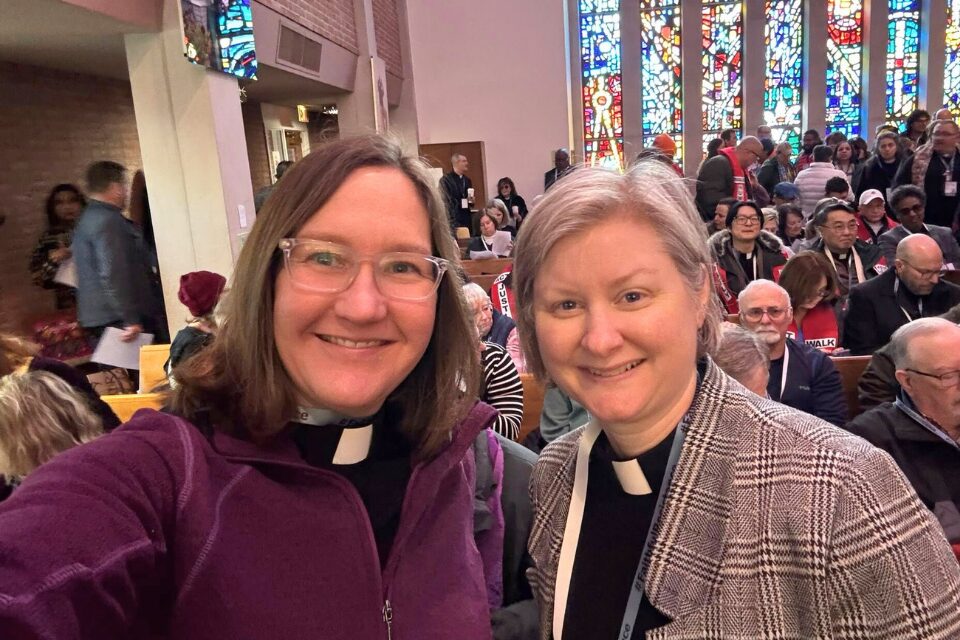
Rev. Stephanie Vader, the host pastor at Capitol Hill United Methodist, said that the day was full of meaning for her and her church. Her church has been involved in migrant ministry since 2022, when they responded to a need: Thousands of immigrants were bused to Sanctuary Cities, including Washington, and simply dropped off with no resources.
The Capitol Hill church sprang into action, providing temporary shelter, food, and other resources.
“This is a really important part of who we are and what we do,” she said, “because Jesus was also an immigrant. He also migrated down from heaven to be with us.”
Vader said that more than 14,000 migrants have come through her church in the past four years. Today, the church hosts a free store — they call it a “tienda” — where people can come get supplies at no cost. They also deliver groceries to families who are afraid to leave their homes, and have hosted immigration clinics.
One of the many groups marching down East Capitol Street was a group of Episcopal priests and lay people from the Episcopal Diocese of the Great Lakes in Michigan. Each of them was wearing a red knit cap with tassels and black cassocks.
“The red hats were associated with the Norwegian resistance under the Nazis, and they caught on during the events in Minnesota,” said Matt from Alpena, who would not give his last name. February 26, 1942 — almost 84 years to the day — is the day the Nazis outlawed this form of resistance.
“We came all the way here to stand with our faith siblings against the immigration policies the U.S. has been imposing,” said Rev. Jess Hart, pastor at St. John’s Episcopal Church in Mt. Pleasant.
At the end of the march, participants and faith leaders gathered at Senate Park, just north of the Capitol, and dozens spent time visiting lawmakers on Capitol Hill.
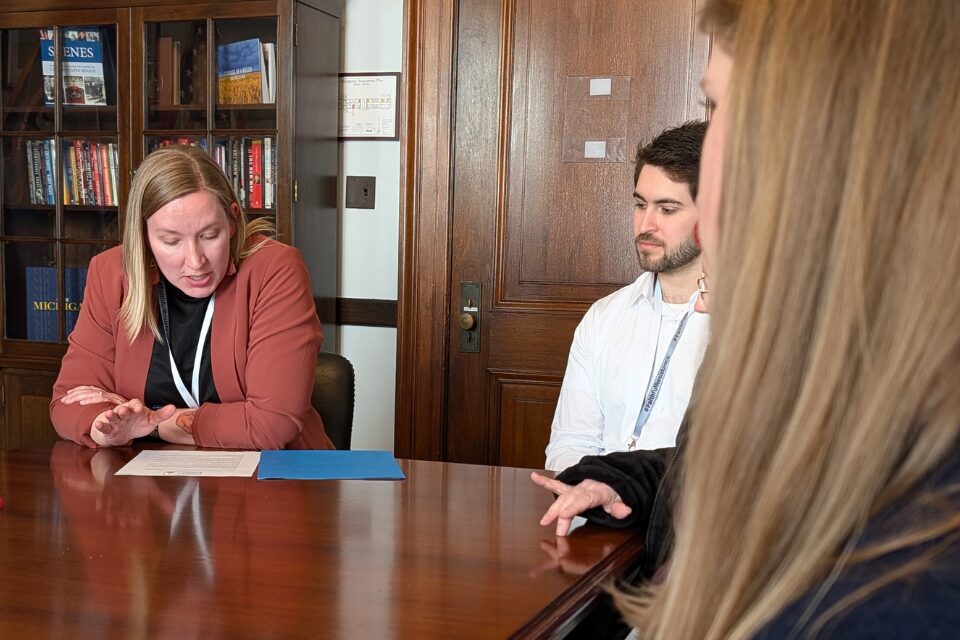
The education and experience gained from participating in the Michigan Conference’s annual Advocacy Day prepared several Michigan United Methodists to meet with their lawmakers, those who can make significant changes related to federal immigration policy.
Rev. Tom Arthur, pastor of the Eastwood campus of Sycamore Creek United Methodist Church in Lansing, said, “Our annual advocacy work in Michigan prepared me to take this next step to the federal level. Talking with federal legislators was not much different from talking to state legislators. The main challenge was just finding their offices amid the maze of D.C. corridors! Our Michigan teams worked cohesively, asking our legislators to make specific commitments to immigrant safety and fair treatment.”
Rev. Michal White, pastor of Sycamore Creek’s South Lansing campus, was surprised to discover that many attendees of Faithful Resistance chose not to meet with their elected officials. But she felt it was the most important part of the day.
“For other Michigan clergy and me,” said White, “it was an easy yes. When I reflected on why I responded that way, it was clear that my experiences at our Advocacy Days had given me the skills and confidence needed to participate effectively in the meetings on Capitol Hill. I’m so thankful to be working with such faithful clergy in the Michigan Conference!”
James Deaton, Senior Content Manager for the Michigan Conference, contributed to this news story.
The publication of this article was made possible thanks to generous financial gifts from local United Methodist churches in Michigan through Ministry Shares. Thank you! Learn about the impact of Ministry Shares on mission and ministry in Michigan and around the world.
Last Updated on March 11, 2026