

A Volunteers in Mission team from Livonia: Newburg UMC shares their experience serving at United Methodist-affiliated Alaska Pacific University’s Spring Creek Farm and learning about sustainable agriculture.
MARSHALL MONTGOMERY
Livonia: Newburg UMC
Ten church members from Livonia: Newburg UMC assembled a United Methodist Volunteers in Mission (VIM) team and answered a call from our neighbors at Alaska Pacific University’s (APU) Spring Creek Farm, located on APU’s Kellogg Campus in Palmer, Alaska. We were there for a week, July 6-12, 2026.
The main project was to rebuild tent platforms to support outdoor exploration and serve as educational gathering spaces for the community and farm personnel. In exchange for helping with the rebuild, we engaged in a knowledge exchange about local agriculture and the food insecurity facing Alaskans. In addition to meeting wonderful people, we became part of the Alaska Tilth project, a community-driven program that distributes food through the food bank and a Community Supported Agriculture (CSA) program.

Our first-day drive was new, breathtaking, and beautiful. We made a scenic stop for a group selfie with a mountain ridge in the background. Back in the van, we climbed the hill to find the Spring Creek Farm sign. A long dirt road lay ahead, but we were excited for what was in store. Our host, Pastor Kelly Marciales, part of the pastoral team at Christ: First UMC in Wasilla and also the program director for APU, greeted us at the end and guided us. We walked into an old farmhouse that had been partially converted into office space in the rear, an educational classroom, and utility space in the basement. The first floor also featured a large sitting area with a wood-burning fireplace, a dining room, and a kitchen. After a quick prayer and breakfast, we took a tour of the grounds. We met some of the interns, toured the farming area, and visited the site of the damaged yurt platforms that needed rebuilding.
The second day began with cooler temps and drizzling rain. To support the local community, we ate at a diner in Palmer. Afterward, we met with Pastor Kelly and headed to the Palmer Hay Flats, a protected wetland area, to thin apple trees, harvest rhubarb, and pick saskatoon berries. It was a beautiful backdrop, with an elevated view over the flats and nearby mountains. Back at the farm, we trimmed, washed, and prepared the harvested rhubarb for distribution to the Betty White Food Pantry (named after a local philanthropist). Due to the rain delay, the group headed back to campus for lunch, communion, and devotions, then to yurt platform building. We took advantage of Alaska’s long daylight and worked until almost 9 pm.
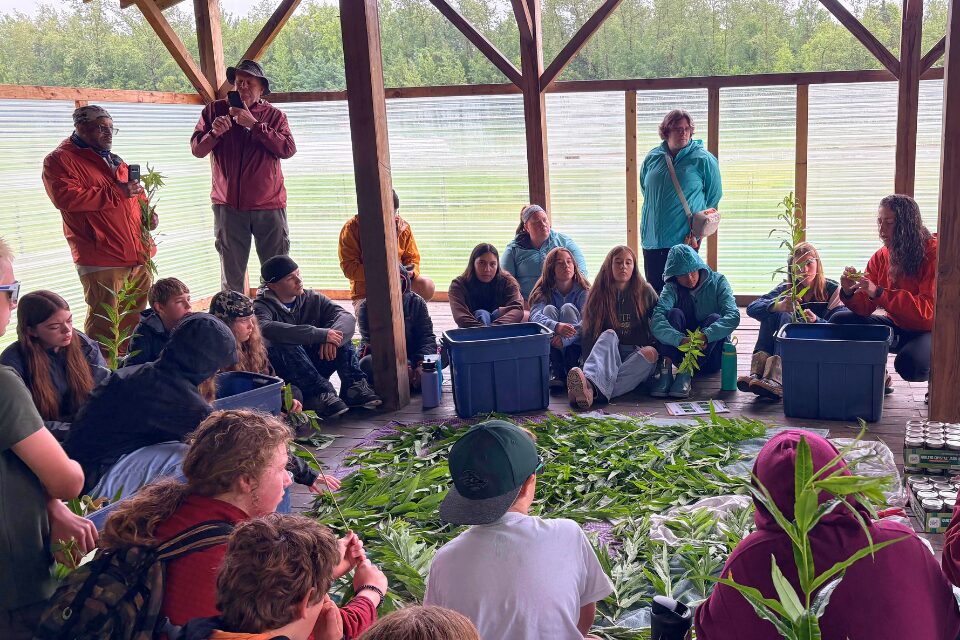
On the third day, we arrived on campus with the day’s agenda to learn what was safe to eat, which plants can kill you, and how to harvest fireweed. A group of young people from across Alaska joined our educational experience. This walk made you never want to cut what looked like weeds again. Along the walking path, we picked fireweed to bring back and learn how to make fireweed tea, also known as Ivan Chai. In the Matanuska-Susitna Valley, people use fireweed in many drinks, jellies, and desserts, usually mixed with pure Alaskan honey.
All week long, our group engaged with the community. We found great local ice cream, small-town diners, larger restaurants, and a delicious doughnut shop (Holy Moley Donuts). At lunch at the top of Hatcher Pass, we met local residents and explained why we were there and where we were working. They blessed us by extending the Alaskan resident discount. We ended the week with service at Pastor Kelly’s church in Wasilla. Our group made up about half of the worshippers that day, and Ms. Pat (a missionary pioneer) read the scripture for the day. After the service, the congregation fed us salmon chowder and cornbread while sharing stories about growing up in Alaska or their migration to the area. They also educated us on the different types of salmon: Chinook (King), Sockeye (Red), Coho (Silver), Humpback (Pink), and Chum (Keta/Dog), and on where the best fishing areas are.
As a team, we prayed together, had devotional time, explored, and fellowshipped with each other and the community. We gave our all, working while learning and respecting local customs. In return, we took time to recognize God’s beauty and grace in all his creation.
History
Alaska Pacific University maintains a historic and ongoing affiliation with The United Methodist Church. Founded in 1957 as Alaska Methodist University in Anchorage, it remains a church-related institution and was designated a United Methodist Historic Site in 2017.
In 2021, in response to Alaska’s changing climate and growing concerns about food insecurity in underserved rural and urban communities, a network called Alaska Resilience Farms was established to increase food security and sovereignty statewide. Since then, the network has grown into a strong collaborative that connects Indigenous and rural communities across the state, helping to share agricultural knowledge, resources, and local expertise more widely.

Alaska Tilth is a community-driven initiative focused on addressing food insecurity in the Matanuska-Susitna Borough. Alaska Tilth aims to redistribute over 6,000 pounds of fresh, locally grown produce each year to food-insecure individuals and families in the region. The program purchases market “seconds” (imperfect or surplus produce) from local farms and food producers and redistributes them to anti-hunger organizations. Alaska Tilth also accepts donations from farms, including Spring Creek Farm, to ensure fresh, nutritious food reaches those in need.
At Spring Creek Farm, several interns from across the Lower 48 receive hands-on training in ecological horticulture and food-system resilience. Interns focus on sustainable agricultural practices, including crop rotation, soil health, and ecological farming methods.
Kelly Marciales is the Director of Alaska Pacific University – Kellogg Campus and oversees the development of the Alaska Tilth program. Pastor Kelly is also part of the ministerial staff at Christ: First UMC in Wasilla.
Continued Support Welcomed
Spring Creek Farm services a secondary farm with 150 apple trees, rhubarb, saskatoon berries, and a variety of vegetables. The farm is currently under a land deed and could be lost if the current owner passes away. The Alaska Tilth program manages the land and harvests the crop for distribution. To secure the land, the program needs to raise $30,000 for appraisal and deed transfer.
Additionally, each year, interns are hired as part of the agriculture education program and serve at the farm, food bank, and distribution center. Each intern costs $500 per week, and the season runs from May 1 to October 31, including on-site lodging. Ongoing support is needed to sustain and extend this unique learning experience. Learn more about this program and how to financially support it.
Interested in forming a similar Volunteers in Mission team to serve in Alaska or someplace else? Contact Jody Pratt, the Michigan Conference’s Volunteers in Mission Coordinator, at [email protected], and visit this web page to learn more.
The publication of this article was made possible thanks to generous financial gifts from local United Methodist churches in Michigan through Ministry Shares. Thank you! Learn about the impact of Ministry Shares on mission and ministry in Michigan and around the world.
Last Updated on August 25, 2026