

ROLAND FERNANDES
Treasurer, General Bd of Global Ministries
Treasurer, General Bd of Global Ministries
I have spent most of my professional life as a financial officer in service to the church.
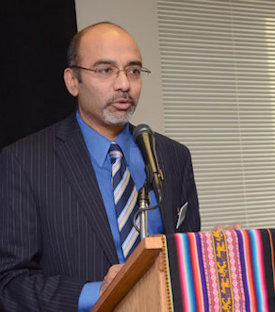 I spent nine years with the Methodist Church of India and almost 20 with the United Methodist General Board of Global Ministries. In these years I have experienced a great deal of inspiring, heart-warming, and committed mission effort and effective results—a great deal of Christ-like love offered, received, and shared.
I have also encountered a network of complex economic, regulatory, and legal accountability. While ethical issues are bound to occur in global organizations, such issues are rarely seen by the constituent parts of the mission community—donors, recipients, missionaries, or volunteers.
Mission involves resources, which means someone’s money. That has been the case since Jesus sent out 70 missionaries (Luke 10:1-9), advising them to take no purse and rely on the generosity of those they met for food and lodging. Mission requires means, and in the case of The United Methodist Church, the means come from United Methodist church members.
Here are a few examples of the financial and legal issues that a border-crossing global mission agency faces:
- Transferring funds from one fiscal system or culture to another—different countries have different rules for banking, paying personnel, and providing benefits. It takes a skilled and experienced staff to know how to operate on a global scale.
- Handling the registration of property and projects—some countries require religious groups to have official government recognition; others sanction certain private or church activities, such as education. It takes attorneys familiar with international law, knowledgeable staff members, and attorneys from different countries working together to handle these issues.
- Evaluating the fiscal and legal capacities of mission partners—some have professional-grade capacity while others need training. It takes skills learned from experience to be a patient partner; internal auditors must be both pastoral and good at ensuring accountability.
And as in every walk of life, integrity—both personal and institutional—is critical. Global Ministries has personnel, projects, and partners in more than 125 countries, all of which have their own ways of keeping books, reporting revenues and expenditures, and responding to audits. Audits are important accountability tools for mission finance because they keep faith with mission supporters and beneficiaries.
Accountability is one of the biggest issues we face in the conduct of world mission. We must balance the goals of mission— making disciples of Jesus Christ for the transformation of the world—with financial integrity. Intervention may be required when signs of financial misappropriation or negligence surface. This is not easy when all the parties involved may believe they are doing God’s work. Yet, all of us who handle funds need someone looking over our shoulders to ensure that the funds entrusted to us are managed as the Book of Discipline and the General Conference intend.
Perhaps the most difficult challenge of all is how to guarantee the accountability of others and ourselves with a sense of humility. We are entrusted with God’s mission and God’s goods. We are privileged to be instruments for the mission through God’s grace. Grace always requires thanksgiving and humility.
Last Updated on January 30, 2024