
June 19 is Juneteenth, a time of communal remembrance, both a festival of freedom and an acknowledgment of past pain. This history is ours as Americans and people of faith.
FAITH GREEN TIMMONS
Michigan Conference Communications
Juneteenth, also called “Freedom Day” and often referred to as “Jubilee Day,” is rooted in the biblical tradition of the Jubilee year in Leviticus 25. Prescribed to Moses on Mt. Sinai nearly three thousand years ago and instituted before the Hebrew exile, the concept symbolizes release and renewal. Blacks in bondage in the South identified with God’s grace, as demonstrated by the release of slaves following the Emancipation Proclamation.
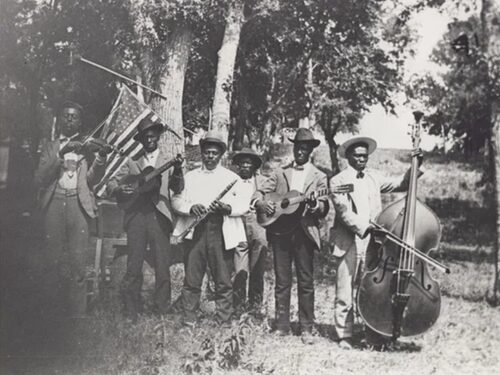
Modeling their late-nineteenth-century celebrations after scriptural traditions symbolizing gratitude, Blacks named their early American commemoration the “Juneteenth Jubilee.” The gatherings began with worshipful marches to church services featuring singing, prayer, and praise, fostering a sense of community rooted in faith and shared history.
Rev. Jack Yates, a formerly enslaved pastor and community leader in Texas, is one of the central figures who established this long-standing commemoration. When Yates gained his freedom, the first thing he did was advocate for his wife. Disturbingly, intent on evading the Emancipation, their former master fled with Mrs. Yates in his custody. Devastated by losing the love of his life to this injustice, Rev. Yates begged to be re-enslaved himself rather than live as a free man without her. This faithful husband and devoted father longed far more deeply for his family than for freedom for himself.
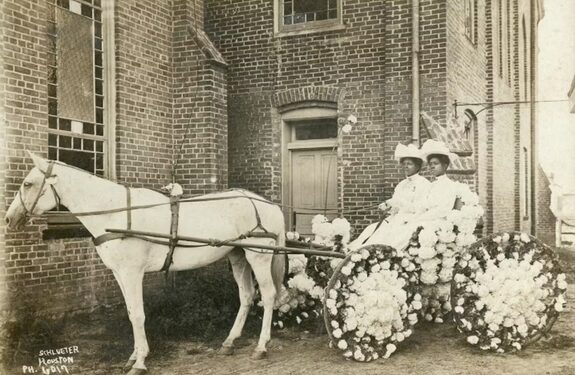
Rev. Yates’ devotion made him a central figure in founding Freedman’s Town in Houston. Known for giving glory to God for the purchase of property, he helped establish communities for formerly enslaved families. Juneteenth has long celebrated progress, marked by parades and horse-drawn carriages fit for royalty. Rev. Yates remains a historic faith figure, remembered for ministering to the spiritual and physical needs of thousands.
Today, Freedman’s Town remains an African American municipality. This community was essential not only for their adjustment but also for their survival. Rev. Yates and other pastors made it the church’s responsibility to secure essential resources for congregations serving people of color. The church was at the center, where the holiday Juneteenth began.
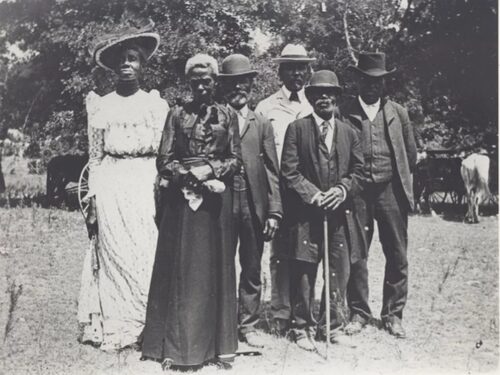
Early Juneteenth celebrations, which began in Texas around 1866, were sometimes held on land purchased for the events. The commemoration featured powerful symbolic acts, such as discarding old garments worn during enslavement into a river and putting on new clothing. Today’s observances often include lectures about those experiences, exhibitions on African American heritage, and voter registration efforts. These efforts evoke hope and a sense of progress, emphasizing the importance of advancement and resilience, and make the holiday relevant for modern communities, inspiring ongoing commitment to justice and equality.
The date — June 19, 1865 — is highly significant because until then, Black Texans were unaware of a historic presidential pronouncement that much of the rest of the world knew: by law and on paper, they had been deemed free for years. Sadly, it took 30 months and 19 days for them to learn of the Emancipation Proclamation, which President Abraham Lincoln signed into law on January 1, 1863. For over two years, they were unaware that their physical and proverbial chains had long been broken.
In this age of instant access to information, it is disturbingly difficult to imagine waiting years in captivity, while deliberately denied the truth of your freedom. This outlandish occurrence underscores Juneteenth’s significance. It inspires admiration for the perseverance of those who endured such injustice and lived to thank God for it, while serving as a clarion call to recognize ongoing struggles for justice. Juneteenth is more than merely a new national holiday. Its expanding commemoration calls attention to disturbing and difficult facts, too crucial to ignore: six to eight generations of progress resulting from the 13th Amendment could easily regress if its meaning and significance are not strongly honored and strictly upheld.
Juneteenth reminds us of illegal, widespread acts of defiance against the United States government, the deliberate denial of human rights for financial gain, and wickedness fueled by racial hatred. White leaders in the Lone Star State were fully aware of President Lincoln’s pronouncement. On June 19, 1865, hard-working laborers whom they counted as human chattel learned that truth as well.
On that day, two thousand Union troops, many of whom were Black, arrived in Galveston to announce the news of freedom. Marching in mass, they declared, “The people of Texas are informed that in accordance with a Proclamation from the Executive of the United States, all slaves are free” and “the connection (between former master and slave) becomes that between employer and hired labor.” That meant over 250,000 Black people were now free. Despite that encouragement, the period following the announcement is sometimes referred to as “The Scatter.” Many left Texas to find family members and establish new lives in the postbellum United States. Their courageous self-determination symbolized strength that often inspires communities today.
“Juneteenth” derives its name from combining “June” and “nineteenth.” For roughly 160 years, it was a regional festival for family picnics and congregational gatherings. Former slaves made annual pilgrimages to commemorate this date as a life-altering Jubilee. As with most holidays, it was eventually commercialized and popularized as an ethnic gathering, with food secondary to the significance of freedom.
Traditional foods and drinks often feature red, which symbolizes sacrifice, strength, and ancestry and is associated with West African traditions. Examples include red drinks, red velvet cake, and barbecued meats. Historically, strawberry soda replaced traditional African beverages, such as kola nut or hibiscus tea, at annual celebrations.
Juneteenth became a national holiday in June 2021 under President Joe Biden. This significant step in acknowledging and celebrating African American history serves as a beacon of hope, reminding us that progress is possible and that the truth, no matter how long it takes, will eventually set us free. Juneteenth National Independence Day, enacted by Congress, was the first new federal holiday since Martin Luther King Jr. Day in 1983.
Juneteenth celebrations highlight African American history, culture, and progress. Traditions include public readings of the Emancipation Proclamation, singing traditional songs such as “Swing Low, Sweet Chariot” and “Lift Every Voice and Sing,” and reading works by African American authors.
The revelation on June 19, 1865, that all Blacks in the United States were now free was neither an isolated incident nor a rare occurrence. Unfortunately, evidence indicates that the systematic denial of access to information remains a persistent problem. Therefore, widespread acknowledgment of Juneteenth is both a tribute and a reminder that the truth sets us free.
Little-known and under-acknowledged travesties of justice continue, similar to the one perpetrated by Texan enslavers from 1863 to 1865. Hiding the truth enabled the exploitation of thousands by exploiting their lack of knowledge. Until the message specifically reached them, nothing changed. Lack of awareness continues to haunt families around the world. Prosecutions of predators are up, yet so is victimization.
As documented by the Hoover Institution, families of poor Black sharecroppers were forced into unpaid servitude in this nation as late as the 1960s. According to The New York Times, Daniel Smith, the last person born to an African slave, died in 2022. The last known survivor of the Black slave trade, Sylvester Magee of Mississippi, died in 2014. A Black woman named Mae Louise Miller and her six siblings claimed to have labored in captivity until 50 years ago. They filed a federal lawsuit in 2003 seeking reparations, alleging that their illiterate father was tricked into signing away the family land in a contract he could not read. The family was forced to work off the debt and could not escape. Their saga inspired the movie “Alice,” which was loosely based on Miller’s life story.
Juneteenth seeks to affirm the inherent dignity and worth of African Americans, grounded in the Christian belief that all people are created in the image of God (imago Dei), not 3/5th human, a deceitful degradation intended to misdefine and undermine one ethnicity in its entirety. Juneteenth offers opportunities for lament, not merely merriment.
The delay of liberation in Texas raises theological questions about delayed justice, echoing the concerns of the Hebrew Bible’s prophets. Therefore, Juneteenth is a time of communal remembrance, both as a festival of freedom and as an acknowledgment of past pain. Enslaved preachers often used the Exodus narrative as a framework for understanding their suffering and their hopes for deliverance.
Juneteenth is the oldest known celebration marking the end of slavery in the United States. It is officially known as Juneteenth National Independence Day and is often called “America’s second Independence Day.”
Events and Resources to Celebrate Juneteenth
Black Methodists for Church Renewal (BMCR) Annual Meeting and Juneteenth Celebration: Join clergy and laity from across Michigan for fellowship, celebration, and connection as we honor Juneteenth and the ongoing work of Black Methodists in the church and community. Saturday, June 13, from 11 am to 2 pm at Scott Memorial UMC in Detroit (15361 Plymouth Road). Lunch is provided. For information or to RSVP, contact Rev. Cornelius Davis, Jr. at [email protected] or Cecelia Tolliver at [email protected].
Juneteenth Celebration at the Flint Cultural Center: The Sloan Museum/Longway Planetarium in Flint is hosting a celebration on Saturday, June 20, from 11 am to 4 pm. Learn more.
June Ministry Planner: The ResourceUMC June planner offers ideas for integrating Juneteenth into church life. Learn more.
Worship Resources: Discipleship Ministries provides liturgies and songs and other resources for local churches, including suggestions for using hymns such as “Lift Every Voice and Sing” (United Methodist Hymnal 519) and “Freedom Is Coming” (The Faith We Sing 2192). Learn more.
R.A.C.E. Worship and Study Resource: The General Commission on Religion and Race (GCORR) offers a free “R.A.C.E. Toward Jesus” Juneteenth study, which uses a framework of Lament, Repentance, Hope, Liberation, Healing, and Reconciliation. Learn more.
Racial Justice Challenge: Originally observed in 2023, the Racial Justice Prayer and Action Challenge can be done every year and is a recommended activity to begin around June 19, with a focus on education and advocacy. Learn more.
The publication of this article was made possible thanks to generous financial gifts from local United Methodist churches in Michigan through Ministry Shares. Thank you! Learn about the impact of Ministry Shares on mission and ministry in Michigan and around the world.
Last Updated on June 17, 2026