

In celebration of World Communion Sunday, Jack Harish shares the story of Judson Collins and his impact on global Methodism.
JOHN E. HARNISH
Michigan Conference Communications
The date was September 6, 1851. It was the annual Missionary Day at the Michigan Annual Conference in session at First Methodist Episcopal Church in Monroe. Dr. James Watson had just mentioned Michigan’s gift to foreign missions, Judson Collins, when the door of the church silently opened and a pale, gaunt, young man walked slowly down the aisle.
Dr. Watson paused. It was Judson Collins.
His brothers, also preachers in the conference, rushed to greet him, realizing from his appearance that he had come home to die. He was 28 years old. He died the following spring, on May 13, 1852.
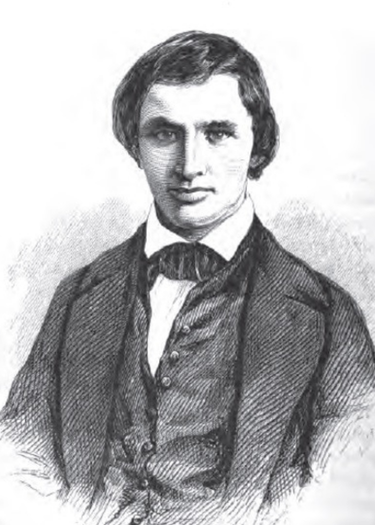
The saga of Judson Dwight Collins is one of the seldom-told stories of Michigan Methodism. Now, with the decommissioning of Judson Collins Camp, there are few reminders of his life. However, on this World Communion Sunday, his story serves as a testament to the long-standing commitment of Michigan Methodists to the needs of the world.
At the age of 15, Judson was converted during a revival service at First Methodist Episcopal Church in Ann Arbor. When the University of Michigan opened in 1841, he was one of five members of the freshman class, and he was part of the first class to graduate from the new university.
He felt called to China, but he took a position on the faculty of Albion College while applying to the mission board. Finally, he set sail from Boston on April 15, 1847, and five months later, he stepped ashore in China, becoming the first Methodist missionary to set foot on Chinese soil.
Collins wrote, “What a field is this for missionary labor! We seem as a drop in the ocean amid the mighty tide of life moving around us. O that the Lord would send more laborers and abundantly bless their labors in this land of moral death.” But before long, unsuitable food, hard work, and the climate drained his strength. In ill health, he left after three years, came home, and died with little awareness that the school he built would continue.
In a memorial address at the university on July 14, 1852, Rev. C. T. Hinman said, “The first missionary from your number has fallen — a martyr for China and for man. Like the master, he gave himself. The University of Michigan may well esteem him among her most honored sons. He was first in labor, first in sacrifice. It were meet that he should be first to receive his crown.”
Over the years, Michigan has sent other individuals and numerous volunteer mission teams to serve around the world, and every congregation is involved in global ministry through our Ministry Shares and special offerings on days like World Communion Sunday. I once heard a bishop say that there is no such thing as a local United Methodist church, because through our giving, every congregation is a global United Methodist church.
On World Communion Sunday, our offerings support student scholarships in the United States and international students in training to lead the church. For seven years, as a member of the staff of the General Board of Higher Education and Ministry, I saw firsthand how these gifts make a difference for students, the church, and global United Methodism.
Download resources and stories to promote World Communion Sunday in your congregation.
Though Collins thought he was a failure, he was not forgotten at his alma mater. In 1947, the University of Michigan held a Collins Centennial, naming him as one of their honored graduates. At the time, President Angell said, “It remained for the University of Michigan, through the person of Judson Collins, to make the most significant contribution to China’s history. He went as a missionary and laid the foundation of its educational life in a little public school in Fouchou.”
The logo for the now decommissioned Judson Collins Camp & Retreat Center in Lenawee County showed interlocking images of the United States and China, and for many years, the church in which he was converted, Ann Arbor: First UMC celebrated World Communion Sunday with Rev. David Church’s collection of flags from around the world.
On this World Communion Sunday, we need to hear once again the call that motivated Judson Collins to extend the mission of Christ through the lives of students supported by United Methodist scholarships.
Collins is buried in the family cemetery, a United Methodist historic site, near Unadilla, and a stained-glass window in Chelsea: First UMC honors the Collins family. His gravestone in Unadilla reads: “Rev. Judson D. Collins. Member of the First Mission of the Methodist Episcopal Church to China. Born Feb. 12, 1823. Died May 15, 1852. ‘He being dead yet speaketh. Christ shall be magnified in my body whether by life or by death. For to me to live is Christ, and to die is gain.’”
Sources
History of the Missions of the Methodist Episcopal Church, chapter 10, edited by Rev. B. F. Tefft, 1850.
An Address on the Life and Character of Rev. Judson Dwight Collins, Rev. C. T. Hinman, University of Michigan Collection. 1852.
Last Updated on September 30, 2025