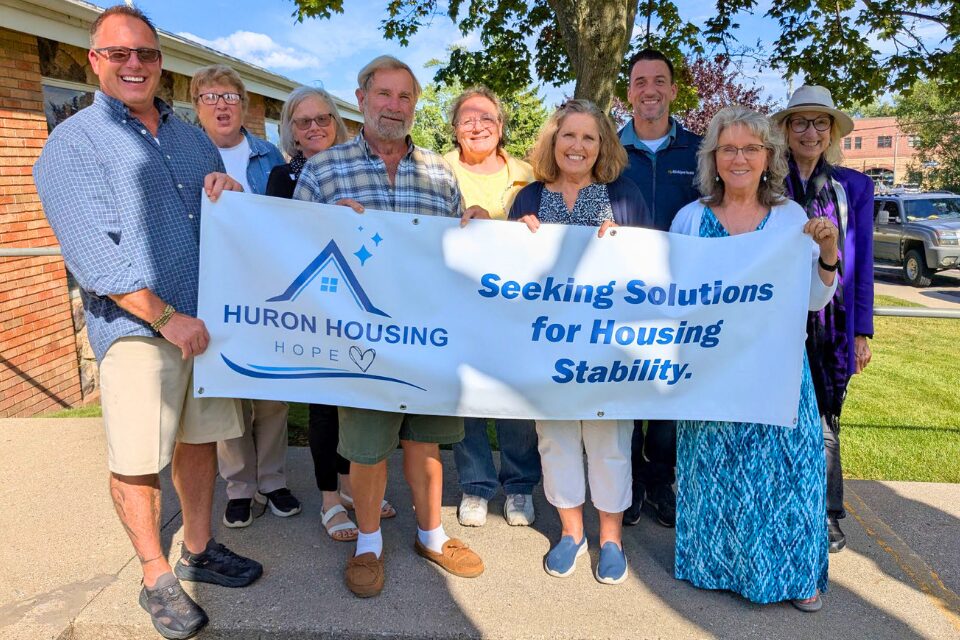
Oscoda UMC launched Huron Housing Hope, an ambitious community-wide housing initiative that creatively addresses local needs after the closure of a homeless shelter.
JAMES DEATON
Content Editor
A God-sized idea to help their neighbors has captured the imagination of a United Methodist congregation in a small resort town on the shores of Lake Huron, and with community buy-in, it’s taking off.
Oscoda UMC is located in the heart of downtown Oscoda, but it’s not just the church building’s physical location that has contributed to their gospel calling. In Pastor Pam Harkema’s words, it’s also been the congregation’s engagement beyond their building, as they get to know their community better and “connect with people at a real heart level.”
God gives this congregation a heart full of Christlike love for their community when needs arise. When neighbors were hungry, they started the Loaves and Fishes Café, a ministry that serves free lunches during the colder months. The café has operated for more than 15 years. Their food pantry began as a 24/7 outdoor box stocked with a few staples and has since grown into a larger pantry open three days a week. This May alone, the pantry provided food and personal care items to 350 people in need.
Huron Housing Hope marks the next chapter in ministry for Oscoda UMC. The idea emerged after the closure of a community shelter for unhoused people in late 2022. There are about 400 unhoused individuals in Iosco County, and the closest shelters are now in Mio and Alpena, both about an hour’s drive from Oscoda. With a lack of year-round employment and affordable housing, this seasonal tourist town has a growing, undercounted unhoused population.
Oscoda UMC’s feeding ministries grew after the shelter closed, as individuals seeking shelter and nourishment began coming to the church for help. During the church’s 2023 annual strategic planning session, homelessness was identified as a challenge facing their community.

“I believe that God called us here to do more than Sunday worship,” says Pastor Pam. “So, a couple of months after the shelter closed, I wrote it on the board that we needed to do something for our homeless population. And one of the people who was at the strategic planning session came up afterward and said, ‘I’d like to be a part of that.’”
That one yes started additional conversations, prompting church leaders to step back and determine what the next steps were realistically. Pastor Pam notes, “We knew we couldn’t do this alone. This is too big of a project to do just with our church. So we involved and invited other community partners who we knew had been talking about how disappointing it was that the shelter had closed. And we invited them to come together for just a brainstorming meeting. Was there anything we could do? And Huron Housing Hope started from that meeting.”
Anne Holley, a lay member of Oscoda UMC, joined that early meeting and remembers the desire from the beginning to secure community buy-in to solve this challenging situation. Huron Housing Hope now has a diverse board that includes representatives from a variety of community agencies and other churches.
“We have a good mix of organizations, and the group has grown,” says Anne. “We struggled early on because we didn’t know how to tackle this big problem. We were so small that we took baby steps and set some goals. Grants helped us get tents and sleeping bags for people living in the nearby woods, plus a place to store the supplies. That took care of a need we saw.”
A $3,500 grant from the Conference Leadership Council, which stewards the Michigan Conference’s vision and strategy, helped Oscoda UMC, through its Huron Housing Hope ministry, establish an eviction-prevention fund to help local residents remain in their homes.
Gerry Wilfong, another lay member of Oscoda UMC, was the yes that led to that first Huron Housing Hope brainstorming meeting. She shares a story about how this new ministry has supported a mother struggling to stay in her home after a difficult divorce.
“This woman had lived in a shed for a year,” explained Gerry. “It was a bad divorce, and she couldn’t keep her child because of where she was living. She was working, but she couldn’t save enough money to get into an apartment. Finally, subsidized housing opened up, and she had enough for rent, but she didn’t have everything she needed. Working with other churches, we were able to get her into an apartment and furnish it. She now has her child back and is still working and doing fantastic.”
Huron Housing Hope has helped over 30 people remain in their homes through grants and by partnering with other churches and organizations in the community. At its core, Huron Housing Hope’s mission is to empower the unhoused and at-risk families with solutions and support so they can achieve long-term self-sufficiency.
Huron Housing Hope leadership also began exploring opening a new shelter, but board members researching the idea’s viability found it difficult to secure the right space, and grant funding was shifting away from shelters toward long-term housing. At best, a new shelter would be a temporary fix. This led the board to pivot toward developing a “micro home” community, similar to Cass Community Social Services’ Tiny Homes community in Detroit.
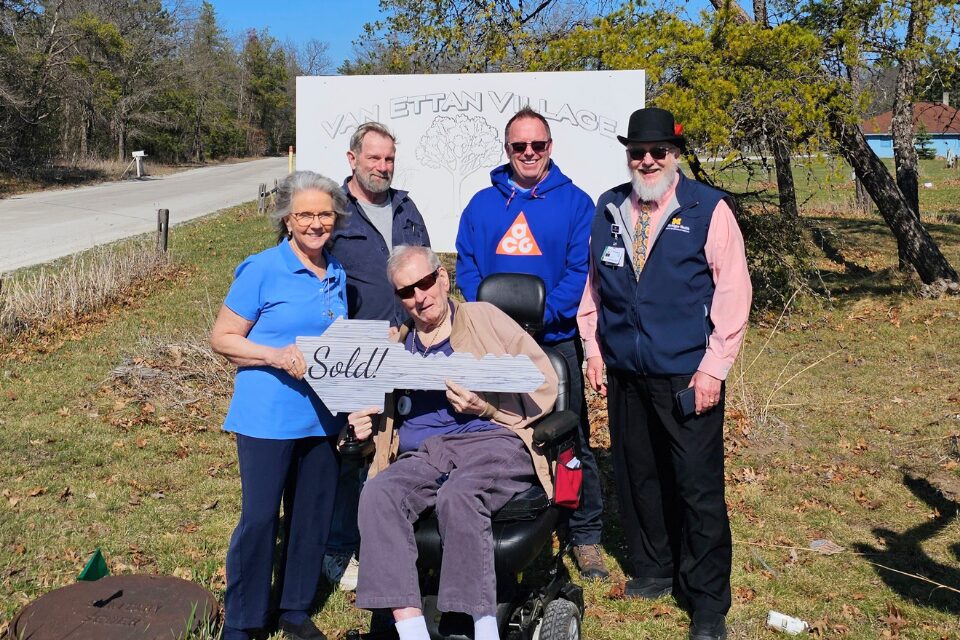
Board members scoped out possible sites, and then a benefactor from Oscoda UMC pledged $250,000, enabling the purchase of a three-acre former mobile home park for $175,000 to develop a sustainable neighborhood.
Pastor Pam drafted an initial site plan for a neighborhood featuring micro homes (150 to 200 square feet each, with a toilet and sink), larger tiny homes, and a shared community building with showers, laundry, a kitchen, and meeting spaces designed to support wraparound services, including mental and physical health care and case management.
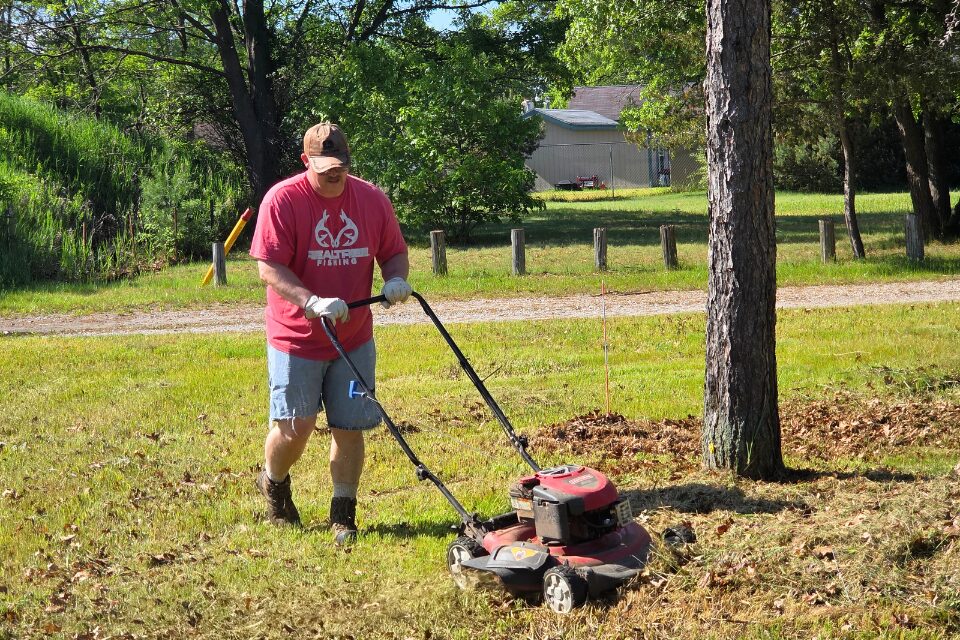
The plan has since been refined by a site engineer as the board prepares to appear before the Oscoda Township Planning Commission on September 8. If approved, the board hopes to break ground on the community building and the first micro home this fall. Thanks to a $20,000 Ministry Innovation Grant from the Michigan Conference, Oscoda UMC, through Huron Housing Hope, will fund construction of the first micro home.
Huron Housing Hope believes that stable, secure housing with locking doors and physical addresses will enable residents to access services and employment and invest in their neighborhood by taking responsibility for upkeep and maintenance. There will also be an application process for those seeking to rent one of the homes.
“We’re building this to be attractive,” explains Pastor Pam. “We want it to look like the Cass Community project — beautiful homes in a community style, where every person who lives there is invested in the community and has responsibility. So if you live in that community, you’re going to be mowing the grass, clearing the snow, and cleaning the showers you share with other people. You’re going to be doing things that contribute positively and put you in interaction with the other people you live with.”
There has been some resistance to this project from nearby homeowners concerned about property values and the character of the neighborhood, and this prompted Huron Housing Hope to host a public meeting emphasizing transparency and availability for questions. More than 60 people attended this meeting on June 30 at Oscoda UMC.
The public information session also served as a forum to challenge stereotypes about homelessness and to educate the community about the human face of this issue.
Gerry remembers hearing some misinformed comments at the meeting and witnessing someone from the community stand up to offer a correction. Gerry continues, “And then we have a person on our board who is a Salvation Army volunteer, who stood up in the meeting and said publicly, ‘I am the face of homelessness. I was homeless for two years, and I was working,’ and then went on to explain her situation. The guy who was speaking ended up apologizing to the board member. So, overall, it was a good meeting.”

For Anne and Gerry, being involved in the Huron Housing Hope ministry has strengthened their Christian faith.
“To be honest, I lost sleep over this,” says Gerry. “I was really so concerned about it. At one point, I even went through the donations and the amount of money we had. And I thought, if this fails, we’ve got enough to give the money back to donors. So, I guess I had to evolve with it. And something eventually hit me: it’s flowing, it’s going. It’s not in my control. It’s under God’s control.”
Anne remarks, “This was not in my wheelhouse; I’ve done other community service, but I’d never really gotten involved in such a project before. It’s such a big thing to think about. But I go back to faith — you just have to leave it in God’s hands, and he will provide. We’ve witnessed it. The more people we got involved, the more it started coming together. Plus, we started getting huge donations, and prayers were being answered. We all have ups and downs, but it’s been helpful for me to give back to my Lord, my community, and my church.”
When asked what inspiration other United Methodists could draw from their story, both Anne and Gerry encourage other congregations to start manageable ministries that everyone can get behind, such as food pantries, free meals, and shared community efforts. Then, gradually expand into broader collaborations and begin to dream a God-sized dream like theirs. It may not be housing, but it should address local needs and bring God’s love to people in tangible ways.
The publication of this article was made possible thanks to generous financial gifts from local United Methodist churches in Michigan through Ministry Shares. Thank you! Learn about the impact of Ministry Shares on mission and ministry in Michigan and around the world.
Last Updated on August 5, 2026