
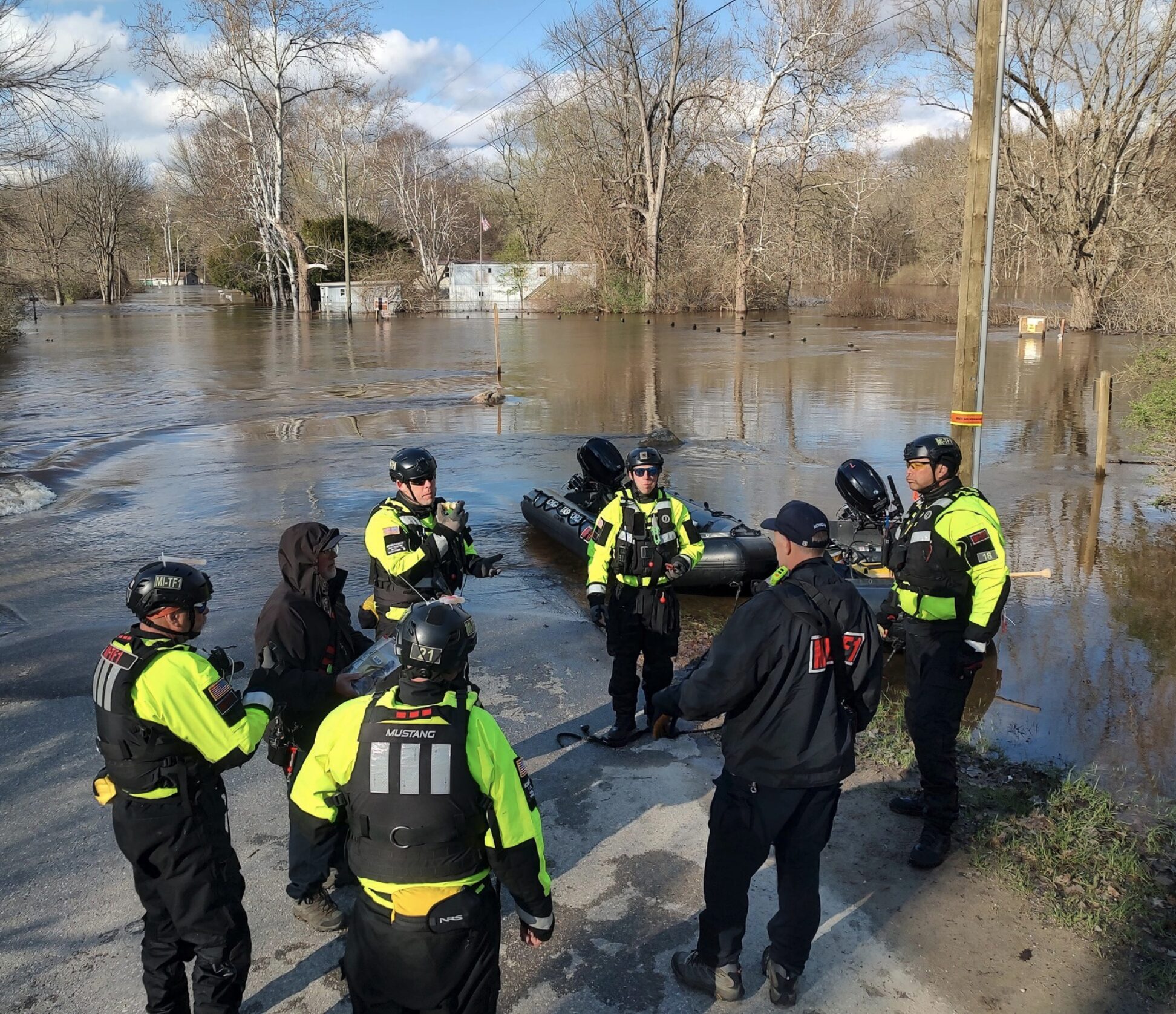
Michigan United Methodist Conference coordinates disaster response to statewide tornadoes and flooding, staging supplies, activating volunteer teams and urging churches not to self-deploy. Relief efforts underway in 41 counties in what state officials call an unprecedented disaster.
MARK DOYAL
Director of Communications
As floodwaters crept across Michigan’s Lower Peninsula last week and tornado warnings sent residents scrambling for shelter, Conference Disaster Response Ministry Committee members quietly began assessing disaster response needs, urging calm, coordinating supplies and waiting for the moment communities would need them most.
“Our hearts go out to all whose lives have been disrupted by these storms and floods,” said Bishop David Bard. “I am deeply grateful for the thoughtful, coordinated response of our Disaster Response team.” This is what connection means in The United Methodist Church, when crisis comes, we are ready to respond together with compassion and professionalism. For now, we hold our neighbors in prayer and trust the capable hands of our disaster response teams and emergency management professionals.”
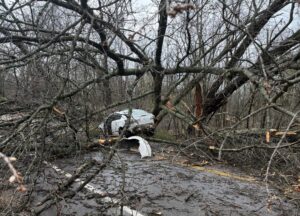
Nine tornadoes were confirmed following the initial storm system last week, with assessments now beginning in Gratiot County and the Ann Arbor area. Damage estimates were not yet available as field work continued across the state. Forty-one counties have declared local states of emergency, with 40 counties covered under a governor’s state-level emergency declaration as of April 18. No United Methodist church buildings have been reported as structurally damaged, though initial reports indicate some congregants in the Plainwell area were affected by the storms.
The Michigan Conference, working with our established disaster response partner After the Storm, moved quickly to activate that system while cautioning member churches against rushing into affected areas prematurely.
“Please do not self-deploy,” Rev. Kayla Roosa, who is coordinating the conference’s response alongside Rev. Bob Miller, wrote in a message to conference leadership Thursday. The guidance reflected a core principle of organized disaster response: that well-intentioned volunteers who arrive unannounced can sometimes impede professional relief efforts rather than support them.
Instead, Roosa encouraged congregations to channel their energy into supply collection drives and donate to After the Storm. The conference is working with the Michigan Methodist Disaster Connectors, known as MMDC, to assemble household cleaning kits and personal dignity kits that will eventually be routed to affected communities. A truckload of almost 1000 cleaning kits, with a value of $162,000, will arrive midweek to a warehouse in Grayling, but that will nearly empty conference supplies. Churches collecting items should work with the nearest MMDC Collection sites to drop items off so that coordination can occur for supply collection, validation and distribution. “This would be a great way for local ministry hubs to work connectionally to support the greater statewide need,” Roosa said, describing how churches across the state could collaborate on supply collection efforts.
Learn how to help provide emergency supplies.
The conference also activated its Emergency Response Teams, notifying trained volunteers of the potential for quick deployment once assessments are complete and communities formally request assistance. Volunteer Organizations Active in Disaster, known as VOADs — a coalition that coordinates among nonprofit and faith-based relief groups — received approval this week to begin damage assessments in three tornado-affected areas: Allegan County, Barry County and the Ann Arbor area. The full extent of damage across other affected counties remained under review.
One note of cautious relief emerged Friday: a dam in Cheboygan that had drawn serious concern was holding, monitored by four cameras streaming live through the Michigan State Police.
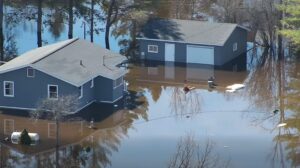
Emergency Management and Homeland Security Division’s Facebook page. Clear skies in the forecast offered additional hope that the immediate crisis may be stabilizing.
The tornadoes were classified primarily as F0 and F1 on the Fujita scale, meaning lower-end storms by wind intensity. Conference leaders noted the destruction appeared concentrated in rural areas and that fewer homes were affected than in the March storms that also struck parts of the state. The precise counties sustaining the heaviest tornado damage had not been confirmed as of late last week, with field assessments still ongoing.
Despite the damage, officials have not yet determined the full scope of long-term recovery needs. Until that picture comes into focus, the conference is holding off on soliciting donations for After the Storm, its long-term recovery ministry. “It is appropriate to wait,” Roosa said, until the organization formally engages in recovery conversations with affected communities.
The conference’s measured approach reflects lessons learned from years of disaster response work. Leaders emphasized transparency about what is and is not yet known, discouraged speculation and urged member churches to trust the professionals managing the immediate crisis. “The simplest response is always: pray,” Roosa said, “For those impacted, for first responders and for the emergency management officials working long days.”
Resources
For residents in affected areas, officials continued to direct people to dial 211 to document needs and access local resources.
To donate to the Michigan Conference disaster partner After the Storm, visit https://afterthestormmi.org/donate/
The conference has numerous resources on how to prepare and respond to disasters. Visit https://michiganumc.org/missions/disaster–response.
Your annual ministry shares contributions support local, state, national, and international response and recovery efforts, in addition to providing readiness resources and the reporting of events. Thank you for your contributions to conference ministry shares!
Last Updated on April 28, 2026