Here are four ways United Methodist churches and communities can respond faithfully to the recent flooding and tornadoes in Michigan.
JAMES DEATON
Content Editor
Damaging weather throughout Michigan has subsided in the past two weeks, and flooding is receding in many areas. The road to recovery begins now as local needs are assessed and long-term disaster recovery begins.
Rev. Kayla Roosa and Rev. Bob Miller, our Michigan Conference Disaster Response Co-Coordinators, have been part of regular meetings with state volunteer organizations involved in disaster impact mitigation. Nancy Money, Executive Director of After the Storm, our long-term disaster recovery ministry, also continues to be at the table in these vital conversations, preparing her staff to come alongside survivors as they rebuild their lives.
According to an April 29, 2026, update from state Voluntary Organizations Active in Disaster (VOAD) partners, 46 of the 83 counties in Michigan have been declared disaster areas, mostly caused by historic flooding from rain and rapid snow melt, from Iron County in the western half of the Upper Peninsula to Kalamazoo County in the southwestern part of the Lower Peninsula and areas in between. This is on top of devastating tornadoes from March and April.
Roosa and Miller have not yet received an official invitation to send Michigan Conference-sponsored, volunteer-led Early Response Teams (ERTs) or Volunteers in Mission teams focused on disaster recovery here in Michigan. Announcements will be sent out from the Michigan Conference if there is a call for teams to deploy. Learn more.
According to Roosa, “We are engaged with some ERTs as we pilot a new strategy for deployment in response to the April flooding. We, along with other VOAD groups, are noting that in many areas, water is still flowing due to high water tables, making the response more challenging at this time. However, there will be a need for mucking out for weeks to come, and we anticipate teams continuing deployment well into the summer months when called upon.”
If your local church would like to host a future disaster team, reach out to Roosa at 989-948-1390.
As state and federal agencies continue assessments of the widespread damage, here are the best ways churches and communities can respond right now.
Communicate Needs
Do you know someone who has been impacted by the flooding or tornadoes? If so, encourage them to call 211 anytime to communicate whatever needs they may have. This state hotline is staffed 24-7 by live operators.
Donate Funds to After the Storm
Financial contributions to After the Storm will support long-term recovery efforts in the affected communities. Staff members from After the Storm, started by Michigan United Methodists, have been involved in discussions with state and local agencies from the beginning, helping to develop the process and plan for long-term recovery. United Methodists are engaged in this hope-filled work, offering caring, compassionate help and the love of Jesus to disaster survivors. Give now.
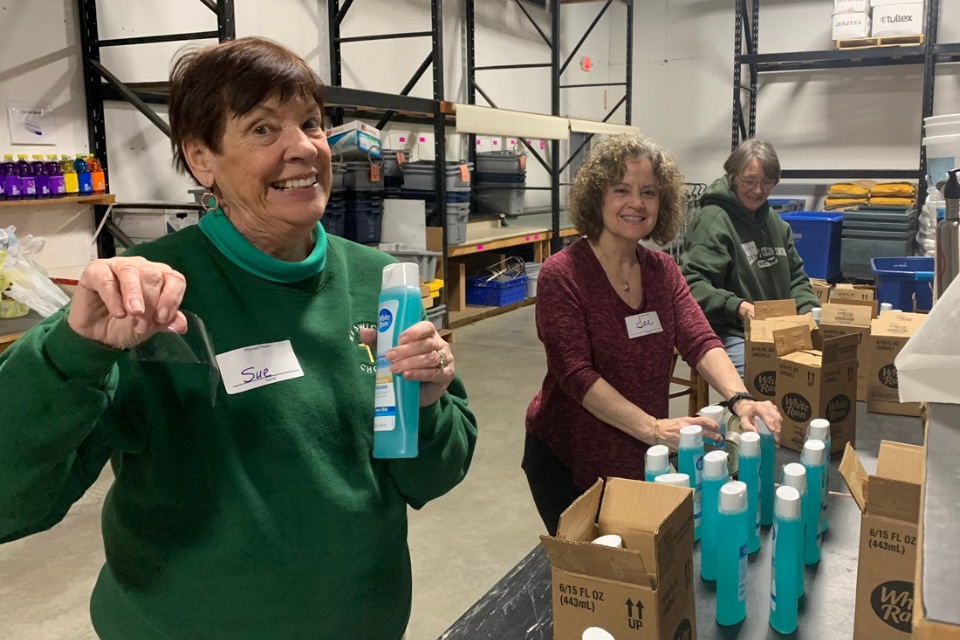
Assemble Disaster Kits
The supply of disaster relief kits has been depleted here in Michigan, so there is a growing need to assemble and collect more for distribution.
The Michigan Conference is collaborating with Midwest Mission, our veteran mission partner in Pawnee, Illinois, in this work. They have two kits — Personal Dignity Kit and Home Care Kit — that are the most needed items at this time. Download instructions and watch assembly videos.
Once assembled, schedule a time to drop them off at one of the five Permanent Collections Sites in Michigan — Warren, Lansing, East Lansing, Midland, and St. Joseph — or bring them to the 2026 Michigan Annual Conference. Midwest Mission will have an on-site truck to collect donated kits on Friday, May 29, from noon to 4 pm, and on Saturday, May 30, from 7 am to 1 pm. The truck will be parked in the Clubhouse/Pro Shop parking lot, right across from the white tent (Plaza tent, where the Mission Festival will be held). Find the exact location on this map.
Prepare for Future Disasters
Be better prepared for storms like the recent ones by ensuring your local church has a plan put together. When a disaster hits, church leaders are often in shock and unsure who to call or what to do for help. Taking an assessment of where you are now and crafting a plan will help you respond quickly and safely and, ultimately, be better neighbors in your community.
The Michigan Conference has guidelines for local churches on how to respond before, during, and after a disaster. Take time to review this plan and share it with others. Download the Michigan Conference Disaster Ministry Response Plan to be better prepared.
The publication of this article was made possible thanks to generous financial gifts from local United Methodist churches in Michigan through Ministry Shares. Thank you! Learn about the impact of Ministry Shares on mission and ministry in Michigan and around the world.
Last Updated on May 18, 2026