
At UMCOR’s Haiti Partner Conference, a new chapter in Haitian-led leadership unfolds as the denomination renews its commitment to the people of Haiti amid the ongoing crisis.
DEACONESS VALERIE MOSSMAN-CELESTIN
Executive Director, Haitian Assets for Peace International
Cap-Haïtien, Haiti — From November 17-19, 2025, a powerful gathering unfolded just as Haiti faces one of its most acute humanitarian crises. The United Methodist Committee on Relief (UMCOR) brought together 11 Haitian-led organizations from four departments, along with key church and mission partners, to chart a new course: a future led by Haitians for Haitians.
UMCOR’s executive director, Jim Cox, framed the meeting as more than a conference. It was a turning point — a public affirmation that the United Methodist connection is bolstering its trust in local leadership at a time when external aid can feel distant, even tenuous.
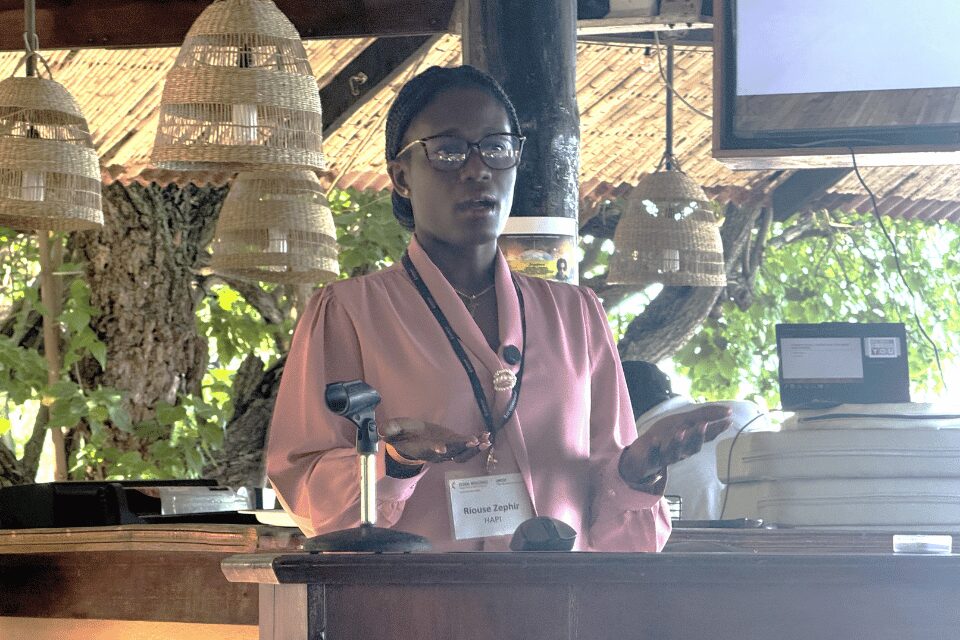
For Haitian Assets for Peace International (HAPI), an Advance project under the General Board of Global Ministries and an EngageMI international ministry partner, the conference marked a milestone. HAPI is in the process of formalizing a Haitian-based foundation. At the gathering, Dr. Riouse Zéphir, HAPI’s medical director, was introduced in her new role as vice president of the Haitian foundation — a moment that reverberated with symbolism.
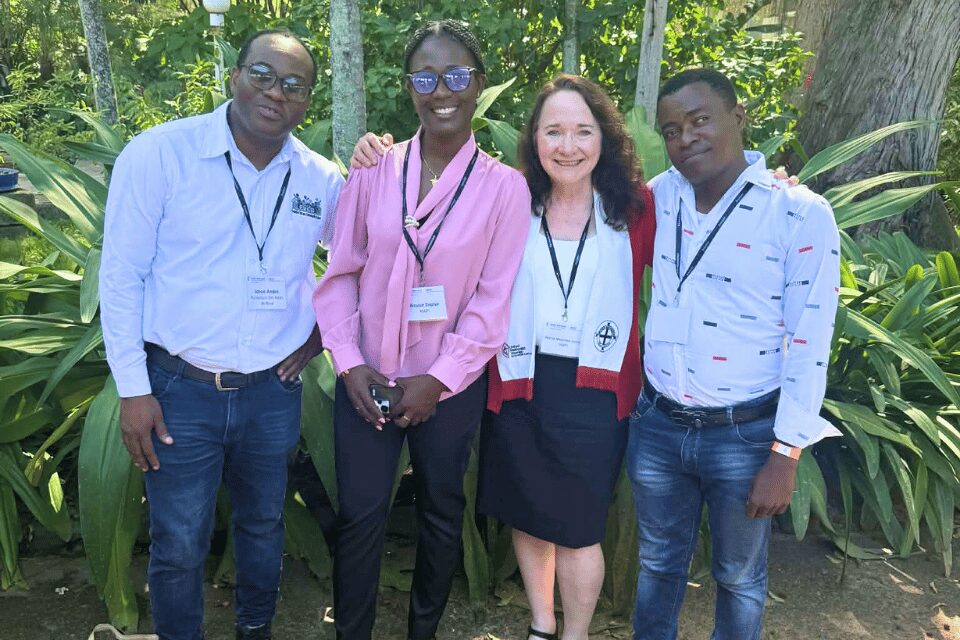
Valerie Mossman-Celestin, HAPI’s executive director, told the assembly that this moment came full circle: “More than twenty years ago, HAPI began with rural artisans . . . their greatest hope . . . was ensuring their children could become educated professionals.” One of those artisans was Dr. Zéphir’s mother. Today, Zéphir is HAPI’s medical director and is vice president of the foundation — a living testament to what dignity-based development can produce.
But the conference was not held in a vacuum. The context is stark. According to a June 2025 report by the United Nations Office for the Coordination of Humanitarian Affairs (OCHA), some 1.3 million people have been internally displaced in Haiti — roughly 11 percent of the population.
Meanwhile, food insecurity grips more than half of the nation: around 5.7 million Haitians now face high levels of acute food insecurity, according to the latest Integrated Food Security Phase Classification (IPC) report.
In this environment, the testimonies shared at the conference were searing:
-
- Women in gang-controlled areas no longer seek hospital care after sexual assault, expecting repeated violence and no recourse.
- Over a million people have been displaced, placing severe strain on rural communities already stretched thin.
- Food shortages, which feed into chronic conditions like hypertension and undermine maternal health, are now commonplace.
- Staff across local organizations are themselves bearing the weight of trauma even as they serve.
Yet Haitian participants insisted the narrative cannot be reduced to one of despair. Instead, their emphasis is on dignity, agency, and self-determination.
As Josue André of the Grassroots Community Voices Foundation remarked, “No international person should build a latrine for someone in Haiti. I should build my own. People must be the actors of their own change.”
Faith formed a grounding backdrop to that conviction. Throughout the conference, Haitian leaders described models of community healing — restorative circles, trauma-informed care, and “dignity hub” frameworks — rooted in mutual support, spiritual resilience, and self-governance. Many of these initiatives are church-led or inspired by Christian principles of dignity and service.
The conference was also a practical exercise in strengthening partnerships. HAPI and grassroots partners explored collaboration around the Michigan Conference’s Gardens of Hope campaign, and a proposed mobile health initiative funded by Global Health.
UMCOR and Global Health officials encouraged HAPI to propose projects directly responding to urgent needs: replacing clinic roofs and installing solar systems damaged by Hurricane Melissa, and acquiring portable oxygen equipment — especially vital in rural Mizak, where emergency referrals often traverse difficult terrain.
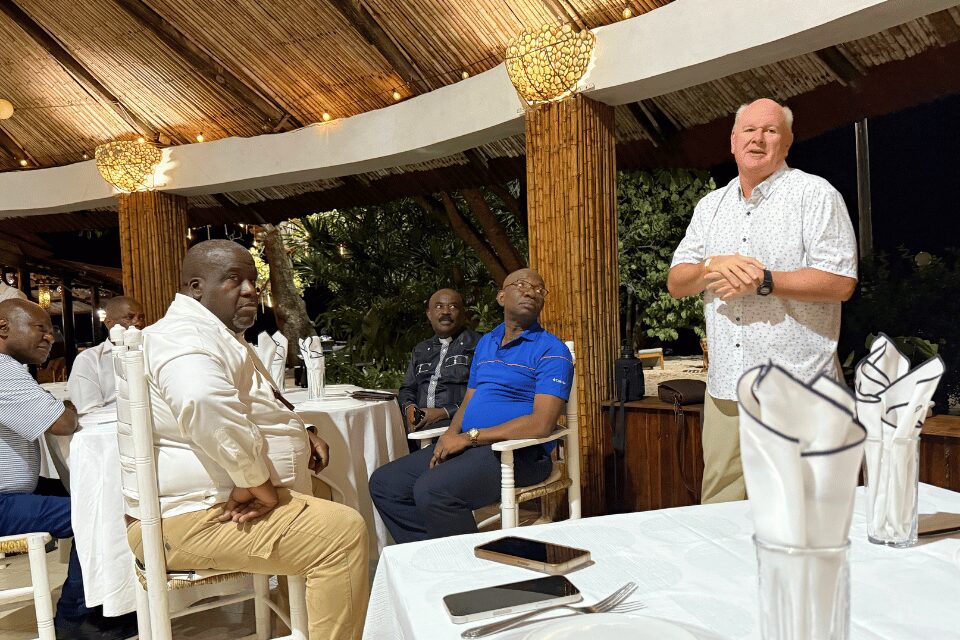
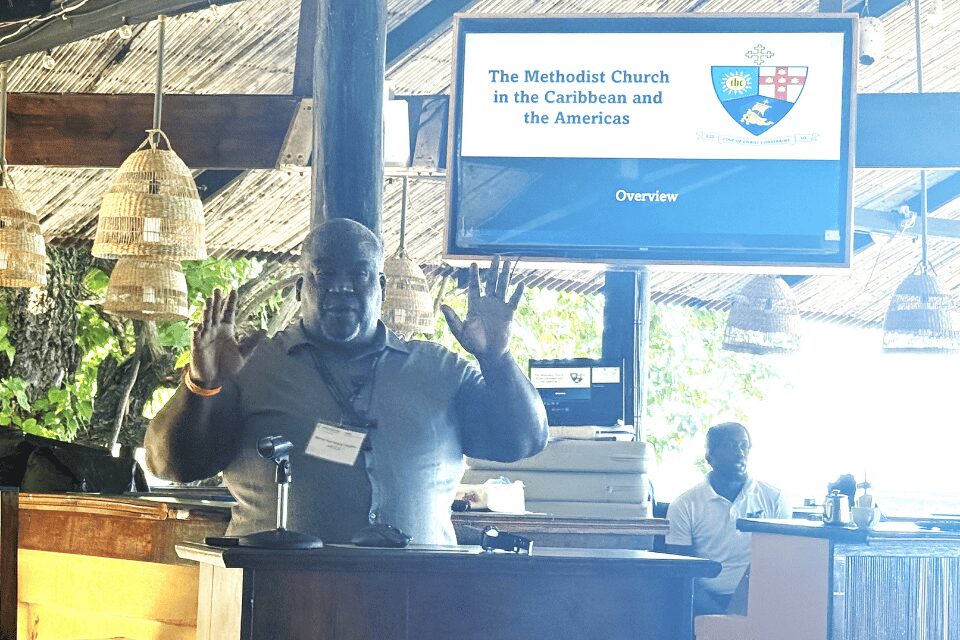
As the conference drew to a close, Bishop Juan Miguel Simpson Bennett, president of the Methodist Church in the Caribbean and the Americas, offered a reflection rooted in history: “The only sin Haiti is guilty of is wanting independence.” It was a reminder not only of past struggle, but of meaning: the enduring, God-given drive for self-determination.
That evening, in the streets of Port-au-Prince on the other side of the island nation, celebration broke out: Haiti had qualified for the World Cup for the first time in 51 years, coinciding with the anniversary of the historic Battle of Vertières. Drums, horns, and cheers echoed in the city — a jubilant affirmation of resilience and collective spirit.
For United Methodists in Michigan, the conference offered both affirmation and challenge. The long-standing partnership with the people of Haiti, through prayer, advocacy, and the current Gardens of Hope campaign, has taken on renewed significance. What local Haitian leaders most asked of their sisters and brothers in Michigan was not an abstract gesture. They asked:
-
- Walk with us.
- Listen to us.
- Support us in ways that build dignity, not dependence.
- Help us tell our story — the story of the work we do in faith and in service.
In a moment when Haiti’s vulnerabilities are exposed, its leadership is rising. And for United Methodists committed to “peace with justice,” standing alongside that generation matters deeply.