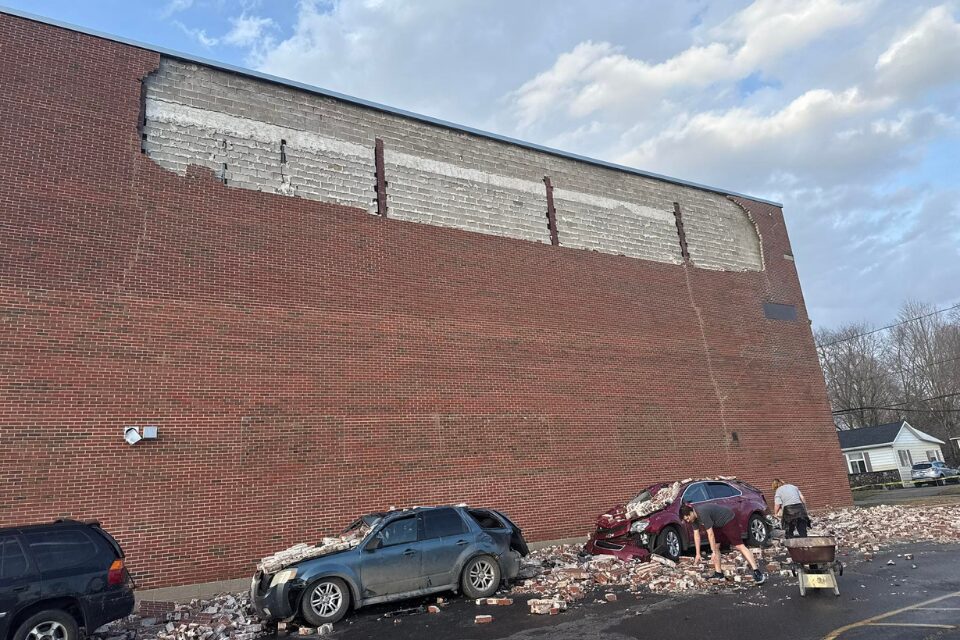
The Michigan Conference is on the move in response to historic tornadoes that swept through Southwest Michigan on Friday.
JAMES DEATON
Content Editor
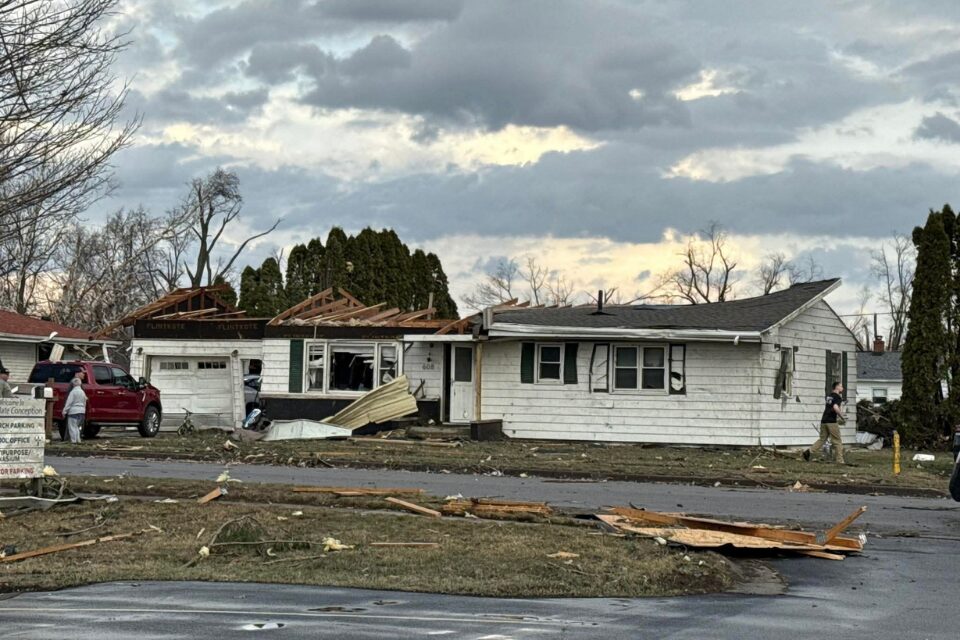
The Michigan Conference of The United Methodist Church is actively helping communities affected by a series of tornadoes and straight-line winds that struck Southwest Michigan on Friday, March 6, 2026. These storms caused significant structural damage, injured people, and tragically claimed lives. The United Methodist churches in these areas were not damaged, but the communities are shaken, and people of faith are reaching out to support their neighbors.
The storms developed from a parent supercell thunderstorm and marched east through four counties — Cass, St. Joseph, Branch, and Calhoun. The strongest of the four tornadoes touched down in Union City, Branch County, as an EF3 storm with a maximum wind speed of 160 mph. This was the earliest EF3 or stronger tornado in Michigan’s recorded history. Four people lost their lives, marking March 6 as the state’s deadliest day for tornadoes since May 13, 1980.
Soon after the news broke, members of the Conference Disaster Response Team, including our long-term disaster recovery ministry, After the Storm, mobilized as details unfolded. While trained first responders worked diligently to save lives and protect property, the Conference Disaster Response Team began assessing the situation and engaging in discussions with state and local agencies to determine next steps and how United Methodists can respond.
The Conference Disaster Response Team also requested a solidarity grant from the United Methodist Committee on Relief (UMCOR) to support our conference as it responds to this disaster, and the request was granted. This money will go toward our conference disaster ministries.
Authorized search and rescue teams have completed their work, and the communities are now focusing on recovery and needs assessments. Do you know someone who has been impacted by these storms? If so, encourage them to call 211 anytime to communicate whatever needs they may have. This state hotline is staffed 24-7 by live operators.
There have been no requests for volunteer Early Response Teams (ERTs) from authorities, but the Michigan Conference will communicate these needs if they occur. Remember, do not send relief teams or self-deploy when a disaster happens. Uncoordinated arrivals can strain local resources, disrupt emergency operations, and put people in harm’s way.
What can United Methodists do right now in response to these storms? You can take three actions: pray, donate funds to After the Storm, and be better prepared for the next disaster.
Pray, as people of faith, for those who have lost loved ones, for those whose property was lost or damaged, and for everyone helping with initial relief efforts and long-term recovery. When disasters like this strike a community, it is common for those providing aid to quickly experience fatigue and burnout as the situation becomes overwhelming and complicated.
Donate funds to After the Storm, a trusted ministry partner in long-term disaster recovery. When disaster strikes, After the Storm, started by Michigan United Methodists, is among the first disaster case management organizations to arrive, helping survivors get back on their feet.
Financial contributions to After the Storm will support long-term recovery efforts in the affected communities of Southwest Michigan. Staff members from After the Storm have been involved in discussions with state and local agencies from the beginning, helping to develop the process and plan for long-term recovery. United Methodists are engaged in this hope-filled work, offering caring, compassionate help and the love of Jesus to disaster survivors.
Be better prepared for storms like this by ensuring your local church has a plan put together. When a disaster hits, church leaders are often in shock and unsure who to call or what to do for help. Taking an assessment of where you are now and crafting a plan will help you respond quickly and safely and, ultimately, be better neighbors in your community.
The Michigan Conference has guidelines for local churches on how to respond before, during, and after a disaster. Take time to review this plan and share it with others. Download the Michigan Conference Disaster Ministry Response Plan to be better prepared.
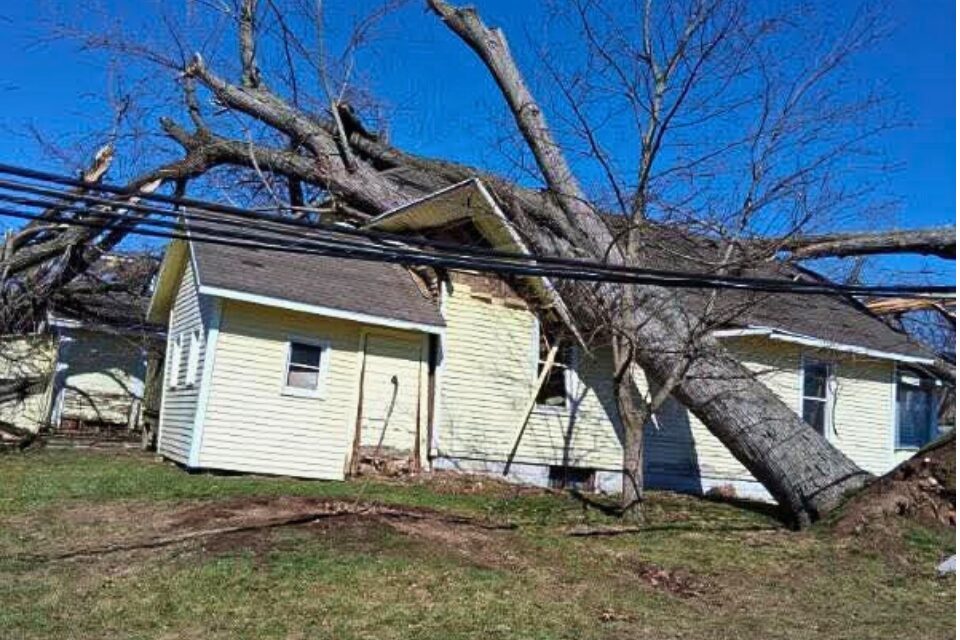
Three Rivers in St. Joseph County was hit by an EF2 tornado around 3:45 pm Friday, causing structural damage to buildings, including the Menards off US 131 and the school district’s new bus barn. There are three United Methodist churches in Three Rivers — First, Ninth Street, and Center Park — and they are doing their part to help their hurting community.
Three Rivers: First UMC’s feeding ministry, which began in April 2025, has become a cornerstone of its outreach efforts, fostering community connections and supporting vulnerable populations.
When the tornado hit, aside from a few roof shingles blown off, the church building itself sustained no damage, so the congregation decided to focus on their new ministry and leverage it to provide meals and support for those affected by the storm. The church has a food pantry in addition to a hot meal served every Sunday, from noon to 2 pm.
Rev. Heather Nowak, First UMC’s pastor, explained their rationale, “We decided that we’re going to lean into the fact that what we do is this feeding ministry, we can’t host the Red Cross. And so we expanded to include lunch, not just on Sundays, but we would add a lunch for Monday, Wednesday, and Friday, and we would continue with our food distribution on Monday and Friday, and then add no-cook kits, which are donated by the South Michigan Food Bank.” The Soup Pot, another ministry organized by nine area churches and hosted by Trinity Episcopal Church, makes hot meals on Tuesdays and Thursdays to cover most of the rest of the week.
Nowak also told the story of a family that received some of these donated meal kits and how the congregation made a heartfelt connection with them.
“We had a family come in for lunch on Monday who said, ‘Our food is spoiling. We have no electricity. We can’t prepare anything. Do you have anything like bread and lunch meat?’ And I told them we just got these kits in, so we were able to give them lunch, then send them home with kits and water, and make that connection with this couple. And they had not been in church for a very long time because of how they perceived churches as being judgy.”
Being fairly new to the area since she was appointed last July, Nowak also commented on how the Three Rivers community has demonstrated remarkable resilience and unity in the storm’s aftermath, with local organizations and residents quickly mobilizing to provide aid and support.
“We spent the weekend in what was considered to be search and rescue,” said Nowak. “The sheriff’s office was telling people, ‘If you are safe, stay there.” Because there were so many downed power lines and rubble, it wasn’t necessarily safe to be out. But I noticed how quickly people mobilized. A command center was set up within two hours. And the next day, the American Red Cross was on site, being hosted at one of the larger nondenominational churches in the area. And United Way was there by Saturday morning with their command center.”
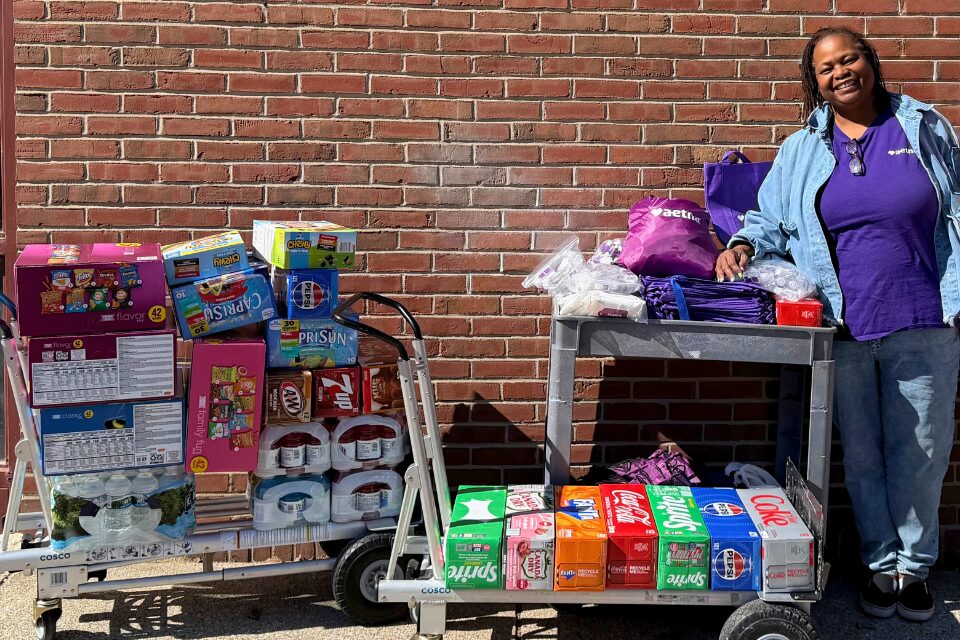
The collaborative spirit of the people of Three Rivers is also seen in the work of Dave Berry, a member of Three Rivers: Ninth Street UMC, who co-manages the Soup Pot and the Three Rivers Food Site, a community pantry for emergency food needs. Several local churches, including Ninth Street UMC, contribute to these feeding ministries.
According to Berry, the Three Rivers Food Site is preparing for increased demand due to the storm’s impact on local employment and businesses. Because of this anticipation, restrictions on food distribution have been lifted for at least March to accommodate those affected.
Pastor Donnie Brooks of Ninth Street UMC noted that the storm hit local businesses hard, especially Menards and other businesses near US 131, and that some people will be out of work for a while, so now is not the time to be a stickler and limit how much food people can get.
“You can imagine some of these small businesses might not have had insurance on their buildings,” said Brooks. “I noticed one near our church’s neighborhood that had been damaged. They wrote on the side of the building, “For Sale,” so I think they’re probably closed for good. Also, with certain jobs, if you’re not open and working, you don’t get wages, PTO, or anything like that. So, it’s a good thing that the site is suspending those rules to meet that increased need for now.”
Center Park UMC is just north of town and sustained no damage. Rev. Pat Catellier is the pastor there, and she emphasized her congregation’s readiness to assist and the importance of prayer for all those affected, particularly the community of Union City, east of Three Rivers, that suffered even more damage and loss, with three fatalities reported.
Pat said, “We are praying for restoration, and we are praying for the people who have lost homes and property that has been damaged, and we will continue to do so. And we are willing to step in and help out whenever it’s possible.” Center Park UMC will watch for ways to contribute to their community’s healing and recovery in the coming weeks.
The publication of this article was made possible thanks to generous financial gifts from local United Methodist churches in Michigan through Ministry Shares. Thank you! Learn about the impact of Ministry Shares on mission and ministry in Michigan and around the world.