
Michigan UMs helped grow HAPI’s Felisane Health Center, and new partnerships have emerged, multiplying the impact of the current Gardens of Hope campaign and your investment.
JAMES DEATON
Content Editor
Ministry is a beautiful partnership in which human gifts and God’s Spirit enliven and advance the work of our hands. Yet our labor often takes time to bear fruit, and we don’t always see the results. Others come after us, tending, weeding, and nurturing. Roots develop. Growth occurs.
The Apostle Paul used a similar metaphor when writing to the Corinthian church about the nature of ministry: “I planted, Apollos watered, but God gave the growth. . . . The one who plants and the one who waters have one purpose, and each will receive wages according to their own labor” (1 Corinthians 3:6, 8, NRSVUE).
For almost 20 years, Haitian Assets for Peace International (HAPI) has developed innovative programs that empower rural communities in southern Haiti to move from dependency to sustainability, improving the health, well-being, and livelihoods of individuals and families.
Michigan United Methodists have witnessed HAPI expand its offerings since its founding in 2007 and have supported this Advance Partner Project by fostering close ties and through financial giving, including offerings at Annual Conference. The Michigan Conference’s new Gardens of Hope campaign is building on that support and multiplying the impact of your investment.
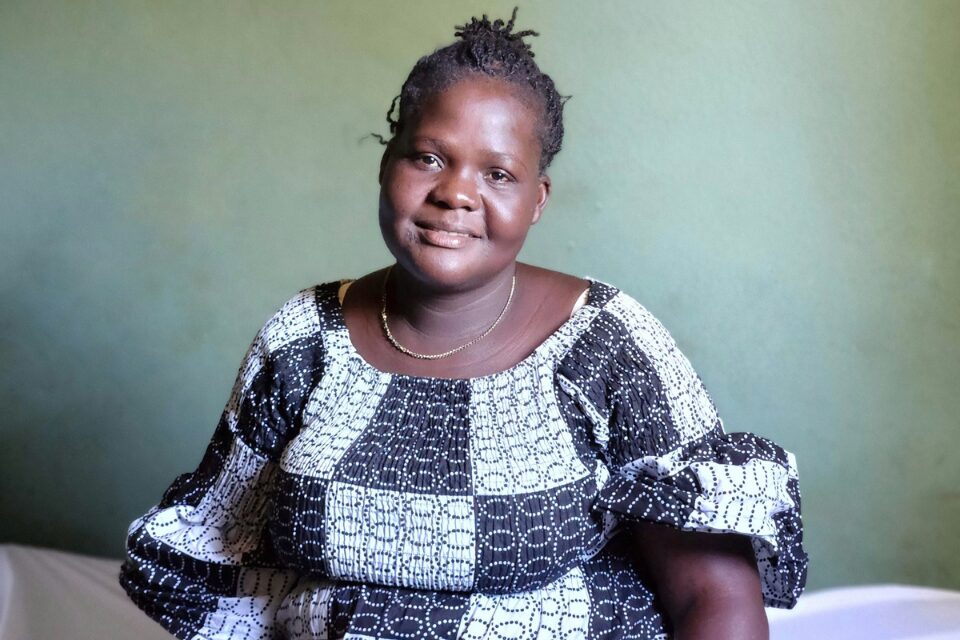
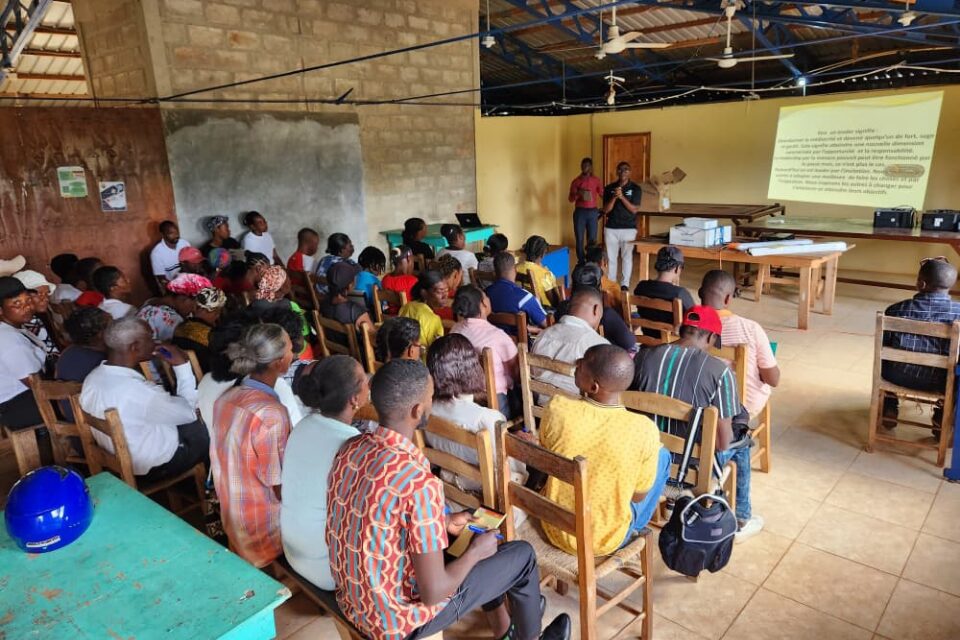
The Gardens of Hope campaign is strengthening the work of HAPI’s Felisane Health Center by helping to expand primary healthcare services, including maternal and pediatric services, and deepen community trust. The campaign is also bolstering HAPI’s vocational training program, HAPITech, which has been scaled back due to increased demand for healthcare services. Through this program, rural residents receive skills in ESL (English as a second language), computers, and ceramic tiling.
The growth HAPI is experiencing has now attracted new partnerships, bringing additional resources, training, and opportunities to the Mizak-based ministry. The General Board of Global Ministries (GBGM) is reinvigorating its commitment to the people of Haiti, which is a hopeful sign, and HAPI has sprouted new partnerships with the Spanish Red Cross and the Grassroots Community Voices Foundation (GCVF), which is launching a new Dignity Hub initiative.
Seeds Planted Bear Fruit
The Michigan Conference’s Gardens of Hope campaign is a new opportunity for United Methodists to increase support as these new gardens of ministry partnerships grow. With less than two months left, the campaign hopes to raise $200,000 for our three EngageMI ministry partners in Haiti — HAPI, Grace Children’s Hospital, and Jeremie Rising — as well as a new partner, Grassroots Community Voices Foundation.
Half of the campaign dollars will be split among Grace Children’s Hospital, Jeremie Rising, and HAPI. Gardens of Hope dollars for HAPI will be allocated to health ministries (76%) and vocational training ministries (24%). The other half of the campaign dollars will go to GCVF and its MUSO program, a community-driven savings and loan program to be implemented in Mizak and Jérémie. Ten MUSO groups are currently in Mizak, with 9 in Jérémie.
To date, more than 150 churches in Michigan have contributed to the campaign, totaling over $98,000. How can your local church give at least $350 to help meet this goal?
Give now to the Gardens of Hope campaign.
For years, Michigan United Methodists have been watering and nurturing seeds of ministry by supporting HAPI, and these efforts have already begun to bear fruit. All HAPI operations in Mizak are now managed by a dedicated team of 30 Haitian professionals, ensuring the mission remains culturally grounded and sustainable. Here are examples of recent achievements:
-
- Surge in Healthcare Access: The Felisane Health Center saw a 47.6% increase in patient visits (from 9,189 in 2024 to 13,562 in 2025), serving as a sanctuary for those fleeing instability. HAPI handles a wide range of services to residents in the area: primary healthcare, urgent care, maternity care and vaccinations, dental care, lab and pharmacy services, along with its field programs for hypertension management and care for people with disabilities.
- Maternal Health Excellence: The StartRight program enrolled 506 new mothers, a 41.3% increase over 2024. 69% of births were delivered at Felisane Health Center. An additional 19% were referred for hospital delivery, resulting in an 88% institutional delivery rate, significantly improving survival outcomes for both mothers and infants in the region.
- Vocational Empowerment: HAPITech currently serves 95 students per month, with a strong focus on gender equity, as 65% of enrollees are women gaining essential digital economy skills.
- Agricultural Growth: The HAPIGro initiative successfully distributed 97 rabbits and saw the birth of 266 kits, fueling youth-managed micro-enterprises and strengthening local food security.
HAPI also has a reputation for strong reporting and building community trust. The Haitian public health department (MSPP) has given positive feedback on HAPI’s community work and its commitment to high standards in its healthcare programs.
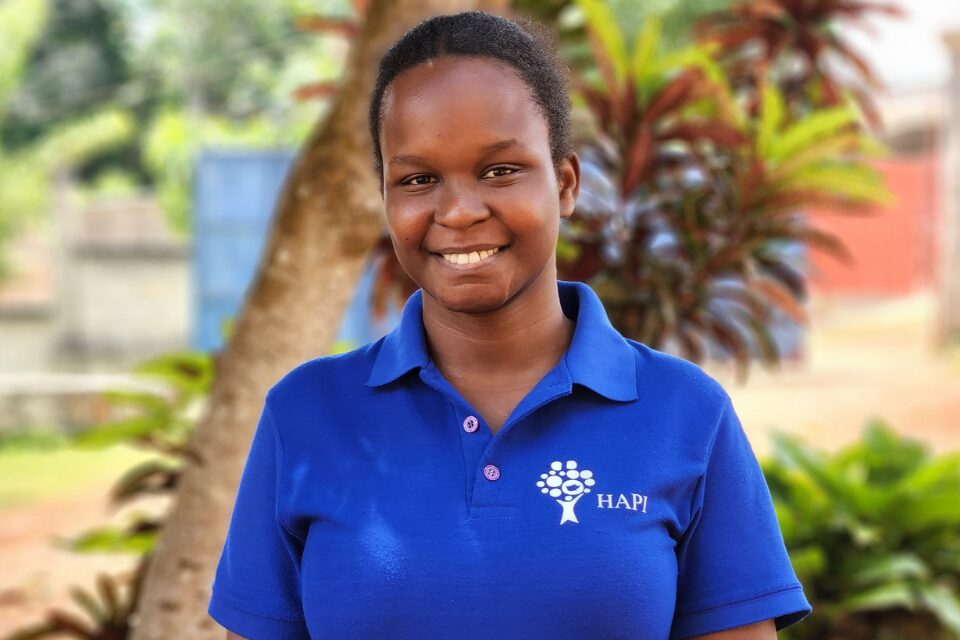
“What excites me most,” says Valerie Mossman-Celestin, HAPI’s executive director, “is seeing local leadership recognize the connection between transparency, strong reporting, the development of community trust, and the ability to attract partners who are eager to help build something positive for Haiti. That may sound very basic, but it’s an incredible accomplishment — and one that we diligently guard!”
HAPI’s reputation is well known within The United Methodist Church as well. The General Board of Global Ministry’s Global Health program and United Women in Faith have also awarded HAPI grants in the past for its work to improve community health and expand vocational education.
New Partnership Takes Root: Spanish Red Cross
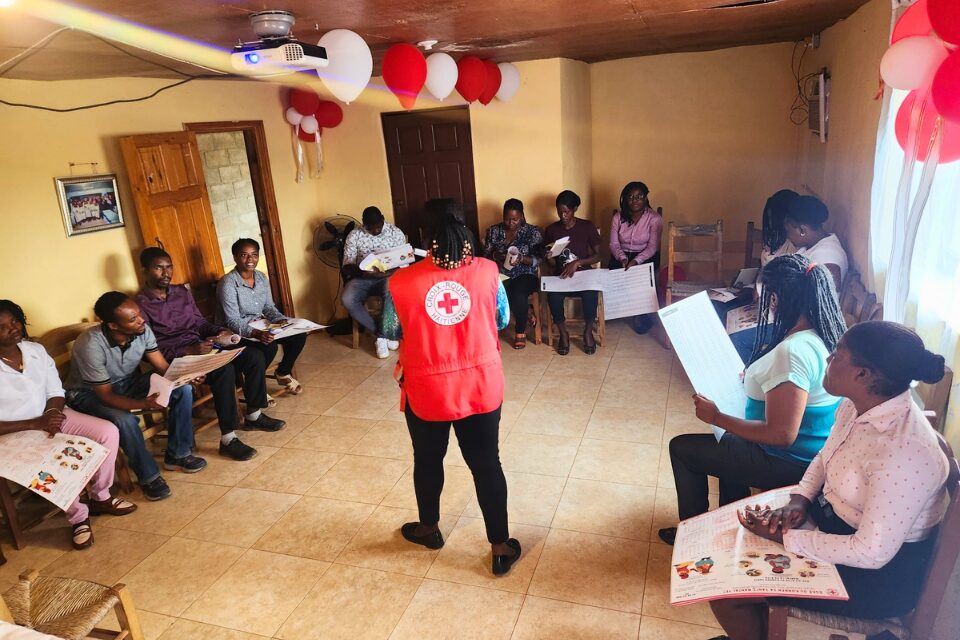
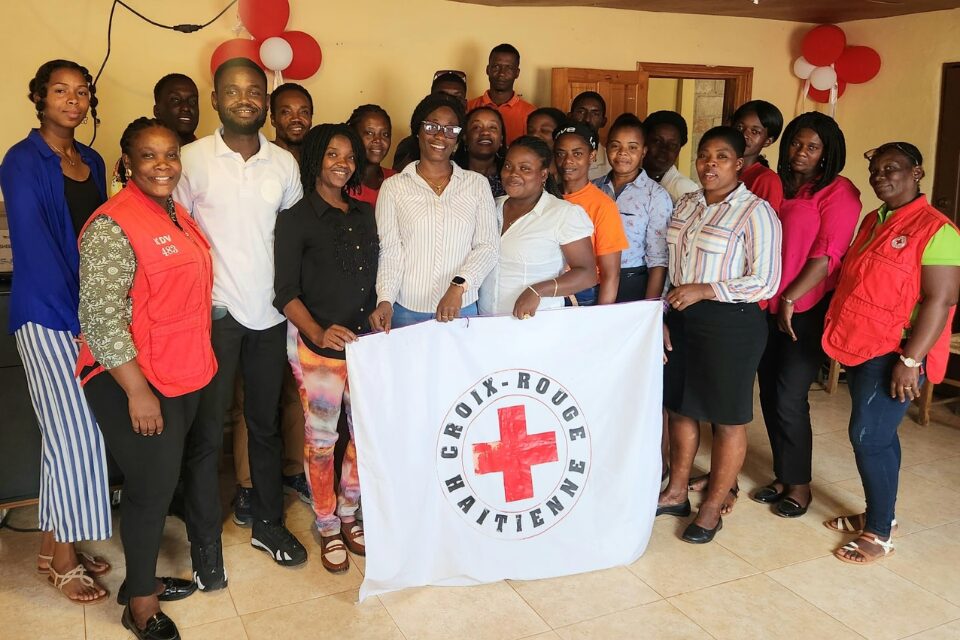
Seeds of ministry planted by United Methodist churches in Michigan helped build credibility that has attracted new partners for HAPI. One partner is the Spanish Red Cross, part of the global Red Cross network, which is working in Haiti to strengthen local health systems and community resilience. The Spanish Red Cross does not intend to stay permanently but to build capacity — training staff, improving services, and supporting infrastructure — so that local organizations can sustain and lead the work over time.
Because of HAPI’s strong reputation with the Haitian public health department (MSPP), the Felisane Health Center was selected as the sole site for a partnership with the Spanish Red Cross in the SouthEast Department of Haiti. There are 10 departments in the country.
The Spanish Red Cross is providing Psychological First Aid (PFA) training and counseling, as well as a referral protocol for HAPI staff (when to refer when the matter is beyond one’s expertise). The Red Cross also gave training on the prevention of violence against women.
This critical training is in response to the horrific crisis in Haiti. Over a million people have been displaced because of gang-related violence in the larger cities. Women in gang-controlled areas no longer seek hospital care after sexual assault, expecting repeated violence and no recourse. UNICEF estimates that sexual violence against children increased 1000% from 2023 to 2024.
The training in PFA and gender-based violence prevention is designed to help frontline HAPI staff support refugees now living in these rural communities who are in distress after trauma, crisis, or violence, in a practical, humane way, without requiring them to be mental health specialists.
The context in these rural areas has changed. In the past, they knew the surrounding community well. Now, as displacement increases, many new people are arriving, and relationships are no longer familiar. There are also real concerns about gang tactics — reports of women being sent ahead to establish a presence before others follow. So, HAPI staff often find patients cautious, and there’s a need to ensure the safety of both staff and patients.
Dr. Riouse Zéphir, HAPI’s medical director, gave thanks for this new partnership with the Spanish Red Cross: “This represents a crucial step in strengthening the capacity of our HAPI clinic. Thanks to this support, our staff has received essential training in Psychological First Aid and gender-based violence prevention, which will improve the quality and humanity of the care provided.”
She also commented on what else they’d provide HAPI: “The support in the form of medications and medical equipment, including obstetric supplies, will ensure safer and more effective care. Furthermore, the rehabilitation of the clinic’s infrastructure and the midwives’ residence will contribute to providing a safer, more functional, and dignified environment for patients and staff. We thank the Spanish Red Cross for its commitment to the communities we serve.”
New Initiative Growing: Dignity Hubs
Trauma impacts the health and well-being of individuals, but it also impacts community health and resiliency. At a November 2025 meeting in Haiti, hosted by the United Methodist Committee on Relief (UMCOR) and attended by 11 Haitian-led organizations, including HAPI and GCVF, concerns about addressing trauma dovetailed with a desire to emphasize dignity, agency, and self-determination.
At this gathering, Haitian leaders described models of community healing rooted in mutual support and spiritual resilience. What they asked of their siblings in faith in Michigan was an active presence of walking alongside, listening, and supporting in ways that build dignity, not dependence.
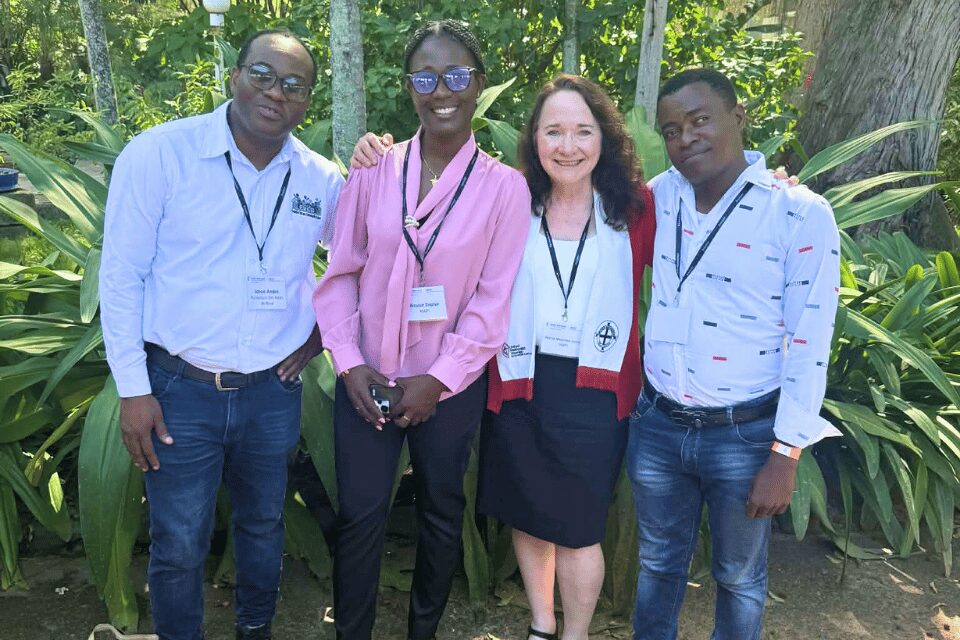
Josué Andre of the Grassroots Community Voices Foundation, the new ministry partner supported by the Gardens of Hope campaign, gave an honest example for denominational leaders to hear at this meeting: “No international person should build a latrine for someone in Haiti. I should build my own. People must be the actors of their own change.”
Josué, Valerie, Dr. Zéphir, and Micha Chaudbury, from the General Board of Global Ministry’s Global Health program, met during this November meeting in Haiti and discussed a partnership that would create Dignity Hubs in rural parts of Haiti. The idea sprouted, and Global Health, along with Church of the Resurrection, a large United Methodist church in Kansas City, agreed to fund it. Two pilots have begun: one in Mizak with HAPI and one in three other locations.
Dignity Hubs transform temporary mobile health outreach into permanent, community-owned centers of care and opportunity. Each hub integrates primary healthcare services — such as vaccinations, nutrition programs, and disease screening — with WASH infrastructure, trauma healing support, and primarily women-led enterprises, such as fortified food production and community gardens. For this pilot, each hub will initially involve 40-50 persons.
By linking health with economic opportunity, the model strengthens both community well-being and local livelihoods. Within four years, the goal is for participating communities to finance up to 50% of their healthcare services locally, moving from dependency toward sustainability.
Josué explained further, “GCVF is partnering with HAPI to establish a permanent Dignity Hub within HAPI’s existing operational area in Mizak. This hub will serve as a dedicated platform for expanding trauma-informed care at the community level.” He added that local community members will be trained as Dignity Facilitators, equipped with assessment tools to conduct trauma assessments and to lead structured healing circles. Somatic practices will be used alongside communal narrative workshops, “where families co-create new stories of resilience and self-investment, replacing the cycle of aid dependency with shared agency.”
Gardens of Hope connected HAPI and GCVF, making this new Dignity Hub initiative possible. The campaign, supported by Michigan United Methodists, continues to strengthen the health system as a whole, making the Mizak community, home to HAPI, an ideal Dignity Hub.
Josué concluded, “HAPI brings critical maternal, newborn, and child health expertise to this partnership, and their deep roots in the Mizak community make them an ideal host for the Dignity Hub model. Our target is for 75 percent of participants to achieve measurable improvement in emotional regulation capacity.”
The Garden Continues to Grow
When congregations plant seeds of hope, growth often spreads farther than anyone expects. HAPI’s reputation as a faith-based ministry with a tremendous track record, thanks to the support of Michigan United Methodists over the years, has drawn attention. New ministry partnerships have recently sprouted with the Red Cross and now with GCVF’s MUSO savings and loan program, supported through the Gardens of Hope campaign, and its new Dignity Hubs.
What new partnerships will sprout in the days ahead? Only God knows. We may not see the fruit, but we can remain faithful in our tending.
Through your financial gifts to the Gardens of Hope campaign, seeds of hope will continue to be watered and cared for as they grow. Communities are growing more resilient thanks to trauma-informed ministry. People of all ages are getting the care they need. Communities are growing stronger economically as local businesses led by Haitians take root and provide sustainable employment.
Your congregation is invited to continue this beautiful garden of hope-filled, life-changing ministries for our siblings in Christ in Haiti. The garden will only grow as long as the church continues to nurture it. Give now to help us meet our goal.
Give now to the Gardens of Hope campaign.
The promotion of the Gardens of Hope campaign and the publication of this article are made possible thanks to generous financial gifts from local United Methodist churches in Michigan through Ministry Shares. Thank you! Learn about the impact of Ministry Shares on mission and ministry in Michigan and around the world.